Nigeria’s Federal Government has defended its proposed $21.7 billion external borrowing programme, arguing that the financing is intended to address the country’s infrastructure deficit, improve public services and stimulate long-term economic growth.
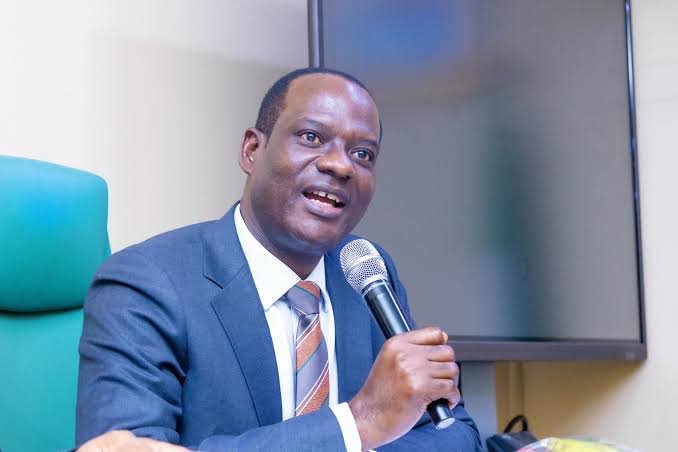
Finance Minister and Coordinating Minister of the Economy, Taiwo Oyedele, said the plan should be viewed as an investment in productive assets rather than simply an increase in government debt. His remarks came amid growing criticism of President Bola Tinubu’s request for National Assembly approval of the proposed financing package.
The proposal comprises approximately $20.52 billion and €1.045 billion, equivalent to about $21.7 billion in total. It covers projects scheduled under the Federal Government’s supplementary external borrowing plan for 2026 and 2027.
The government says the projects will support transport, electricity, agriculture, healthcare, education, security and other development priorities. However, the request still requires legislative scrutiny before the proposed facilities can proceed.
Government Says Borrowing Will Fund 46 Projects
Oyedele said the borrowing plan covers 46 projects across 11 sectors, with financing expected to come from a combination of multilateral institutions, bilateral development partners and commercial lenders.
According to the document presented by the government, about $10.6 billion is earmarked for transportation infrastructure. The projects include sections of the Lagos–Calabar Coastal Highway, the Sokoto–Badagry Highway and railway development associated with the Kano–Kaduna corridor.
The minister argued that improvements in road and rail infrastructure could reduce transport costs, support regional commerce, strengthen supply chains and help businesses move goods more efficiently.
The government also expects the projects to create employment opportunities and improve access to markets across Nigeria’s 36 states and the Federal Capital Territory.
Power, Agriculture and Social Services Included in the Plan
Beyond roads and railways, the proposed financing package includes investments in electricity, food production, healthcare, education, water supply, social protection and climate-related programmes.
During a briefing after the Federal Executive Council meeting in Abuja, Oyedele highlighted several financing approvals intended to support infrastructure and economic activity.
One of the facilities is a €155.9 million credit arrangement involving Deutsche Bank and other lenders to upgrade electricity substations under the Presidential Power Initiative. The government says the improvements are expected to strengthen power reliability for households and businesses while helping to reduce energy costs.
Another facility is a $970 million syndicated loan involving Standard Chartered and the Africa Finance Corporation to finance rolling stock for the Karu–Maradi rail line. The project is intended to support freight movement, regional trade and transport links across the Northern Economic Corridor.
The minister also cited a €76.8 million credit facility from the ECOWAS Bank for Investment and Development for Bauchi State’s transport infrastructure programme. The funding is expected to support urban and rural roads, including routes connecting farming communities to markets.
The Federal Executive Council also approved investment in inspection scanners and related technical support for the Nigeria Customs Service. The equipment is expected to improve cargo clearance, reduce misdeclaration and strengthen efforts to detect prohibited goods and small arms.
Government Highlights Concessional Financing
The Federal Government says a significant share of the proposed funds will come from development institutions offering more favourable financing conditions than some commercial lenders.
According to the borrowing plan, approximately $7.9 billion is expected from multilateral and bilateral development partners. The World Bank is identified as the largest contributor, with a proposed $5 billion component carrying an average interest rate of about 2.1 per cent.
The government says 29 of the 46 projects will receive concessional or blended financing. It also maintains that the social-sector programmes covering agriculture, energy, education, social protection and climate-related activities will be financed entirely on concessional terms.
For the commercial portion, the government cited an average indicative interest rate of 7.8 per cent, which it said was below the 9.1–9.6 per cent yield on Nigeria’s November 2025 Eurobond.
Oyedele attributed the proposed financing conditions partly to improved credit ratings from international agencies. However, the final cost of the borrowing will depend on the specific terms of each facility, including fees, repayment periods and any conditions attached to the loans.
Minister Says Not All the Money Is for the Federal Government
Oyedele also challenged the suggestion that the entire $21.7 billion would be borrowed directly by the Federal Government.
He said about $4.8 billion of the package was intended for state governments and public agencies. Of this amount, approximately $3.3 billion would go directly to states, while another $1.45 billion would be channelled through agencies and development finance institutions.
The institutions identified include the Bank of Industry, Development Bank of Nigeria, Transmission Company of Nigeria and electricity distribution companies.
The minister explained that the Federal Government acts as the main interface for external borrowing, including facilities intended for other public entities. He argued that the distinction was important when assessing the programme’s effect on federal debt.
Nevertheless, loans taken by states and public agencies can still create repayment obligations for those borrowers and, depending on the terms and guarantees involved, may carry wider public-finance risks.
Opposition Questions Transparency and Debt Sustainability
The borrowing proposal has attracted criticism from opposition figures who want the government to provide more detailed information about the projects before lawmakers approve the request.
Former Vice President Atiku Abubakar has urged the National Assembly to suspend consideration of the plan until the government publishes a project-by-project breakdown, including costs, locations, contractors, loan terms and repayment obligations.
Atiku argued that lawmakers should not approve such a substantial financing package without enough information for the public to evaluate how the money would be spent. His concerns reflect a wider debate over the transparency of public borrowing and the risks of adding new repayment commitments to Nigeria’s finances.
Concerns have also been raised about Nigeria’s growing public debt and the amount of government revenue used to service existing obligations.
Data cited by The Guardian put Nigeria’s public debt at approximately ₦166.79 trillion in June 2026, compared with ₦87.38 trillion in June 2023. The increase in the naira value of debt includes the effect of exchange-rate changes on foreign-currency obligations and should not be interpreted solely as the amount of new cash borrowed.
The central question for lawmakers is whether the proposed projects will generate enough economic and fiscal benefits to justify their financing costs, while ensuring the country can meet future repayments without placing excessive pressure on public services.
Government Points to Improvements in Economic Indicators
In defending the administration’s economic policies, Oyedele cited improvements in several indicators, including economic growth, inflation and foreign reserves.
He said Nigeria’s economy grew by 4.43 per cent in the second quarter of 2026, compared with 2.74 per cent in May 2023. He also reported that headline inflation declined to 14.63 per cent in September 2026 from 20.98 per cent a year earlier.
The minister said foreign reserves had risen above $55 billion, while net reserves exceeded $45 billion. He attributed the changes to the government’s economic reforms and improvements in the country’s external financial position.
These figures form part of the government’s argument that the economy is in a stronger position to support investment. However, headline economic indicators do not automatically establish that households are experiencing lower living costs or that the proposed borrowing will deliver its intended results.
The impact will depend on whether the planned projects are completed on time, provide value for money and generate lasting benefits for businesses and ordinary Nigerians.
Food Prices Remain a Government Priority
Oyedele also said the Federal Executive Council had made food-price stability a priority, with the Federal Government working alongside state authorities on measures to improve supply and contain costs.
The short-term objective is to stabilise or reduce the prices of essential foods such as rice, yam, beans and maize in the months leading up to the end of 2026.
The government intends to assess gaps between domestic food production and consumption to guide any targeted imports. Oyedele said the approach would focus on importing unprocessed brown rice to preserve local milling jobs and domestic processing capacity.
Over the longer term, the government plans to expand irrigation, improve crop yields through scientific methods and reduce post-harvest losses. The aim is to increase domestic food production and build a stronger agricultural export sector.
These measures are important to the broader economic debate because infrastructure spending alone may not ease household pressure unless it is accompanied by improvements in food supply, transport efficiency and market access.
What Happens Next?
The proposed borrowing programme now faces legislative scrutiny. President Tinubu has asked lawmakers to approve the facilities, arguing that external financing is necessary to close Nigeria’s infrastructure funding gap and accelerate development.
Lawmakers will need to assess the intended uses of the loans, the terms offered by lenders, the agencies responsible for implementation and the country’s capacity to service the resulting obligations.
For the government, the challenge is to demonstrate that the programme will deliver measurable economic returns. For critics, the priority is ensuring transparency and preventing additional borrowing from becoming a burden on future budgets.
The outcome of the legislative process will determine whether the proposed facilities receive approval. Until then, the $21.7 billion package remains a borrowing proposal rather than a fully approved and disbursed loan programme.