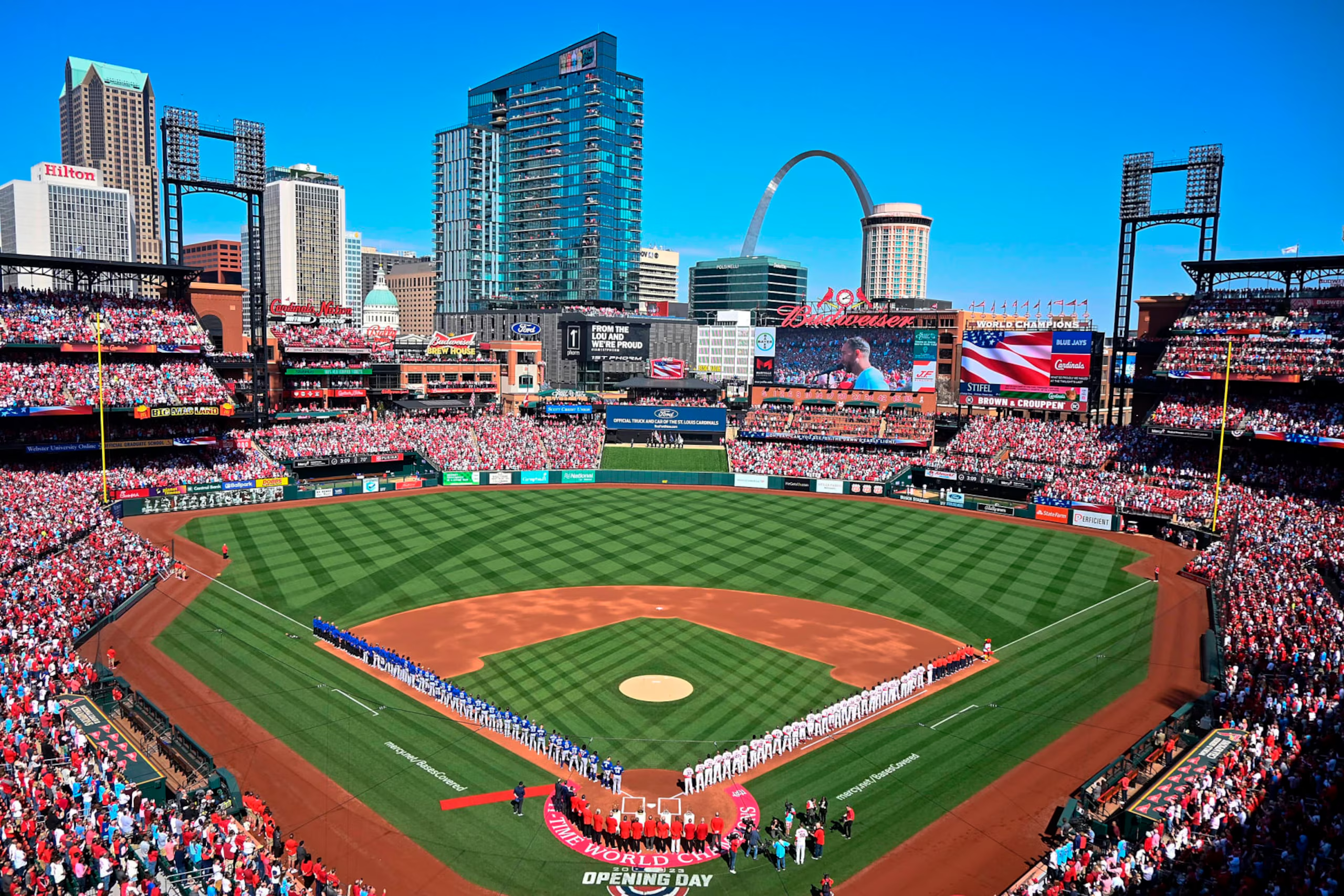
The biggest MLB stadium in 2026 is Dodger Stadium, home of the Los Angeles Dodgers, with a listed seating capacity of 56,000. Located in Los Angeles, California, the famous ballpark stands ahead of every other active Major League Baseball venue in terms of standard seating capacity.
Dodger Stadium has been a major part of American baseball since opening in 1962. More than six decades later, it remains one of the sport’s most recognisable venues, attracting thousands of supporters for regular-season games, playoff contests and other major baseball events.
The stadium’s large seating capacity gives it a significant advantage over other MLB ballparks. The next-largest venues, including Chase Field and T-Mobile Park, have capacities below 50,000.
For baseball fans researching the biggest MLB stadiums, Dodger Stadium is the clear starting point. However, the league has several other impressive ballparks, each with its own design, atmosphere and history.
1. Dodger Stadium – 56,000 Seats
- Team: Los Angeles Dodgers
- Location: Los Angeles, California
- Capacity: 56,000
- Opened: 1962
Dodger Stadium holds the title of the biggest MLB stadium by listed seating capacity. It is situated in the Chavez Ravine area of Los Angeles and provides views of the surrounding hills and city skyline.
The stadium opened in 1962 and has remained the Dodgers’ home since their early years in Los Angeles. It is also the third-oldest active ballpark in Major League Baseball, behind Fenway Park and Wrigley Field.
Over the years, the venue has hosted numerous memorable baseball moments, including World Series games and appearances by some of the sport’s biggest stars.
Despite its age, Dodger Stadium has received several upgrades. Improvements to its facilities, fan areas and player accommodation have helped maintain its position as a major destination for baseball supporters.
Its 56,000-seat capacity makes it the largest current MLB ballpark, providing room for a substantial crowd during important games.
2. Chase Field – 48,330 Seats

- Team: Arizona Diamondbacks
- Location: Phoenix, Arizona
- Capacity: 48,330
- Opened: 1998
Chase Field ranks among the largest baseball stadiums in Major League Baseball. It is home to the Arizona Diamondbacks and is located in downtown Phoenix.
One of its most distinctive features is its retractable roof, which allows games to take place in a climate-controlled environment during Arizona’s hot summer months.
The stadium opened in 1998 and has hosted regular-season games, postseason contests and major baseball events.
Its design combines traditional baseball seating with modern facilities, making it an important sporting venue in the region.
With more than 48,000 seats, Chase Field is one of the few MLB stadiums that comes relatively close to Dodger Stadium’s capacity.
3. T-Mobile Park – 47,929 Seats

- Team: Seattle Mariners
- Location: Seattle, Washington
- Capacity: 47,929
- Opened: 1999
T-Mobile Park is the home of the Seattle Mariners and one of the biggest baseball venues in the United States.
The stadium opened in 1999 and is known for its retractable roof, which protects spectators from Seattle’s frequent rain while allowing the venue to maintain an open-air feel.
Its location near downtown Seattle and its views of the surrounding city make it a distinctive destination for baseball fans.
The ballpark has undergone several improvements since opening, including upgrades to its seating areas, food services and fan facilities.
With a listed capacity of approximately 47,929, T-Mobile Park occupies one of the top positions among MLB stadiums.
4. Coors Field – 46,897 Seats
- Team: Colorado Rockies
- Location: Denver, Colorado
- Capacity: 46,897
- Opened: 1995
Coors Field is another major venue in the MLB stadium rankings. Located in Denver, Colorado, it has served as the home of the Colorado Rockies since 1995.
The ballpark is particularly famous for its high-altitude setting. Denver sits approximately one mile above sea level, a factor that affects how baseballs travel through the air and has historically contributed to the stadium’s reputation as a hitter-friendly venue.
Coors Field combines a traditional baseball design with views of the Rocky Mountains. Its spacious seating arrangement allows it to accommodate nearly 47,000 spectators.
The stadium also features an area known as the Rooftop, where supporters can enjoy the game in a more relaxed social setting.
5. Yankee Stadium – 46,537 Seats
- Team: New York Yankees
- Location: Bronx, New York
- Capacity: 46,537
- Opened: 2009
Yankee Stadium is one of the most famous sports venues in the world. It is home to the New York Yankees, one of baseball’s most successful and widely recognised franchises.
The current stadium opened in 2009, replacing the original Yankee Stadium, which had served the team for more than eight decades.
Although the new venue does not have the largest seating capacity in MLB, it remains an important landmark in American sports.
Its design incorporates features inspired by the original stadium, including elements of the famous exterior facade. Inside, fans can find modern facilities, premium seating and exhibits celebrating the history of the Yankees.
With a capacity of 46,537, Yankee Stadium completes the top five biggest MLB ballparks by the figures used in this 2026 ranking.
Top 10 Biggest MLB Stadiums by Capacity in 2026
The following table highlights ten of the largest active MLB stadiums based on their listed standard baseball capacities.
| Rank | Stadium | Home Team | Capacity |
| 1 | Dodger Stadium | Los Angeles Dodgers | 56,000 |
| 2 | Chase Field | Arizona Diamondbacks | 48,330 |
| 3 | T-Mobile Park | Seattle Mariners | 47,929 |
| 4 | Coors Field | Colorado Rockies | 46,897 |
| 5 | Yankee Stadium | New York Yankees | 46,537 |
| 6 | Angel Stadium | Los Angeles Angels | 45,517 |
| 7 | Oriole Park at Camden Yards | Baltimore Orioles | 44,970 |
| 8 | Busch Stadium | St. Louis Cardinals | 44,383 |
| 9 | Great American Ball Park | Cincinnati Reds | 43,500 |
| 10 | Citizens Bank Park | Philadelphia Phillies | 42,901 |
Capacities can vary slightly between sources and seasons depending on seating arrangements, standing-room areas and stadium configurations.
What Makes Dodger Stadium the Biggest MLB Stadium?
The main reason Dodger Stadium leads the MLB capacity rankings is its ability to accommodate 56,000 spectators in its standard baseball configuration.
Its large seating structure includes multiple levels, giving fans different viewing positions around the playing field.
The venue was designed to serve a large baseball market in Los Angeles, and its capacity has helped it accommodate substantial crowds throughout its history.
However, stadium size is not determined by seating capacity alone. Other factors include the playing field’s dimensions, the overall layout, available facilities and the number of spectators a venue can accommodate during special events.
Dodger Stadium’s combination of history, location and large capacity has helped establish its reputation as one of baseball’s most recognisable venues.
Biggest MLB Stadium vs Smallest MLB Stadium
While Dodger Stadium leads the capacity rankings, not every MLB venue is designed to accommodate such a large crowd.
The Athletics currently play their home games at Sutter Health Park in West Sacramento, California, a temporary venue with a much smaller listed capacity of approximately 13,416.
The team is expected to move to a new ballpark in Las Vegas, which has been projected to accommodate around 33,000 spectators.
This illustrates the considerable difference in stadium size across Major League Baseball. Some venues are designed to host crowds approaching 50,000, while others prioritise a more compact experience.
It is also worth distinguishing the Athletics’ temporary home from the smallest permanent MLB stadium. Tropicana Field, home of the Tampa Bay Rays, has a listed capacity of around 25,000 in its current configuration.
Why MLB Stadium Capacities Matter
Stadium capacity plays an important role in the business and entertainment side of professional baseball.
Larger venues provide teams with the potential to sell more tickets, accommodate bigger crowds and generate additional income from concessions, merchandise and premium seating.
However, a bigger stadium does not automatically mean a better fan experience. Smaller ballparks can offer more intimate viewing environments, while modern stadium designs often place greater emphasis on comfort, accessibility and entertainment facilities.
For teams, choosing the right stadium size involves balancing attendance demand, operating costs and the long-term needs of their supporters.
Dodger Stadium is the biggest MLB stadium in 2026, with a seating capacity of 56,000. The home of the Los Angeles Dodgers remains ahead of Chase Field, T-Mobile Park, Coors Field and Yankee Stadium in the league’s capacity rankings.
Although many MLB ballparks have impressive designs and histories, Dodger Stadium’s combination of size, tradition and continued use makes it the leading venue by standard seating capacity.
For baseball fans interested in the largest stadiums in the United States, it remains one of the most significant destinations in Major League Baseball.