A United Kingdom-backed education initiative that has supported more than two million Nigerian children and helped train over 25,000 teachers has officially ended after seven years of operation.
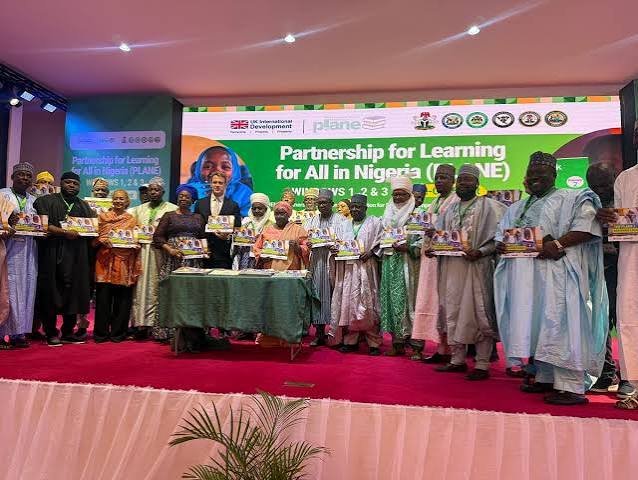
The Partnership for Learning for All in Nigeria (PLANE) programme concluded its activities at a closing ceremony in Kaduna State on Wednesday, October 28, 2026, bringing an end to an initiative established in 2019 to improve access to quality education and strengthen learning outcomes, particularly in northern Nigeria.
Although the programme has closed, its achievements have raised questions about whether Nigerian governments and education authorities can maintain the progress without continued financial and technical support from the United Kingdom.
The initiative focused on improving children’s reading, writing and numeracy skills while supporting teachers, strengthening education institutions and providing learning opportunities for vulnerable children.
PLANE Programme Supported More Than Two Million Children
Since its establishment in 2019, PLANE has worked with education authorities and communities to address some of Nigeria’s longstanding educational challenges.
The programme reached more than two million children and supported the training of over 25,000 teachers and facilitators across participating states.
Its activities covered foundational literacy and numeracy, education in emergency situations, community-based learning and child protection. It also helped education authorities improve school management, develop policies and strengthen the use of data in decision-making.
The programme operated across five northern states: Kaduna, Kano, Jigawa, Borno and Yobe, while also engaging federal education institutions.
Its implementation involved international development organisations, including DAI, UNICEF and Save the Children, alongside other partners.
UK Government Calls for Sustainability of Education Reforms
British High Commissioner to Nigeria, Pete Vowles, said the programme had demonstrated the benefits of cooperation between governments, teachers, local communities and international development partners.
Speaking at the closing event, he emphasised that the most important issue following the programme’s conclusion was how its achievements would be preserved.
Vowles expressed encouragement that Nigerian institutions were already adopting some of the approaches introduced through PLANE, adding that the end of the initiative would not mean the end of Britain’s education partnership with Nigeria.
His remarks highlighted the need for state and federal authorities to take greater responsibility for sustaining improvements in teaching standards and children’s learning outcomes.
Kaduna Highlights Gains From the Programme
Kaduna State Deputy Governor Hadiza Balarabe, who represented Governor Uba Sani at the ceremony, acknowledged the contributions of the British government, the Foreign, Commonwealth and Development Office, and the organisations involved in implementing the programme.
She said PLANE had worked directly with government officials, teachers and communities, including those in remote locations where access to quality education remains difficult.
Kaduna State Commissioner for Education, Professor Abubakar Sani Sambo, also outlined some of the programme’s achievements in the state.
According to him, more than 6,300 teachers and approximately 700 head teachers received training, while 737,000 learning materials were distributed to schools.
He added that 76,125 learners benefited from community-based education activities. Among them were 40,958 girls and 4,389 children living with disabilities.
The programme also supported life-skills activities for 1,345 adolescents and provided child-protection assistance to 2,811 children.
Sambo further disclosed that interventions supported by the programme helped more than 25,000 out-of-school children return to learning across Kaduna’s 23 local government areas.
Five Northern States Urged to Protect PLANE’s Achievements
Education commissioners from Kaduna, Kano, Jigawa, Borno and Yobe have been encouraged to incorporate successful interventions from PLANE into their existing education policies and budgets.
The participating states face the challenge of maintaining teacher development programmes, community learning initiatives and support systems for children who are at risk of dropping out of school.
Borno State Commissioner for Education Abba Wakilbe said the programme’s long-term value would depend on what governments achieved after its closure.
His position reflects a wider concern among education stakeholders that development projects should not lose their impact when external funding comes to an end.
The Federal Ministry of Education has also emphasised the importance of partnerships, reliable education data and innovation in improving school attendance and learning outcomes.
UK Reaffirms Commitment to Nigeria’s Education Sector
Although PLANE has ended, British officials say cooperation with Nigerian educational institutions will continue through other partnerships.
Cynthia Rowe, Head of Development Cooperation at the British High Commission, described education as a major investment in the future of any country.
She said the programme demonstrated how research, innovation and collaboration could contribute to improving educational opportunities.
Rowe also pointed to continued UK engagement with Nigerian schools, universities and communities, including partnerships aimed at developing advanced technical and professional skills.
During the visit, UK representatives toured the College of Petroleum and Energy Studies in Kaduna, where Nigerian institutions are working with British universities to expand educational and professional opportunities.
What Happens After the PLANE Programme Ends?
The conclusion of PLANE marks an important moment for Nigeria’s education sector, particularly in northern communities where poverty, insecurity, displacement and limited school facilities continue to affect children’s access to education.
While reaching more than two million children represents a significant achievement, the programme’s lasting success will depend on whether governments can continue funding the interventions and maintaining the systems developed over seven years.
Teacher training, access to learning materials, community participation and child-protection programmes will require sustained attention.
For Nigeria, the challenge is now to turn the knowledge and institutional capacity developed through the UK-funded initiative into long-term improvements that benefit future generations.
The end of PLANE may close a seven-year development programme, but the responsibility for improving education across the participating states now rests increasingly with Nigerian authorities.