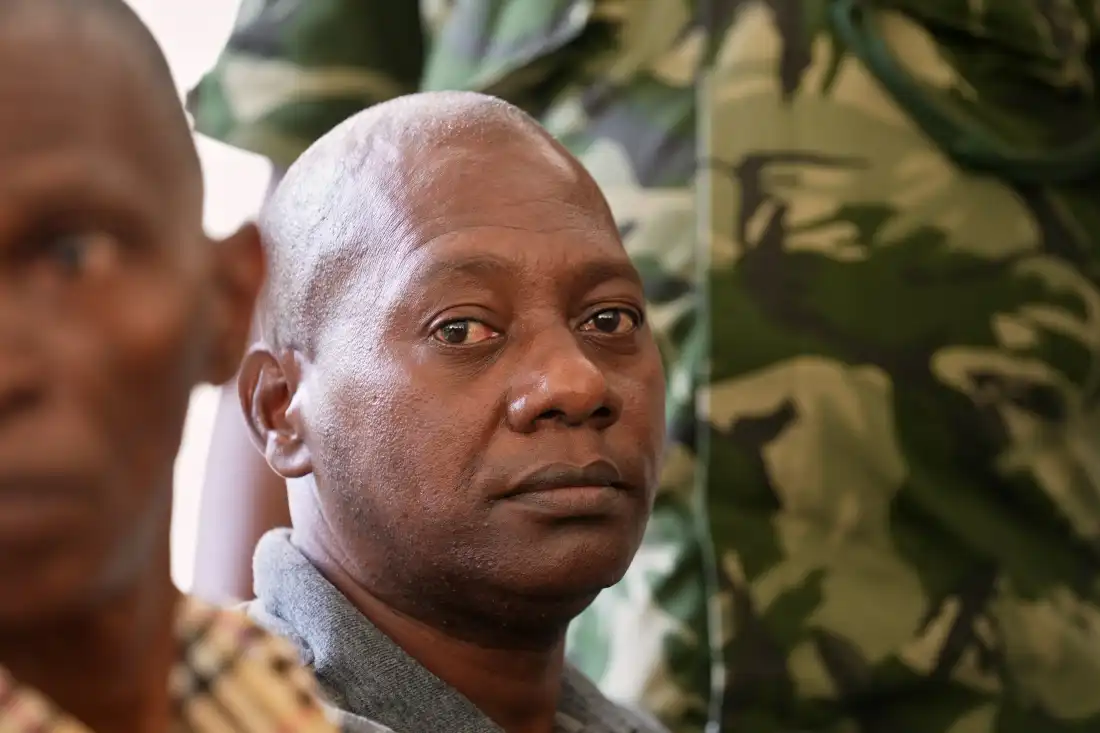
A Kenyan court has sentenced self-proclaimed preacher Paul Mackenzie to 200 years in prison for his role in the deaths of 191 people, including 190 children, in one of the country’s most disturbing religious cult cases.
The sentence was delivered on Friday, November 6, 2026, at the High Court in Mombasa, following Mackenzie’s conviction for murders connected to the Shakahola Forest tragedy.
Mackenzie, who led the Good News International Church, was accused of persuading followers to starve themselves and their children in the belief that dying through fasting would allow them to meet Jesus before the end of the world.
The court imposed two separate 100-year prison terms on the preacher: one for homicide offences and another for murders resulting from starvation. The sentences will run consecutively, bringing his total prison term to 200 years.
Twenty-eight other defendants convicted alongside Mackenzie also received lengthy prison sentences for their involvement in the deaths.
The ruling represents a major development in a case that has attracted international attention and raised serious questions about religious exploitation, child protection and the oversight of religious organisations in Kenya.
Court Holds Mackenzie Responsible for Shakahola Deaths
Justice Diana Kavedza said Mackenzie bore primary criminal responsibility for moving followers to a remote location and directing them to undertake deadly fasting practices.
The victims were members of his religious movement, which operated from the Shakahola area in Kilifi County, near the coastal town of Malindi.
Prosecutors argued that Mackenzie used his religious influence to convince followers that refusing food would help them reach heaven. The court heard that some accomplices also threatened, assaulted and controlled members to ensure they followed the instructions.
Investigators uncovered evidence that the victims suffered prolonged starvation, while others died through direct acts of violence.
The 191 murder convictions covered deaths that occurred between January 2021 and September 2023. Mackenzie and 28 co-defendants were found guilty in October 2026 after a lengthy trial.
The preacher had denied forcing anyone to starve and rejected the murder allegations. However, the court dismissed his defence and found him criminally responsible for the deaths covered by the case.
190 Children Among the 191 Victims
The number of children killed in the Shakahola case has been one of its most distressing features.
Of the 191 victims covered by the murder convictions, 190 were children and only one was an adult.
The court distinguished between victims who died from starvation and those classified as victims of direct homicide. According to reporting on the judgment, 183 people died from starvation, while eight were killed through direct acts of violence.
The case exposed the extreme conditions under which Mackenzie’s followers lived. Members were reportedly encouraged to abandon conventional institutions, including schools and hospitals, which the preacher portrayed as incompatible with his religious teachings.
Some families followed these instructions by withdrawing children from education and avoiding medical treatment.
The prosecution’s case also highlighted the vulnerability of children who depended entirely on adults for food, healthcare and protection.
The judge’s ruling placed responsibility on Mackenzie and his accomplices for the deaths, rejecting attempts to distance the accused from the consequences of the fasting instructions.
How the Shakahola Forest Massacre Was Discovered
The tragedy came to public attention in 2023 after authorities received information about people allegedly starving their children in the Shakahola Forest.
Police investigations eventually led to the discovery of mass graves and the recovery of hundreds of bodies from the area.
The site was part of a large ranch in Kilifi County where Mackenzie’s followers had settled in isolated makeshift homes.
As investigators expanded their searches, the scale of the deaths became increasingly clear. Authorities recovered bodies from shallow graves and other locations, while forensic teams worked to establish the identities and causes of death.
More than 400 bodies have been recovered in connection with the wider Shakahola investigation. Kenyan human rights authorities previously placed the death toll at 429, although investigations into other suspected deaths have continued.
Many victims were difficult to identify, leaving relatives uncertain about the fate of missing family members.
The discovery triggered national outrage and renewed scrutiny of how Mackenzie had been able to operate his religious movement despite previous encounters with law enforcement.
Accomplices Also Receive Lengthy Prison Terms
Mackenzie was not the only person punished over the deaths.
The 28 co-defendants convicted alongside him received different prison terms based on their respective roles in the crimes.
Those involved included individuals accused of enforcing the fasting instructions, controlling followers and helping conceal victims’ bodies.
The prosecution had asked the court to impose the death penalty on Mackenzie and life imprisonment for his accomplices, arguing that the scale of the killings demanded the strongest possible punishment.
However, the court opted for lengthy prison sentences instead.
Mackenzie’s defence lawyer indicated that an appeal would be pursued, meaning the legal battle surrounding the convictions and sentences may continue.
Mackenzie Faces Other Criminal Cases
The 200-year sentence does not bring all proceedings against the preacher to an end.
Mackenzie is also facing separate charges relating to terrorism, manslaughter and other alleged offences connected to the wider Shakahola investigations. He has denied the accusations in those cases.
Authorities are continuing to investigate additional deaths linked to the religious movement, including a separate case involving 52 people reportedly found dead in the Kwa Binzaro area.
The distinction between the 191 murder convictions and the wider death toll is important. The 200-year sentence relates specifically to the 191 victims covered by the case decided in October, not every death associated with the wider investigation.
Kenya Faces Renewed Calls for Stronger Religious Oversight
The Shakahola tragedy has intensified public debate over the regulation of religious organisations in Kenya, where churches and other faith-based institutions play an important role in community life.
The case raised concerns about how individuals can use religious authority to influence followers, particularly when teachings encourage isolation, rejection of medical care or practices that endanger children.
Mackenzie had reportedly faced previous arrests and investigations before the mass graves were discovered. His ability to continue operating has prompted questions about whether earlier intervention by authorities could have prevented some of the deaths.
Families of victims have also called for greater accountability and assistance in identifying and recovering the remains of their relatives.
For many survivors and relatives, the court’s decision offers a measure of legal accountability, but it cannot undo the loss of hundreds of lives or resolve the uncertainty surrounding missing family members.
The 200-year prison term marks a significant moment in Kenya’s response to the Shakahola Forest massacre. It also places renewed attention on the responsibility of authorities to identify dangerous practices early, protect vulnerable people and ensure that religious freedom is not used as a cover for criminal abuse.