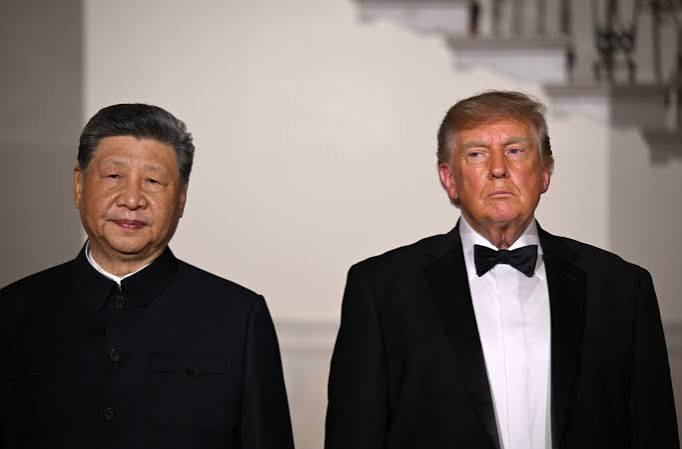
The United States has released details of product categories that could qualify for reduced tariffs under a new trade arrangement reached with China following a summit between US President Donald Trump and Chinese President Xi Jinping.
The proposed arrangement covers approximately $30 billion worth of goods moving in each direction, although Washington has not yet announced the specific tariff rates or when the reductions will take effect.
The White House said both countries would review the products identified in the agreement with the aim of applying lower tariff treatment on a reciprocal basis.
The announcement comes after Trump and Xi concluded their latest summit on Friday, with trade and economic relations among the major issues discussed.
77 Chinese product categories identified
Under the US proposal, 77 categories of Chinese goods have been identified for possible tariff reductions.
The products include fireworks, Christmas decorations, household items and sporting equipment. Toys and other consumer-related products are also included in the broader list released in connection with the agreement.
The products have been classified as non-sensitive goods, meaning the proposed tariff changes are aimed primarily at easing duties on items considered less strategically sensitive.
However, the announcement does not mean the lower tariffs have already taken effect.
The two governments still have to complete their respective domestic procedures before the changes can be implemented.
China identifies more than 1,600 US goods
China’s side of the proposed arrangement covers a much larger number of product categories.
The US statement identified 1,619 categories of American goods that could receive improved tariff treatment when entering the Chinese market.
The products include meat, seafood, dairy products, grains, coal and timber, as well as medical equipment.
The arrangement could therefore provide opportunities for American agricultural producers and other exporters that have faced higher barriers in the Chinese market during the recent trade dispute.
China has also indicated that tariff reductions would be implemented simultaneously after both sides complete the necessary legal and administrative procedures.
Trade tensions begin to ease
The proposed tariff reductions represent another step in efforts by Washington and Beijing to stabilise relations after a prolonged period of escalating trade restrictions.
The two economic powers have imposed tariffs on each other’s products during a dispute that at one point saw some duties climb above 100 per cent.
The latest arrangement follows a trade truce reached by Trump and Xi during a meeting in South Korea last year.
That agreement was initially scheduled to expire in November. However, US Treasury Secretary Scott Bessent said the two sides had agreed to extend the truce until January 10.
The new product lists could therefore provide a mechanism for reducing some of the trade barriers while negotiations continue on broader economic issues.
US coal exports to China
Energy trade is another significant element of the latest agreement.
According to the White House, China has committed to purchasing at least 10 million metric tonnes of US coal in both 2027 and 2028.
The commitment could create additional opportunities for American coal producers while increasing China’s purchases of US energy commodities.
The coal commitment comes after Chinese purchases of US coal declined sharply during the trade dispute.
Beyond tariffs and commodity purchases, the two countries are also seeking to maintain communication through new channels covering areas such as trade and agriculture.
What happens next?
Despite the announcement, the proposed tariff reductions are not yet final in practical terms.
The White House has not provided a timetable for when the lower rates will become effective, nor has it specified the exact tariff levels that will apply to individual products.
The lists are therefore best viewed as part of an ongoing process rather than a completed tariff overhaul.
China has separately confirmed the broad arrangement and said the two sides will implement the reductions in line with their domestic procedures.
For businesses in both countries, the timing and final rates will be important because tariff changes can influence the cost of importing and exporting goods.
US retailers and manufacturers that depend on Chinese household products, sporting equipment, toys and other consumer goods could potentially benefit if lower duties are ultimately introduced.
Likewise, American farmers, food producers, energy companies and other exporters could gain greater access to the Chinese market if Beijing reduces tariffs on the products covered by the arrangement.
The latest development signals a move towards easing some of the trade pressure between Washington and Beijing, although major issues remain unresolved.
For now, businesses and investors will be watching for further announcements from both governments on the final tariff rates, implementation dates and any additional products that may be added to the agreement.