Millions of people displaced by Sudan’s ongoing war are facing an increasingly severe shelter crisis as humanitarian organisations struggle with depleted emergency supplies and a shortage of funding ahead of the approaching winter season.
United Nations agencies have warned that millions of vulnerable people could be left without adequate protection from harsh weather conditions as humanitarian warehouses run empty and relief operations fall far short of growing needs.
According to figures released by the United Nations on November 6, 2026, between 13.4 million and 15.4 million people in Sudan urgently require emergency shelter assistance.
However, the funding available to humanitarian organisations remains significantly below the amount needed to provide adequate support.
Abubakarr Jalloh, deputy representative of the United Nations High Commissioner for Refugees (UNHCR) in Sudan, said only 35 per cent of the $179 million required for the country’s collective shelter response in 2026 had been secured.
The warning highlights the worsening humanitarian consequences of a conflict that has displaced millions, destroyed homes and disrupted access to basic services across the country.
IOM Reports Empty Humanitarian Warehouses
The International Organization for Migration (IOM) has reported that its emergency supply warehouses in Sudan are completely empty, leaving the agency with limited capacity to respond to the growing demand for shelter materials.
Mohamed Refaat, IOM’s chief of mission in Sudan, said the organisation had recently distributed its remaining supplies, sending 16 trucks carrying humanitarian assistance to communities in Darfur.
The agency has been forced to reduce the scale of its operations, limiting its intended response to approximately one in every 10 people requiring emergency shelter.
Even with that reduced target, IOM has managed to reach only about 900,000 people.
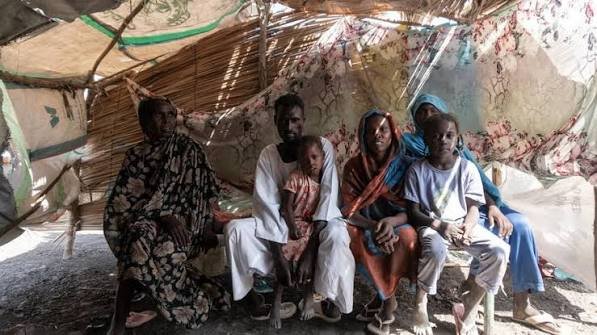
The shortage means millions of displaced families could remain without essential items such as emergency tents, blankets, mattresses and other materials needed to establish temporary accommodation.
Humanitarian agencies say the situation is particularly concerning because many displaced people have already lost their homes, livelihoods and personal belongings during the fighting.
Women and Children Face Greater Protection Risks
The shelter emergency has created additional concerns for women and children, who make up a significant proportion of Sudan’s displaced population.
UN officials estimate that approximately three out of every four displaced people are women and children.
For these groups, access to safe and secure accommodation is not simply a matter of protection against bad weather. Proper shelter also provides privacy, dignity and security, particularly for families living in overcrowded displacement sites.
Without adequate accommodation, women and children may face increased exposure to exploitation, violence, illness and other protection risks.
The approaching winter season is expected to make these conditions more difficult, especially in Darfur and northern parts of Sudan, where nighttime temperatures are forecast to fall considerably.
Aid organisations are therefore calling for additional financial contributions and emergency supplies to reach vulnerable communities before weather conditions deteriorate further.
Blue Nile Among Areas Facing Fresh Displacement
Sudan’s humanitarian emergency is being intensified by the expansion of fighting into previously less affected areas.
Blue Nile State has emerged as another major displacement hotspot, with nearly 120,000 people reportedly forced from their homes since January 2026.
The continued movement of civilians is putting additional pressure on humanitarian agencies already struggling to support established displacement communities in Darfur and other regions.
The situation also makes it more difficult to plan relief operations because new groups of displaced people require immediate assistance while existing communities continue to face shortages.
Almost 15 million people have been uprooted by the war or are attempting to rebuild their lives in areas devastated by the fighting.
Some families have moved several times in search of safety, while others are returning to communities where homes and essential infrastructure have been destroyed.
Rising Food Prices Make Shelter More Difficult to Afford
The shelter crisis is also connected to Sudan’s worsening economic and food insecurity conditions.
UNHCR’s Jalloh said extreme inflation and harvest disruptions associated with El Niño had pushed the prices of staple grains up by 40 per cent in September alone.
For households that have lost their income and property, rising food prices leave very little money for other essential needs.
Families are increasingly forced to choose between purchasing food and obtaining materials needed to protect themselves from harsh weather.
This financial pressure makes displaced households more dependent on humanitarian assistance at a time when aid organisations are struggling to secure funding.
The combination of expensive food, limited employment opportunities and inadequate shelter is creating increasingly difficult living conditions for communities affected by the conflict.
Drone Attacks Complicate Humanitarian Operations
The delivery of emergency assistance has also become more dangerous because of continued insecurity and attacks on humanitarian infrastructure.
UNHCR reported that its trucks were targeted in two separate drone strikes during 2026.
The attacks destroyed emergency shelter materials and other supplies intended for more than 1,300 families in White Nile State.
Such incidents have further complicated efforts to deliver assistance to people living in remote and conflict-affected areas.
Humanitarian organisations must contend with damaged roads, insecurity, logistical difficulties and the risk of supplies being destroyed before reaching intended recipients.
The challenges have raised concerns about whether international aid agencies can maintain their operations at the scale required to address Sudan’s growing needs.
Millions Return to Northern Sudan but Find Homes Destroyed
Despite the continued conflict, approximately 5.2 million people have returned to northern Sudan.
However, returning home has not necessarily meant that these families can resume normal lives.
Many have discovered that their houses were destroyed or looted during the fighting. Others have returned to communities where access to clean water, healthcare and other essential services remains severely limited.
The absence of basic infrastructure has forced some returnees to leave again in search of safer living conditions and better access to assistance.
This situation illustrates the difficulty of achieving lasting recovery while fighting continues and essential public services remain disrupted.
For humanitarian agencies, supporting returnees is becoming another major responsibility alongside assisting people who remain displaced.
UN Warns Sudan Crisis Could Affect Neighbouring Countries
IOM’s Refaat warned that the failure to deliver emergency supplies on a much larger scale could have consequences beyond Sudan’s borders.
If displaced families cannot access adequate shelter and basic assistance inside the country, pressure on neighbouring states could increase as more people seek protection elsewhere.
Sudan’s prolonged conflict has already placed significant pressure on humanitarian resources across the region, particularly in countries hosting refugees and people fleeing the fighting.
The United Nations is therefore urging the international community to increase financial contributions and support the delivery of essential supplies.
With humanitarian warehouses depleted and only a fraction of the required shelter funding secured, the coming months could become particularly difficult for millions of vulnerable Sudanese.
The latest warning underscores the urgency of addressing the country’s shelter emergency before winter conditions worsen and the humanitarian situation becomes even more difficult to manage.