The African Bar Association (AfBA) has called for international mediation, justice for victims and a comprehensive political settlement to end Cameroon’s Anglophone crisis, which has entered its tenth year.
In resolutions adopted at its 2026 annual conference in Cabo Verde, the continental legal organisation urged the parties involved in the conflict to address the historical and political grievances behind the violence in the country’s North-West and South-West regions.
The association also demanded accountability for human rights violations, compensation for victims and improved humanitarian access to communities affected by the prolonged insecurity.
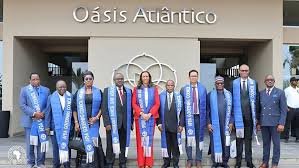
The recommendations were contained in resolutions adopted during the conference held from September 20 to 24 at the Oasis Atlantico Hotel Belorizonte on the island of Sal. The communiqué was subsequently made public on October 29, bringing renewed attention to the continuing conflict.
The conference brought together lawyers, judicial officials, government representatives, security experts and civil society organisations from Africa and beyond. It was led by AfBA President High Chief Ibrahim Eddy Mark, while former United Nations Under-Secretary-General Professor Ibrahim Agboola Gambari delivered the keynote address.
African Bar Association condemns violence in Cameroon
In its Resolution 45, the association condemned reported abuses in the English-speaking regions, including extrajudicial killings, arbitrary arrests, torture, sexual and gender-based violence, and attacks on schools, students and humanitarian workers.
The organisation also expressed concern about civilian deaths attributed to both government security forces and armed separatist groups.
By identifying abuses allegedly committed by both sides, the association stressed that the protection of civilians must remain a priority regardless of the parties involved.
The Anglophone crisis began in 2016, when lawyers and teachers in Cameroon’s English-speaking regions organised protests over concerns about the treatment of their legal and educational systems.
Lawyers raised objections to the increasing use of French in common-law courts, while teachers protested against developments they believed threatened the English-language education system.
The demonstrations later expanded into a wider political movement. A heavy security response, growing demands for autonomy and the emergence of armed separatist groups contributed to the conflict that has continued for a decade.
AFBA seeks internationally backed mediation
One of the association’s central recommendations is the introduction of internationally mandated mediation to address the underlying causes of the crisis.
In Resolution 46, the organisation called for negotiations that would consider historical grievances, perceived marginalisation and demands for greater autonomy or federalism.
These issues have remained central to disagreements between the Cameroonian government and different Anglophone groups.
The government has maintained its position on national unity and territorial integrity, while introducing decentralisation measures and granting special status to the North-West and South-West regions.
Separatist groups, however, continue to pursue independence, while other stakeholders have advocated federalism, greater regional autonomy or constitutional reforms within a united Cameroon.
The African Bar Association’s proposal does not endorse a particular constitutional arrangement. Instead, it calls for an internationally supported process capable of bringing the competing positions to the negotiating table and addressing the grievances that have sustained the conflict.
The association’s position reflects its view that a lasting settlement requires more than security measures and must also address the political and institutional questions at the heart of the dispute.
Association demands justice and compensation for victims
The legal organisation also called for a comprehensive transitional justice mechanism to investigate serious violations, establish accountability and provide reparations to people affected by the conflict.
Under Resolution 47, the proposed mechanism would be expected to hold perpetrators of atrocity crimes accountable, provide remedies for victims and introduce safeguards to prevent similar abuses in the future.
The association further emphasised that communities affected by the violence should participate fully in the process.
Such a framework could address allegations of unlawful killings, torture, arbitrary detention, sexual violence and attacks on civilian infrastructure. However, the association has not outlined the precise structure or membership of the proposed mechanism.
Its recommendation places justice and compensation alongside political negotiations, suggesting that any settlement should consider the experiences of victims and survivors rather than focus solely on ending armed confrontations.