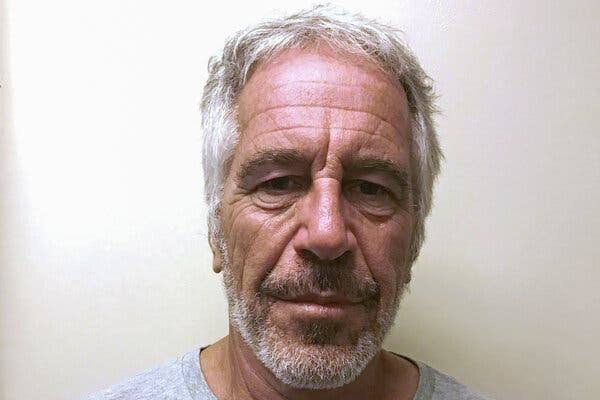
Jeffrey Epstein was an American financier whose wealth, relationships with influential people and criminal activities made him one of the most controversial figures in modern American history. Although he built a fortune through financial management and advisory services, his reputation became closely associated with allegations of sexual abuse and the trafficking of underage girls.
Epstein was convicted of sex-related offences in Florida in 2008 and was arrested again in 2019 on federal sex-trafficking charges. He died in a New York jail cell on August 10, 2019, before his federal trial could take place.
His death generated widespread public debate, particularly because of the powerful people he had associated with and the failures surrounding his detention. His estate, financial dealings and connections have continued to attract attention years after his death.
This article examines Jeffrey Epstein’s estimated net worth, career, early life, family background, criminal history, relationships and death.
Jeffrey Epstein’s net worth
At the time of his death in August 2019, Jeffrey Epstein’s estimated net worth was approximately $560 million, according to financial information filed in connection with his criminal case.
Other estate documents initially placed the value of his assets above $636 million. The difference reflects variations in the valuation of his properties, investments, business interests and other holdings.
Epstein accumulated considerable wealth through financial management, investment advice and relationships with wealthy businesspeople. However, the full origins of his fortune remained a subject of scrutiny, particularly because he operated a relatively private financial business and did not publicly disclose detailed information about many of his clients.
His assets included several expensive properties and luxury possessions, such as:
-
A large townhouse in Manhattan, New York.
-
A mansion in Palm Beach, Florida.
-
A ranch in New Mexico.
-
An apartment in Paris, France.
-
Two private Caribbean islands, Little St. James and Great St. James.
-
Private aircraft, vehicles, artwork and other valuable possessions.
His Caribbean properties became particularly notorious because Little St. James was repeatedly mentioned in allegations involving the sexual exploitation of girls and young women.
After his death, the estate faced legal claims, settlements, taxes and substantial administrative expenses. The US Virgin Islands also pursued legal action connected to Epstein’s activities in the territory. His properties were subsequently sold, including the two Caribbean islands, which were purchased in 2023 by businessman Stephen Deckoff for $60 million.
It is therefore important to distinguish Epstein’s estimated wealth at the time of his death from the value of the estate after legal settlements and asset sales.
Early life and education
Jeffrey Edward Epstein was born on January 20, 1953, in Brooklyn, New York, United States.
He grew up in a middle-class Jewish family in the Sea Gate neighbourhood of Brooklyn. His parents were Seymour Epstein and Paula Epstein, who came from families of Jewish immigrants.
His father worked as a groundskeeper and gardener for New York City’s parks department, while his mother was primarily a homemaker.
Epstein was the elder of two children and had a younger brother, Mark Epstein.
During his childhood, he reportedly demonstrated strong academic abilities, particularly in mathematics. He was also interested in music and learned to play the piano.
He attended Lafayette High School in Brooklyn and graduated in 1969 after reportedly skipping two academic grades.
Following secondary school, Epstein studied at Cooper Union and later attended New York University’s Courant Institute of Mathematical Sciences. However, he did not complete a university degree.
Despite lacking a college qualification, he eventually secured a teaching position at one of Manhattan’s prestigious private schools, marking the beginning of his professional career.
Jeffrey Epstein’s career and how he made his money
Epstein began his professional life in education before moving into the financial industry.
Teaching career
In 1974, he became a mathematics and physics teacher at the Dalton School, an elite private institution in Manhattan.
The school served children from wealthy and influential families, giving Epstein access to social circles that would later become important in his financial career.
He remained at Dalton until 1976, when he left following concerns about his teaching performance.
During his time there, he developed connections with parents whose professional networks included influential figures in business and finance.
Working at Bear Stearns
Epstein’s transition into finance came through his relationship with Alan Greenberg, then chief executive of the Wall Street investment firm Bear Stearns.
He joined the company in 1976 and gradually moved into more senior positions.
At Bear Stearns, Epstein worked in financial trading and developed experience in investment management. He eventually became a limited partner, a significant position within the company.
However, questions surrounding his conduct and business practices reportedly created difficulties during his time there.
He left Bear Stearns in 1981 and subsequently established himself as an independent financial adviser.
Establishing his own financial business
After leaving the investment bank, Epstein worked with wealthy individuals, offering financial advice and helping clients recover money from complicated financial arrangements.
In 1988, he established J. Epstein & Company, a private financial management firm that reportedly focused on clients with substantial fortunes.
One of his most important business relationships was with Leslie Wexner, the billionaire businessman behind the retail empire associated with Victoria’s Secret and other major brands.
Epstein gained considerable influence over aspects of Wexner’s financial affairs and managed significant portions of his wealth.
He also received substantial payments from other wealthy individuals, including Leon Black, the co-founder of Apollo Global Management. According to information reported by CBS News in February 2026, Black paid Epstein $158 million for tax and estate planning services.
Although Epstein became known as a billionaire’s financial adviser, his precise investment strategies and the complete origins of his wealth remained difficult for outsiders to establish.
Family, relationships and personal life
Jeffrey Epstein came from a family based in Brooklyn, New York.
His parents, Seymour and Paula Epstein, raised him alongside his younger brother, Mark. Unlike Epstein, his immediate family members generally maintained a much lower public profile.
Epstein never married and had no publicly known children.
One of the most significant relationships in his personal life was with British socialite Ghislaine Maxwell.
Maxwell was the daughter of British media businessman Robert Maxwell. She became closely associated with Epstein during the 1990s and was part of his social and professional circle.
Prosecutors later accused her of helping Epstein recruit and groom underage girls for sexual abuse.
In December 2021, a US federal jury convicted Maxwell on five counts connected to the sexual exploitation and trafficking of minors. She was sentenced to 20 years in prison in June 2022.
Epstein also developed relationships with influential business executives, politicians, academics, celebrities and members of royal circles.
His associations included former US presidents, prominent technology figures and British royal circles. However, appearing in photographs, contact books, flight records or other documents connected to Epstein does not, by itself, establish that an individual participated in or knew about his criminal activities.
Criminal history and sexual abuse allegations
Epstein’s criminal history became a major international issue following investigations into allegations that he sexually abused underage girls.
The first major police investigation began in Florida in 2005 after the family of a teenage girl reported that she had been sexually abused at Epstein’s Palm Beach residence.
Investigators subsequently received accounts from other girls and young women, leading to a wider investigation involving local police and federal authorities.
In 2008, Epstein entered a controversial agreement with federal prosecutors in Florida. Rather than facing federal prosecution at that time, he pleaded guilty to two state prostitution-related offences, including soliciting prostitution from a minor.
He received an 18-month sentence but served approximately 13 months in custody, with work-release privileges that allowed him to leave prison for approved activities.
The agreement attracted widespread criticism because of its lenient terms and the way it was negotiated. It also became the subject of years of legal and public scrutiny.
In 2018, investigative reporting by the Miami Herald renewed attention to the case and brought additional accounts from alleged survivors into public discussion.
In July 2019, federal authorities arrested Epstein in New Jersey and charged him with sex trafficking of minors and conspiracy to commit sex trafficking.
Prosecutors alleged that he had sexually exploited numerous underage girls, some of whom were recruited to provide access to other victims.
Epstein pleaded not guilty to the federal charges. He died before the case could proceed to trial, meaning those 2019 charges were never resolved through a trial verdict against him.
Jeffrey Epstein’s death
Jeffrey Epstein died on August 10, 2019, at the Metropolitan Correctional Center in Manhattan, New York.
He was 66 years old and was being held while awaiting trial on federal sex-trafficking charges.
Authorities found him unresponsive in his jail cell. The New York City medical examiner ruled his death a suicide by hanging.
His death immediately attracted international attention because of the seriousness of the allegations against him and his connections to prominent individuals.
There were also major questions about how he had been monitored while in custody.
Epstein had previously been found with injuries to his neck in July 2019, prompting concerns about his safety. He was later removed from suicide watch.
On the night before his death, prison procedures were not properly followed. Guards failed to carry out required checks, and surveillance arrangements were affected by equipment problems.
The US Department of Justice’s inspector general subsequently identified serious failures by prison staff, including neglect of monitoring responsibilities.
In 2025, a joint FBI and Department of Justice review reaffirmed the official conclusion that Epstein died by suicide and reported that investigators found no evidence establishing that he had been murdered.
Although conspiracy theories about his death have continued to circulate, the official findings have not established that another person killed him.
What happened to Jeffrey Epstein’s estate?
Following his death, Epstein’s fortune became the subject of extensive legal proceedings.
His estate was initially valued at more than $636 million in probate-related documents. It included cash, investments, real estate, aircraft, artwork, business entities and other assets.
However, the value of the estate declined as it faced legal settlements, taxes, property maintenance costs and legal fees.
A compensation programme was established to provide payments to people who said they had been sexually abused by Epstein.
According to reporting by The New York Times, settlements and related expenses had significantly reduced the estate’s value by early 2022.
The estate’s legal and financial matters have remained an important part of the wider effort to address the consequences of Epstein’s activities and provide compensation to survivors.
Jeffrey Epstein’s legacy
Jeffrey Epstein’s story remains significant because it exposed questions about wealth, influence, criminal accountability and the treatment of victims.
His financial success allowed him to move among some of the world’s most influential social and business circles. At the same time, investigations revealed a pattern of sexual exploitation that resulted in a criminal conviction in 2008 and federal trafficking charges in 2019.
The conviction of Ghislaine Maxwell further demonstrated that other individuals could face criminal accountability for their roles in the abuse.
The release of investigative and court documents has also generated public interest in Epstein’s relationships with powerful people. However, the presence of a person’s name in released records should not be treated as proof of criminal wrongdoing.
Ultimately, Epstein’s life is remembered not simply for the fortune he accumulated but also for the serious crimes, institutional failures and unresolved questions surrounding his activities.