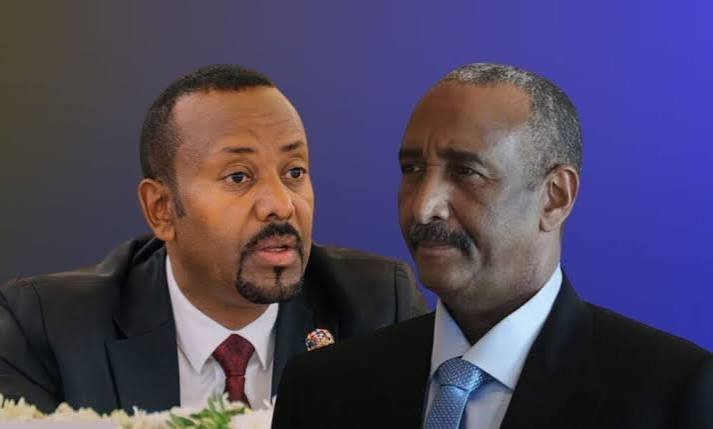
Sudan and Ethiopia have taken reciprocal diplomatic measures against each other, deepening tensions between the neighbouring countries amid accusations that both governments are supporting armed groups involved in their respective conflicts.
The diplomatic dispute intensified on Wednesday, November 4, 2026, after Ethiopia ordered six Sudanese diplomatic and consular officials to leave the country within 48 hours and announced the closure of Sudan’s consulate in the western Ethiopian town of Assosa.
Sudan subsequently responded by declaring Ethiopian consular personnel in the eastern Sudanese city of Gedaref unwelcome and ordering them to leave within the same 48-hour period, according to Sudanese government officials cited by AFP.
The developments represent a further deterioration in relations between the two countries, which share a border and have become increasingly entangled in competing security concerns.
The dispute centres on allegations that Ethiopia is providing assistance to Sudan’s paramilitary Rapid Support Forces (RSF), while Addis Ababa accuses Sudan of supporting armed groups linked to the conflict in Ethiopia’s northern Tigray region.
Both governments have rejected allegations directed against them.
Ethiopia orders Sudanese diplomats to leave
Ethiopia’s decision to expel six Sudanese diplomatic officials was first reported by international news agencies, citing Ethiopian officials familiar with the matter.
The affected personnel were attached to Sudan’s consulate in Assosa, a town in Ethiopia’s Benishangul-Gumuz region, close to the Sudanese border.
Ethiopian authorities reportedly gave the officials 48 hours to leave the country and ordered the closure of the Sudanese diplomatic mission.
A Sudanese official confirmed that Ethiopia had summoned Sudan’s ambassador on Sunday to communicate the decision concerning the consulate.
According to reports, the six officials had left Ethiopia by Tuesday evening. However, Ethiopian authorities did not publicly provide a detailed explanation for the expulsions.
Sudan responded by taking similar action against Ethiopian diplomatic personnel stationed in Gedaref, a city in eastern Sudan near the Ethiopian border.
Two Sudanese government officials told AFP that the Ethiopian consular employees had been informed they were no longer welcome in the country and were instructed to depart within 48 hours.
The reciprocal expulsions have increased concerns about the future of diplomatic relations between the neighbours, particularly as both countries face serious internal security challenges.
Sudan accuses Ethiopia of assisting RSF attacks
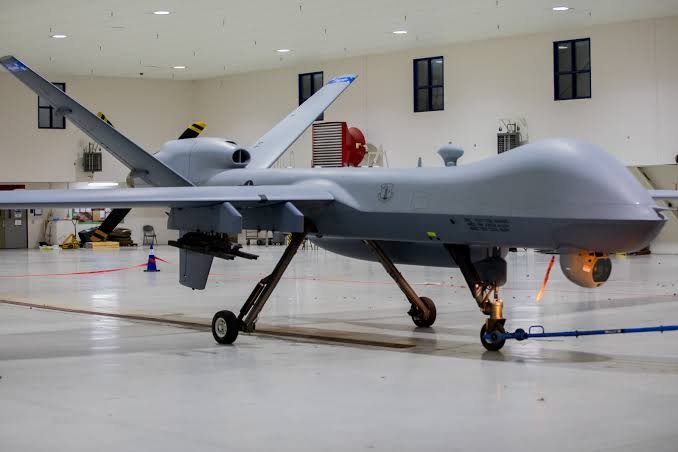
The latest diplomatic confrontation follows accusations from Sudan’s army-aligned government that Ethiopian territory has been used to support drone operations by the RSF.
Sudan recently submitted complaints to the United Nations Security Council and the African Union’s Peace and Security Council, alleging that the paramilitary organisation had launched attacks against civilian infrastructure from Ethiopian territory.
The Sudanese authorities claim that drone operations have targeted electricity installations and other essential facilities, contributing to disruptions in services across parts of the country.
The allegations have become particularly sensitive because Sudan has been experiencing a devastating conflict between its national army and the RSF since April 2023.
The fighting has destroyed infrastructure, displaced millions of people and severely affected access to food, electricity, water and healthcare.
Amjad Farid, a political and foreign affairs adviser to Sudan’s Transitional Sovereign Council, said the government remained committed to defending the country’s territory but was making efforts to prevent the dispute from developing into an open military confrontation with Ethiopia.
Khartoum’s accusations against Addis Ababa have not been independently established. Ethiopia has consistently denied supporting the RSF or assisting its military operations inside Sudan.
Ethiopia accuses Sudan of supporting Tigrayan rebels
While Sudan has accused Ethiopia of helping the RSF, the Ethiopian government has raised its own security concerns involving armed groups in Tigray.
Addis Ababa has accused Sudan, alongside Egypt and Eritrea, of providing support to Tigrayan rebels who launched an offensive against Ethiopian government forces in September.
The Ethiopian authorities view the alleged involvement of neighbouring countries in the Tigray conflict as a threat to national security.
However, Sudan, Egypt and Eritrea have rejected the accusations.
The competing allegations have created a difficult diplomatic environment, with each government accusing the other of interfering in its internal security affairs.
The tensions also reflect wider regional rivalries involving countries in the Horn of Africa, where political disagreements, border concerns and competition over strategic resources have frequently affected relations between governments.
Growing diplomatic tensions across the Horn of Africa
The dispute with Sudan is not the first recent diplomatic confrontation involving Ethiopia and its neighbours.
On October 1, Ethiopia expelled 10 Eritrean diplomats and ordered the closure of its embassy in Eritrea. Eritrea subsequently responded by severing diplomatic relations with Addis Ababa.
Ethiopia also expelled an Egyptian diplomat in October, adding to longstanding tensions between the two countries over the Grand Ethiopian Renaissance Dam (GERD), which is built on the Blue Nile.
Egypt has repeatedly expressed concerns about the potential effects of Ethiopia’s dam operations on water supplies downstream, while Ethiopia considers the project central to its development and electricity-generation ambitions.
The latest confrontation with Sudan therefore comes against a background of deteriorating relations between Ethiopia and several neighbouring countries.
The developments have raised concerns that disputes involving Sudan’s civil war and Ethiopia’s internal security situation could become increasingly connected, creating wider instability across the Horn of Africa.
Sudan’s war raises fears of wider regional instability
Sudan’s conflict, which began in April 2023 following a power struggle between the Sudanese Armed Forces and the RSF, has developed into one of the world’s most severe humanitarian emergencies.
More than 14 million people have been displaced, according to figures cited by international reporting, while fighting has devastated communities and disrupted essential public services.
Recent drone attacks on electricity infrastructure have further complicated the humanitarian situation. Strikes on substations in northern Sudanese towns, including Al-Dabbah and Abu Hamad, disrupted power supplies and raised concerns about access to water and medical services.
The Sudanese government and rights group Emergency Lawyers blamed the RSF for those attacks.
A direct confrontation with Ethiopia would create additional pressure on Sudan’s military, which is already engaged in intense fighting against the paramilitary group.
Although neither country has announced a formal declaration of war, the diplomatic expulsions underline how quickly their disagreements are escalating.
For now, the immediate concern is whether both governments can prevent the diplomatic dispute from developing into a broader security crisis.
The closure of consular facilities and removal of diplomatic personnel could also make communication more difficult at a time when cooperation along their shared border remains important.
With Sudan’s civil war continuing and Ethiopia facing its own internal security challenges, the latest confrontation adds another source of uncertainty to an already fragile Horn of Africa region.