Morocco’s King Mohammed VI has directed government officials to strengthen measures aimed at protecting the country’s territorial integrity, national security and the safety of residents in its southern provinces following the end of the United Nations mission in Western Sahara.
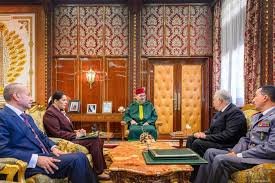
The monarch issued the instructions during a working meeting at the Royal Palace in Rabat on Wednesday, November 4, 2026. The meeting focused on Morocco’s next steps after the United Nations Security Council failed to renew the mandate of the United Nations Mission for the Referendum in Western Sahara (MINURSO).
The royal meeting brought together Head of Government Fatima Ezzahra El Mansouri, Royal Adviser Fouad Ali El Himma, Interior Minister Abdelouafi Laftit and Lieutenant General Mohammed Berrid, Inspector General of the Royal Armed Forces and Commander of the Southern Zone.
According to a statement from the Royal Cabinet, the king identified three central priorities: safeguarding Morocco’s territorial integrity and national unity, protecting national security, and ensuring the safety and well-being of citizens, particularly those living in the southern provinces.
The directives come at a significant moment in the decades-long dispute over Western Sahara, as the international community faces uncertainty over the future of the UN’s role in the territory.
Morocco prepares for MINURSO’s withdrawal
One of the main issues discussed during the meeting was the process of winding down MINURSO following the expiration of its mandate.
King Mohammed VI instructed the Coordination Office with MINURSO, which operates under the Ministry of the Interior, to oversee arrangements connected to the mission’s withdrawal.
The office is expected to work with the United Nations to coordinate administrative and logistical procedures and facilitate an orderly departure.
The Royal Cabinet said the process should be handled responsibly and in cooperation with the international organisation.
MINURSO was established in 1991 following a ceasefire between Morocco and the Polisario Front. Its original responsibilities included monitoring the ceasefire and preparing a referendum through which the people of Western Sahara would determine the territory’s future.
However, disagreements over voter eligibility and the political conditions surrounding the proposed referendum prevented it from taking place.
More than three decades after its establishment, the mission remained in the territory without achieving the referendum objective.
UN Security Council fails to agree on mission’s future
The latest developments followed the October 30, 2026 meeting of the UN Security Council, where competing proposals concerning MINURSO’s future failed to secure approval.
A United States-backed proposal sought to renew the mission’s mandate while changing aspects of its role and placing Morocco’s autonomy proposal at the centre of negotiations.
Russia opposed the US proposal and presented an alternative calling for an extension of the existing mandate. That proposal also failed to pass.
With neither draft adopted, MINURSO’s mandate expired on October 31.
The outcome has created uncertainty over the future of international monitoring and diplomatic engagement in Western Sahara. It does not, by itself, settle the territory’s disputed political status.
Morocco welcomed the failure to renew the mission, arguing that the circumstances surrounding its original establishment have changed. The Polisario Front and Algeria, meanwhile, have expressed concerns about developments surrounding the UN mission and the wider political process.
King reaffirms Morocco’s ceasefire commitment
Despite the end of MINURSO’s mandate, King Mohammed VI reaffirmed Morocco’s commitment to the ceasefire.
The Royal Cabinet described the commitment as voluntary and said it would remain unchanged despite the departure of the UN mission.
Moroccan officials also criticised MINURSO’s record, arguing that it had repeatedly failed to monitor compliance with the ceasefire effectively or address violations.
The position reflects Rabat’s argument that the existing international framework has not delivered the political outcome originally envisaged when the mission was established.
However, the withdrawal of the mission raises questions about how ceasefire developments will be monitored and how potential violations will be addressed in the future.
The Polisario Front declared a return to armed struggle in 2020 after the collapse of the previous ceasefire arrangement, although the United Nations has described the conflict as relatively low-intensity.
Development projects in southern provinces to continue
Beyond security and diplomatic arrangements, the king instructed officials to maintain development programmes and structural projects in Morocco’s southern provinces.
The monarch emphasised that ongoing initiatives should continue while authorities closely monitor developments relating to Western Sahara.
The focus on development is consistent with Morocco’s broader position that economic progress and improved living conditions should form part of its approach to the disputed territory.
Infrastructure, investment and public services have featured prominently in Rabat’s development plans for the southern provinces.
The government is expected to continue implementing these projects while responding to changes in the security and diplomatic environment.
Western Sahara dispute enters another uncertain phase
The end of MINURSO’s mandate represents an important development in the long-running dispute involving Morocco and the Polisario Front.
Morocco controls most of the territory and supports an autonomy arrangement under its sovereignty as the basis for a negotiated settlement. The Polisario Front, backed by Algeria, seeks independence for Western Sahara.
The disagreement has remained unresolved for decades and continues to affect relations between Morocco and Algeria, as well as wider regional cooperation in North Africa.
The latest royal directives show that Morocco intends to place greater emphasis on domestic security arrangements, continued development and diplomatic efforts following the end of the UN mission’s mandate.
Nevertheless, the future of international involvement, ceasefire monitoring and negotiations remains uncertain.
For now, Rabat is preparing for the withdrawal process while insisting that its ceasefire commitment remains in place and that the protection of its southern provinces will remain a government priority.