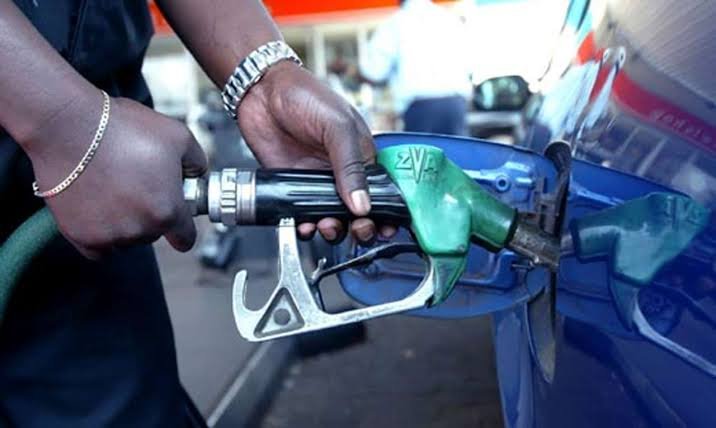
Niger has introduced restrictions on petrol sales during night-time hours as the government attempts to ease a nationwide fuel shortage that has disrupted transportation, lengthened queues at filling stations and placed additional pressure on motorists and commercial drivers.
Under the temporary directive, most filling stations across the West African country must stop selling fuel to the public between 9 p.m. and 6 a.m. Designated stations are exempted from the restriction to ensure that motorists can still obtain petrol during the affected hours.
The measure, which took effect on October 19, 2026, is intended to give suppliers more room to replenish filling stations and improve the reliability of deliveries. The government has identified the Nigerien Petroleum Company, known as Sonidep, as one of the suppliers involved in the restocking process.
However, the restrictions have added to the difficulties faced by people who rely on petrol for their livelihoods, particularly taxi operators whose daily earnings depend on being able to transport passengers.
Government seeks to stabilise petrol supplies
Niger’s authorities say the temporary arrangement is designed to improve the movement of fuel from suppliers to retail outlets. By limiting ordinary sales overnight, officials hope filling stations will have more opportunity to receive deliveries and replenish their storage tanks.
The directive provides for selected stations to remain available during the restricted period. Authorities say information about these outlets, including their locations and operating hours, is to be communicated through official channels. Motorists have therefore been encouraged to check which stations are authorised to operate overnight before travelling in search of fuel.
The government has also prohibited the sale of petrol in jerrycans outside filling stations in localities where at least one station operates. The restriction is part of a broader effort to regulate fuel distribution and ensure that available supplies move through the authorised network.
Officials have appealed to residents and fuel retailers to cooperate with the temporary rules, saying the measures are intended to improve availability rather than permanently limit access to petrol.
Nevertheless, the effectiveness of the policy will depend on whether deliveries become more regular and motorists begin to find fuel more easily.
Fuel shortage puts pressure on taxi drivers
The restrictions have created additional challenges for taxi drivers and other transport operators, many of whom need a steady supply of petrol to cover daily expenses and meet vehicle payment obligations.
In Niamey, taxi driver Moussa Idé Boubacar said the shortage had affected his ability to meet his financial commitments. He explained that his usual daily earnings were divided between fuel costs and payments for the vehicle he operates, but the disruption had left him unable to make his payments for two consecutive days.
His experience illustrates how a fuel shortage can affect more than motorists waiting at filling stations. When drivers cannot obtain enough petrol, they may lose income, struggle to meet operating costs and reduce the number of journeys they complete.
The taxi drivers’ union, Synctaxi, has consequently appealed to the authorities to reconsider the restrictions. The union argues that transport operators need more reliable access to fuel to continue serving passengers and supporting economic activity.
Its secretary-general, Ganda Sanda, has called for the government to take the difficulties facing drivers into account, particularly the need for access to stations outside ordinary operating hours.
The appeal highlights a challenge facing policymakers: the government wants to improve fuel distribution, but restrictions can create further hardship for businesses and workers if supplies remain inadequate.
Long queues disrupt movement in Niamey
The shortage has also affected residents who depend on private vehicles, taxis and other forms of road transport to reach workplaces and carry out daily activities.
Reports from Niamey indicate that motorists have faced increasingly long queues at filling stations. Some residents said they had spent days searching for petrol, while others complained that the disruption continued despite assurances that the shortage would ease.
For households already dealing with rising living costs, any prolonged disruption to transport can add to everyday pressures.
The situation has therefore increased calls for a lasting solution that addresses the availability of fuel while allowing essential services and commercial transport to continue operating.
Supply challenges raise questions about Niger’s fuel distribution
Although Niger is an oil-producing country, domestic production does not automatically guarantee that petrol will be consistently available at filling stations. Refining capacity, distribution arrangements and the movement of products through the supply chain all influence what consumers can purchase.
Africanews’ French-language report linked the current difficulties partly to the end of supplies from illicit petrol trading and insufficient refining capacity at the country’s only refinery. However, the full contribution of each factor to the present shortage has not been independently established in the reports available.
The authorities are now relying on adjustments to station operating hours and more organised deliveries to improve the situation. The restrictions are temporary and may be reviewed as fuel availability and distribution conditions change, according to the government’s announcement.
Whether the intervention succeeds will depend on the regularity of deliveries, the volume of petrol reaching retail outlets and the ability of designated stations to serve motorists during restricted hours.
What happens next?
For residents and transport operators, the immediate concern is when fuel supplies will return to a more dependable level. Until that happens, drivers may continue to face queues, lost working hours and uncertainty over where they can refuel.
The government has urged the public to remain patient and comply with the rules while officials monitor the distribution system. At the same time, taxi operators want the authorities to consider adjustments that would allow them to work without being unduly affected by the restrictions.
Niger’s night-time petrol sales policy represents an attempt to manage an urgent supply problem, but it also demonstrates how shortages can ripple through the wider economy. A sustained improvement in deliveries will be essential if the country is to ease pressure on motorists, protect transport livelihoods and restore confidence in the fuel supply system.