Egypt has recorded a $2.8 billion balance of payments surplus for the 2025/2026 fiscal year, reversing the $2.1 billion deficit reported in the preceding financial year, according to figures released by the Central Bank of Egypt (CBE).
The improvement reflects stronger foreign investment inflows, increased remittances from Egyptians living abroad and higher earnings from tourism and Suez Canal operations.
However, the positive result comes alongside growing pressure on the country’s external accounts, as the cost of imports and investment-related payments continues to widen Egypt’s current account deficit.
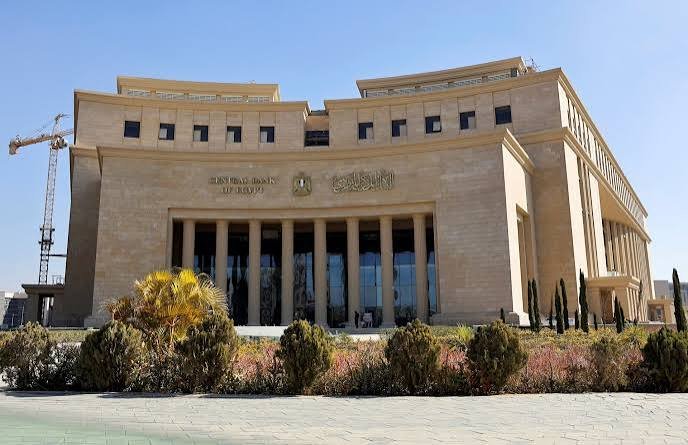
The Central Bank of Egypt reported the figures on Monday, October 12, 2026, highlighting significant changes in the country’s foreign financial flows during the fiscal year that ended in June 2026.
Foreign Investment Drives Egypt’s Economic Improvement
One of the major factors behind Egypt’s return to a balance of payments surplus was the substantial increase in foreign capital entering the country.
Net inflows through the capital and financial account climbed to $23.2 billion during the 2025/2026 fiscal year, more than double the $10.2 billion recorded a year earlier.
Foreign direct investment (FDI) played a particularly important role, rising to $18 billion from $12.2 billion in the previous financial year.
Portfolio investments also increased, generating a net inflow of $4.2 billion, compared with $1.6 billion previously.
These figures indicate that Egypt attracted more foreign capital through direct business investments and financial market transactions.
Foreign direct investment can support economic activity by financing new businesses, expanding existing operations and creating employment opportunities. However, the longer-term benefits depend partly on how effectively the investment translates into productive economic activity.
The increase in foreign capital helped offset weaknesses in other areas of Egypt’s external accounts, contributing to the overall surplus reported by the central bank.
Current Account Deficit Widens Despite Surplus
Despite the overall improvement, Egypt’s current account deficit increased considerably during the period.
The deficit expanded to $22.5 billion in the 2025/2026 fiscal year, compared with $15.4 billion in the previous year.
A major contributor was the merchandise trade deficit, which rose by 27.1% to $64.8 billion.
The widening gap reflected the difference between the value of goods Egypt imported and the value of goods it exported.
The non-oil trade deficit increased by 25.4% to $46.6 billion. Non-oil imports rose by $12.1 billion, while non-oil exports increased by a comparatively smaller $2.7 billion.
The country’s oil trade deficit also deteriorated, climbing by 31.5% to $18.3 billion as imports of natural gas and crude oil increased.
In addition, the investment income deficit widened by 33.8% to $21.2 billion.
These developments illustrate the challenges facing Egypt as it seeks to strengthen its external financial position. Although foreign capital inflows supported the overall balance, the country continued to face substantial expenditure on imported goods and investment-related payments.
Egyptians Abroad Send $47.3 Billion Home
Money sent home by Egyptians living and working overseas provided another significant source of foreign currency during the financial year.
Remittances increased by 29.6% to $47.3 billion, offering substantial support to Egypt’s external financial position.
Remittances are an important source of foreign exchange for many economies because they bring money into the country from citizens working abroad.
These transfers can help families cover everyday expenses, education, housing and healthcare. They can also support domestic consumption and contribute to the availability of foreign currency in the banking system.
For Egypt, the increase in remittances helped cushion the impact of the widening current account deficit.
The latest figures also underline the importance of Egyptians living abroad to the country’s economy, particularly at a time when authorities are seeking to improve foreign currency availability and strengthen economic stability.
Tourism Revenue Climbs to $18.4 Billion
Egypt’s tourism industry also contributed to the improvement in foreign currency earnings.
Tourism revenues increased by 10.3% to $18.4 billion during the 2025/2026 fiscal year, compared with $16.7 billion in the preceding year.
Tourism remains an important source of income for Egypt, which attracts international visitors through its ancient historical sites, Red Sea resorts, cultural attractions and other destinations.
Revenue generated by international visitors brings foreign currency into the economy and supports businesses operating in hospitality, transportation, food services and other tourism-related sectors.
The increase in tourism receipts helped offset some of the pressure created by higher import costs and the expanding current account deficit.
Maintaining this growth could therefore remain important to Egypt’s efforts to strengthen its external earnings and support economic activity.
Suez Canal Earnings Recover
Receipts from the Suez Canal also recorded a notable increase during the fiscal year.
Revenue from vessels transiting the strategic waterway rose by 21.6% to $4.4 billion, compared with $3.6 billion in the previous year.
The improvement was accompanied by a 22.4% increase in net tonnage passing through the canal and a 9.8% rise in the number of vessels using the route.
The Suez Canal is a major international shipping corridor connecting the Mediterranean Sea with the Red Sea. Its strategic position makes it an important route for maritime trade between Europe and Asia.
Canal transit fees provide Egypt with foreign currency earnings, making changes in shipping activity economically significant.
The latest figures suggest an improvement in canal-related receipts during the period, providing additional support for the country’s external accounts.
However, sustained growth in this revenue stream will depend partly on international shipping activity and the willingness of vessels to use the route.
Non-Oil Sectors Attract Most Foreign Direct Investment
The central bank’s figures show that non-oil industries accounted for the largest share of Egypt’s net foreign direct investment inflows.
These sectors attracted $17.8 billion during the 2025/2026 fiscal year.
Greenfield investments and capital increases contributed $8.8 billion, including $3.5 billion associated with the Alam Al-Roum deal between October and December 2025.
Greenfield investment generally involves establishing new business operations, while capital increases can provide additional funding for existing enterprises.
Reinvested earnings accounted for another $6.2 billion, indicating that some foreign investors retained profits within their Egyptian operations.
Purchases of real estate by non-residents generated a net inflow of $2.8 billion.
Meanwhile, foreign direct investment in oil and mineral resources recorded a net inflow of approximately $190.2 million.
The figures highlight the role of non-oil sectors in attracting foreign capital, although the broader economic impact will depend on the nature of the investments and the extent to which they generate jobs, exports and productive capacity.
External Borrowing and Financial Flows
Egypt’s financial account also reflected changes in borrowing and movements in foreign assets.
Medium- and long-term loans and credit facilities recorded net disbursements of $1.9 billion during the financial year.
This represented a reversal from the previous year, when the country recorded net repayments of $3.5 billion.
Total loan disbursements reached $9 billion, while principal repayments amounted to $7.1 billion.
At the same time, net outflows associated with changes in commercial banks’ foreign assets and the central bank’s non-reserve assets increased to $9.7 billion, compared with $5.6 billion a year earlier.
The central bank’s liabilities also recorded a net outflow of $695.8 million, contrasting with a net inflow of $3.6 billion in the previous financial year.
These developments show that Egypt’s external financial position was influenced by several factors beyond foreign direct investment, including debt transactions and movements in financial assets.
What the $2.8 Billion Surplus Means for Egypt
Egypt’s return to a balance of payments surplus represents an improvement compared with the deficit recorded in the preceding fiscal year.
Higher foreign direct investment, stronger portfolio inflows, increased remittances and improved tourism and Suez Canal receipts all contributed to the result.
Nevertheless, the widening current account deficit demonstrates that challenges remain.
The country’s import bill, particularly for non-oil goods and energy products, continues to put pressure on its external accounts. The rise in investment income payments also contributed to the deterioration.
For the Egyptian economy, the key challenge will be to sustain foreign currency inflows while strengthening export performance and managing the cost of imports.
Encouraging productive investment, supporting domestic industries and expanding tourism earnings could help improve the country’s ability to generate foreign exchange over time.
The latest figures therefore present a mixed picture: Egypt achieved a $2.8 billion overall balance of payments surplus, but its growing current account deficit shows that external economic pressures have not disappeared.