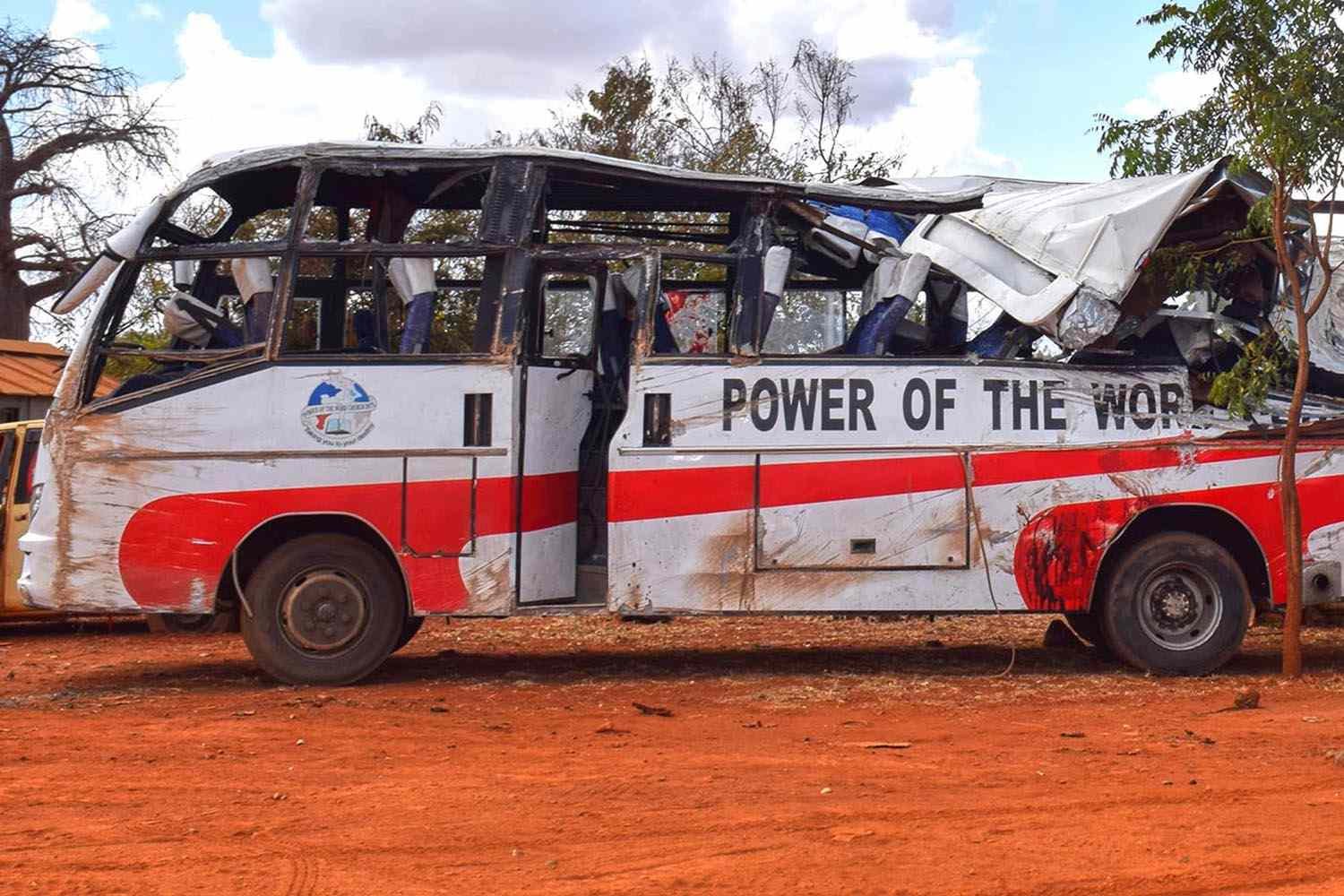
At least 24 people have died and another 24 have been injured after a passenger bus collided with a truck on Kenya’s busy Nairobi–Mombasa highway, prompting renewed calls for stronger road safety enforcement.
The crash occurred on Sunday morning, October 25, 2026, in Makueni County, southeastern Kenya. The bus was carrying passengers travelling back to the coastal city of Mombasa after attending the funeral of their church pastor in western Kenya.
The tragedy has intensified concerns about dangerous driving on one of the country’s most important transport routes. It also came only weeks after another serious collision on the same highway claimed 17 lives.
Kenyan authorities are now facing renewed pressure to address the causes of fatal road accidents, including risky overtaking, speeding and inadequate enforcement of traffic regulations.
Passengers returning from funeral caught in deadly collision
The bus had been travelling with church members who were returning to Mombasa after paying their respects to their pastor. According to reports, the passengers had stopped in the town of Mtito Andei for breakfast shortly before the accident.
The collision left dozens of people dead or injured. Medical Superintendent Paul Kisienya of Mtito Andei Hospital said 24 injured passengers were receiving medical attention after the crash, with the facility treating many of those who survived.
Survivors described a frightening scene as passengers called for help following the impact. Violet Mwandonyi, a mother of two who was on the bus, said she could not remember exactly how the crash unfolded. She expressed concern about her children, who were also travelling on the vehicle, and said she did not know their fate at the time she spoke to reporters.
Another passenger, Spenza Mudave, said the truck struck the bus from behind, causing it to overturn. However, investigators were still examining the circumstances surrounding the collision, and accounts of how it happened differed.
The crash has left families searching for information about their loved ones while survivors receive treatment. Authorities are expected to establish the full sequence of events as investigations continue.
Investigators examine possible cause of the crash
Kenya’s National Transport and Safety Authority (NTSA) raised concerns about dangerous overtaking, citing information suggesting the vehicles may have collided head-on. The precise circumstances were still being investigated, and the differing accounts from passengers underline the need for an official determination.
Unsafe overtaking is a serious risk on busy highways, particularly when heavy trucks and passenger buses share roads carrying traffic in both directions. A driver attempting to pass another vehicle without enough visibility or space can leave little opportunity to avoid an oncoming vehicle.
Other factors, including excessive speed, driver fatigue, vehicle condition and road design, can also contribute to severe collisions. Authorities have repeatedly warned motorists to obey speed limits, avoid risky manoeuvres and ensure their vehicles are safe for long journeys.
The investigation into Sunday’s crash will be important in determining whether driver behaviour or other circumstances contributed to the loss of life.
Fresh concerns after another deadly highway accident
The latest collision occurred roughly three weeks after a separate crash on the Nairobi–Mombasa highway killed 17 people. That earlier accident involved several vehicles and raised similar concerns about unsafe overtaking.
The highway connects Nairobi, Kenya’s capital, with Mombasa, a major port and tourism destination. It carries substantial passenger and freight traffic, making it an important route for the country’s economy.
Repeated fatal accidents along the corridor have increased calls for stronger enforcement, safer driving practices and improvements to dangerous stretches of road.
The NTSA has described the wider road safety situation as a national emergency, citing approximately 20,000 crashes and more than 5,000 deaths annually. The authority has urged the government to treat road safety as a priority requiring coordinated action.
President Ruto orders inspections of public service vehicles
President William Ruto expressed condolences to the families of those killed and called for urgent attention to vehicle safety following the latest tragedy.
The president ordered inspections of public service vehicles to ensure they comply with the relevant safety requirements. The move is intended to identify vehicles that may be unfit for passenger transport and strengthen accountability among operators.
Kenya’s transport authorities have also called for tougher action against speeding and dangerous overtaking, alongside improvements to hazardous road sections and stronger checks on commercial drivers.
Such measures are particularly important for buses and heavy goods vehicles, which can cause devastating damage when involved in high-speed collisions. Regular vehicle inspections, properly trained drivers and effective enforcement can help reduce avoidable risks.
However, the impact of these measures will depend on consistent implementation rather than inspections and warnings carried out only after major accidents.
Road safety remains a major challenge in Kenya
Kenya continues to face difficulties in reducing deaths on its roads, with fatal crashes affecting public transport passengers, private motorists and commercial drivers.
The consequences extend beyond those directly involved. Families lose relatives, survivors may face long recoveries, and accidents can disrupt traffic on key transport routes. For businesses, crashes involving trucks and buses can also interrupt the movement of goods and passengers.
The latest incident has renewed calls for drivers to take greater responsibility behind the wheel and for authorities to enforce safety regulations more consistently.
Motorists are encouraged to maintain safe speeds, avoid overtaking when visibility is limited, keep a safe distance from other vehicles and ensure they are rested before undertaking long trips. Passengers can also help by reporting unsafe driving when it is safe to do so.
As investigators work to establish what happened in Makueni County, the immediate priority remains supporting the injured, identifying those who died and informing affected families.
The deaths have added urgency to Kenya’s road safety debate. Whether the tragedy leads to lasting improvements will depend on the government’s ability to turn renewed promises into effective enforcement, safer vehicles and better protection for everyone using the country’s highways.