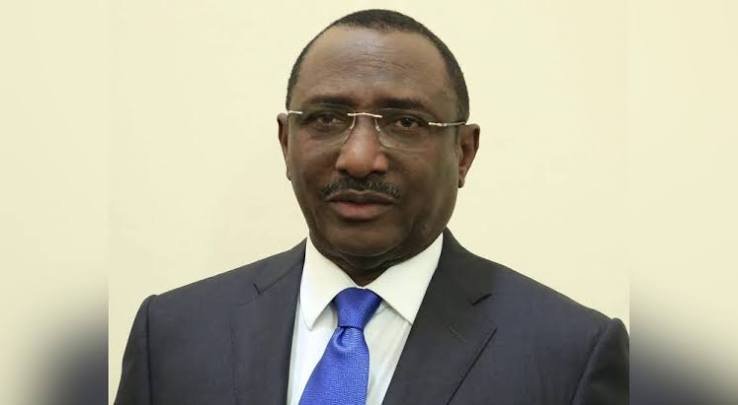
Guinea’s political landscape has been hit by the death of former Prime Minister and opposition leader Sidya Touré, who died in Paris, France, at the age of 81.
Touré reportedly passed away on Friday, September 25, 2026, after a period of illness. Reports from Guinea said he died at the American Hospital of Paris, where he had been receiving treatment after his health deteriorated.
His death brings to an end the career of one of the country’s most prominent political figures, whose public life stretched across several important periods in Guinea’s modern history.
From Administration to Guinea’s Prime Minister’s Office
Born in 1945, Touré spent part of his professional career in neighbouring Côte d’Ivoire, where he held senior administrative responsibilities.
Before becoming a major figure in Guinean politics, he served as chief of staff to Alassane Ouattara when Ouattara was Côte d’Ivoire’s prime minister.
His return to Guinea’s political scene gained national attention in the 1990s.
In July 1996, President Lansana Conté appointed Touré as Prime Minister, making him the first person to hold the position after the office had been absent for several years.
He remained in the position until March 1999.
His tenure came during a difficult period for Guinea, with the country facing economic challenges as well as political and social tensions.
Touré’s administration was associated with economic and administrative reforms and efforts to improve the country’s relationship with international financial institutions. His government was also linked to initiatives concerning public services, including water and electricity supply in Conakry.
Became a Leading Opposition Figure
After leaving government, Touré gradually became one of Guinea’s leading opposition politicians.
He took charge of the Union of Republican Forces (UFR) and remained closely associated with the party for decades.
Touré also contested Guinea’s 2010 presidential election. He finished third in the first round with 13.62 per cent of the vote, behind Alpha Condé and Cellou Dalein Diallo. He initially raised concerns about aspects of the electoral process but later accepted the final outcome after its confirmation by the Supreme Court.
His political career subsequently became closely connected to major debates over elections, governance and democratic institutions in Guinea.
Injured During 2009 Political Violence
One of the most significant episodes in Touré’s political career occurred on September 28, 2009.
He was among opposition leaders involved in a major demonstration in Conakry against the possibility of then-junta leader Moussa Dadis Camara contesting a future presidential election.
The protest at the September 28 Stadium was violently suppressed, leaving dozens dead and many others injured.
Touré was also seriously injured during the incident, suffering a head injury. The event became one of the most controversial episodes in Guinea’s recent political history.
Years Away From Guinea
Touré’s final years were largely spent outside Guinea.
Following the military takeover that removed President Alpha Condé from power on September 5, 2021, Touré left the country and subsequently lived in exile.
He continued commenting on political developments in Guinea from abroad and remained involved with the UFR.
In 2025, he participated in an extraordinary congress of the party remotely, demonstrating that his political engagement continued despite his absence from the country.
Reports said he had been living in Côte d’Ivoire before travelling to France for medical treatment. He had reportedly been unwell for several months before his condition worsened.
A Career Spanning Nearly Three Decades
Touré’s political journey covered several major chapters in Guinea’s history.
He served under President Lansana Conté, became an opposition leader, participated in the 2010 presidential election, survived the violence surrounding the 2009 opposition demonstration and remained active during the political transitions that followed.
He also served as a high representative to President Alpha Condé at one stage of his career.
His death comes only months after the passing of other senior figures associated with the UFR, including former National Assembly vice-president Bakary Goyo Zoumanigui, who died in June 2026. Another former UFR official, Babara Fofana, also died shortly before Touré.
Guinea Loses a Veteran Political Figure
Sidya Touré’s death marks the departure of a politician who remained a familiar figure in Guinea’s public life for decades.
From government administration and the prime minister’s office to opposition politics and years in exile, his career reflected many of the political changes that shaped Guinea from the 1990s onward.
At the time of his death, Touré was 81.
His passing is expected to prompt tributes from political allies, former colleagues and others who followed his long involvement in Guinea’s political affairs.