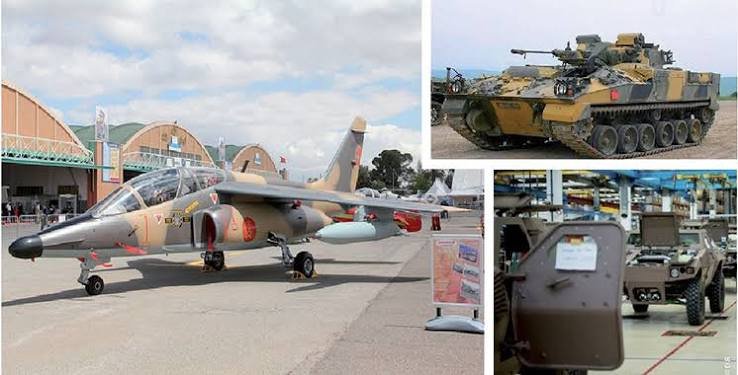
Morocco is positioning itself for a major expansion of its aerospace industry, with annual exports expected to reach about $5 billion within the next three years, up from roughly $3 billion last year.
The projection was disclosed by Mohammed Bellatig, head of Morocco’s aerospace industry association GIMAS, during the Marrakech Airshow, where the North African country is showcasing its growing manufacturing and engineering capabilities.
Morocco’s aerospace sector currently employs around 25,000 people across approximately 160 companies, many of which supply major global aviation manufacturers including Airbus, Boeing and Safran.
The anticipated export growth reflects Morocco’s ambition to move further up the international aerospace supply chain instead of concentrating mainly on the production of individual aircraft components.
Morocco Seeks More Value From Aerospace Manufacturing
For years, Morocco has attracted international aerospace companies by offering competitive production costs, a growing skilled workforce and access to markets in Europe, Africa and the wider Middle East.
The next stage of the country’s strategy is to manufacture more sophisticated aerospace systems locally.
Bellatig said Morocco expects to progress into activities such as engine and landing-gear assembly, which would allow domestic manufacturers to capture a greater share of the value generated by the global aviation industry.
The shift would represent an important step beyond producing relatively basic components and would strengthen Morocco’s role as an integrated aerospace manufacturing centre.
Moroccan investment authorities say the country’s aerospace ecosystem has already developed into a significant industrial base, with capabilities spanning engineering, electrical wiring, assembly, engines, maintenance and composites.
Safran Expands Its Moroccan Operations
French aerospace and defence company Safran is among the international companies increasing its presence in Morocco.
The company is developing facilities linked to aircraft landing gear and Airbus aircraft engines, reinforcing Morocco’s growing importance within Safran’s production network.
Safran is also expected to assemble engines in Morocco, highlighting the country’s transition towards more advanced aerospace manufacturing. Industry executives at the Marrakech Airshow have pointed to the country’s workforce and industrial capabilities as important factors behind the expansion.
The increased involvement of major companies could help local suppliers gain access to more sophisticated technologies and international production networks.
Aerospace Sector Creates Thousands of Jobs
The expansion is also expected to generate employment and strengthen Morocco’s industrial workforce.
The sector currently supports around 25,000 jobs, according to GIMAS, while the country’s regional investment authorities put the broader aerospace ecosystem at more than 26,000 jobs.
The industry has also expanded its network of domestic and international companies over the past two decades, helping Morocco establish itself as an important aerospace production location in Africa.
The country’s aerospace development has been supported by industrial zones, specialised training institutions and investment incentives aimed at attracting international manufacturers.
Morocco Turns Attention to Drone Production
Morocco is not limiting its ambitions to civilian aircraft manufacturing.
The country is also seeking to develop a domestic drone industry, with officials viewing unmanned aircraft as a natural extension of expertise already built in aerospace engineering, materials and assembly.
At the Marrakech Airshow, Morocco signed an agreement with French defence startup Harmattan AI covering the local manufacture of autonomous drones.
The planned systems are designed for long-range missions, with the agreement providing for important technologies to be developed and manufactured domestically.
Morocco has also authorised several other drone-related projects involving international companies. Turkish defence manufacturer Baykar, known for its Bayraktar TB2 unmanned aircraft, is among the companies connected to the country’s developing drone sector.
Marrakech Airshow Highlights Morocco’s Industrial Ambitions
The Marrakech Airshow has become an important platform for Morocco to attract aerospace and defence investment.
The 2026 edition brings together international manufacturers, government officials and defence representatives as Rabat promotes its ambitions to develop domestic industrial capabilities.
Moroccan officials say the aerospace sector has evolved from basic assembly activities towards more advanced manufacturing and engineering, while the country is simultaneously seeking to build a stronger defence-industrial base.
The presence of major companies at the event has also underscored Morocco’s growing links with global aerospace supply chains.
Airbus, Safran and Lockheed Martin executives have highlighted the increasing role of Moroccan companies in international production networks. Airbus, for example, has expanded its local activities from aerostructures and composites into more complex electrical assembly.
Aiming for a Bigger Role in Global Aviation
Morocco’s aerospace ambitions are part of a wider industrialisation strategy designed to increase exports, attract foreign investment and create higher-skilled employment.
The country already benefits from its proximity to Europe and its position between European, African and Middle Eastern markets. These advantages have helped attract companies seeking production locations outside their traditional manufacturing centres.
Morocco’s investment authorities describe aerospace as one of the country’s fastest-growing industrial sectors, with the industry now involving major international names and an expanding network of local suppliers.
Reaching the projected $5 billion in annual aerospace exports would represent a significant increase from current levels.
However, achieving that target will depend on Morocco’s ability to attract additional high-value manufacturers, develop specialised skills and move further into advanced areas such as engines, landing gear, systems integration and other complex aerospace technologies.
The country’s growing drone industry could provide another avenue for expansion as Morocco seeks to establish itself not simply as a low-cost manufacturing destination, but as a more sophisticated aerospace and defence production hub.
If the planned investments materialise, Morocco could strengthen its position as one of Africa’s leading aerospace manufacturing centres while increasing the amount of value generated domestically from the global aviation supply chain.