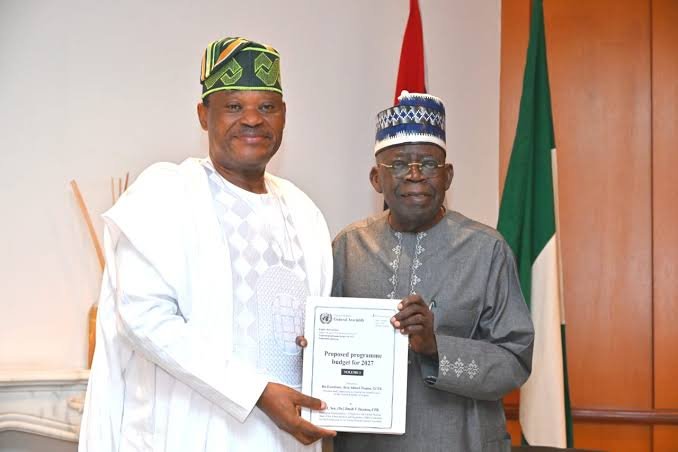
President Bola Ahmed Tinubu has received the United Nations’ proposed 2027 budget, valued at approximately $14 billion, from Nigeria’s Permanent Representative to the global body, Senator Jimoh Ibrahim.
The seven-volume budget document was presented to the Nigerian leader at the State House in Abuja. Ibrahim, who chairs the United Nations General Assembly’s Fifth Committee on Administrative and Budgetary Matters, described the occasion as a major milestone for Nigeria’s role in the organisation’s financial administration.
The presentation comes as Nigeria occupies a prominent position in the UN’s budget deliberations for the first time in 66 years. The Fifth Committee is responsible for reviewing the organisation’s financial requirements and administrative matters before member states make final decisions.
Jimoh Ibrahim Highlights Nigeria’s Historic Role
Speaking after handing over the proposal, Ibrahim said Nigeria’s leadership of the committee had created a significant moment in the country’s diplomatic history.
He explained that the UN Secretary-General had submitted the proposed budget to the committee for consideration, after which he brought the document to Tinubu in his capacity as Nigeria’s representative and committee chairman.
Ibrahim said the development was particularly noteworthy because Nigeria had not chaired the body responsible for the UN’s budget and administrative affairs in more than six decades.
The envoy also described Tinubu’s receipt of the document as an unusual opportunity for a Nigerian president to engage directly with the UN’s budget process.
However, the presentation does not mean that the proposed spending plan has been approved. The document is still subject to negotiations among member states, which may review its figures and make adjustments before the final budget is adopted.
How the Proposed UN Budget Is Structured
Ibrahim said the proposed budget includes approximately $3.4 billion for the UN’s regular operations and around $8.5 billion for peacekeeping activities. He placed the overall figure at about $14 billion, equivalent to an estimated ₦36 trillion to ₦40 trillion.
The regular budget supports the organisation’s core activities, including its administrative work and programmes carried out under mandates approved by member states. Peacekeeping funds, meanwhile, help finance missions deployed to conflict-affected regions to support security, stability and political processes.
The UN’s financial plan must balance these responsibilities with the resources member countries are willing to provide. The proposed allocations could therefore change as governments review spending priorities and negotiate the final figures.
Ibrahim emphasised that the figures were not yet final, noting that the budget would go through further discussions before approval and the commencement of expenditure.
Nigeria’s Expected Benefits Remain Unclear
The envoy did not disclose what direct financial or other benefits Nigeria might receive from the budget process.
He explained that discussions with other committee members were still underway, making it premature to outline any specific gains for the country.
Nigeria’s chairmanship gives it an important role in facilitating discussions on the UN’s financial and administrative affairs. However, that position should not be interpreted as meaning that Nigeria controls the organisation’s budget or automatically receives a particular share of its spending.
The final decisions will depend on negotiations and approval by the UN’s member states.
Nigeria’s role in the process nevertheless offers an opportunity to participate in discussions about the organisation’s priorities, financial management and allocation of resources. The extent to which the country can translate its diplomatic position into specific outcomes remains to be seen.
UN Spending Also Includes Major Infrastructure Projects
To illustrate the scale of the organisation’s financial activities, Ibrahim pointed to the construction of a United Nations conference centre in Kenya, a project he valued at approximately $260 million.
The example highlighted how the organisation spends money not only on its core operations and peacekeeping missions but also on facilities supporting international meetings and diplomatic engagement.
Such projects form part of the wider discussion over how the UN manages its resources and distributes spending across its global operations. Member states must weigh the need for effective international institutions against questions of cost, efficiency and accountability.
For Nigeria, the budget presentation also places a spotlight on the responsibilities that come with chairing a key financial committee within the UN General Assembly.
What Happens Next?
The proposed 2027 budget will now proceed through detailed consideration by member states. During this process, governments can debate spending plans, request changes and negotiate the allocations before the budget receives final approval.
Until that process is completed, the $14 billion figure should be treated as the proposal described by Ibrahim rather than an approved spending total.
The presentation to Tinubu marks a significant diplomatic moment for Nigeria, but the next stage will be the negotiations that determine the final financial plan. Those discussions will shape how much the organisation allocates to its regular activities, peacekeeping operations and other priorities during 2027.