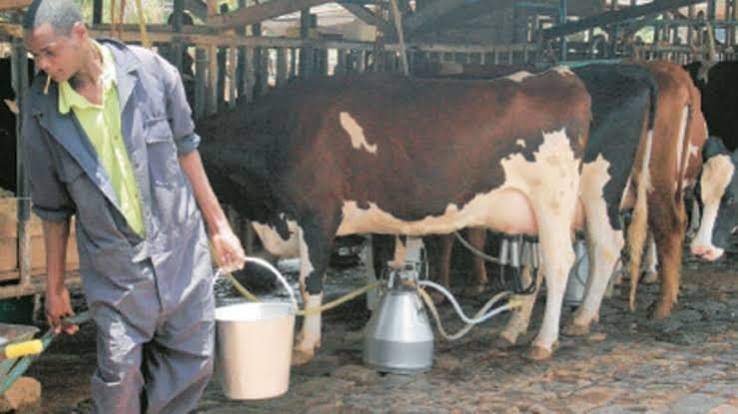
Kenya is experiencing a decline in milk deliveries to formal processors despite recording significant growth in national dairy production, raising concerns about supply shortages and the availability of milk products across the country.
Data from the Kenya National Bureau of Statistics (KNBS) shows that milk intake by formal dairy processors dropped to 74.8 million litres in September 2026, compared with 79.1 million litres recorded in August.
The latest figures represent a reduction of approximately 4.3 million litres, equivalent to a 5.4 per cent monthly decline.
The statistics also reveal that formal-sector milk intake between January and September fell by two per cent to 750.2 million litres, compared with the corresponding period in 2025.
The decline comes despite President William Ruto’s recent announcement that Kenya had increased its annual milk production from 4.6 billion litres to 5.4 billion litres, making it Africa’s leading milk producer.
The contrasting figures have raised questions about why increased national production has not translated into consistent supplies reaching processing companies and retail outlets.
Formal Milk Deliveries Continue to Decline
According to the KNBS Leading Economic Indicators report, the quantity of milk received by formal-sector processors has weakened over several months.
The figures show that milk intake reached 90.3 million litres in April before declining to 88.9 million litres in May. Collections subsequently dropped to 84.4 million litres in June and 83 million litres in July.
The downward trend continued in August, when processors received 79.1 million litres, before the figure fell further to 74.8 million litres in September.
The cumulative performance for the first nine months of 2026 also indicates a weaker supply situation compared with the previous year.
KNBS recorded 750.2 million litres during the period, representing a two per cent decline from the corresponding nine-month period in 2025.
It is important to distinguish formal-sector milk intake from total national production. The figures measure milk delivered through organised collection and processing channels, rather than every litre produced by farmers across the country.
Consequently, a decline in processor deliveries does not necessarily mean that national milk production has fallen by the same amount.
Kenya’s Dairy Production Reaches 5.4 Billion Litres
The decline in formal milk collections has emerged against the background of growth in Kenya’s wider dairy industry.
President Ruto recently said the country’s annual milk production had increased from 4.6 billion litres to 5.4 billion litres, allowing Kenya to overtake Egypt as Africa’s largest milk producer.
The announcement was made during the Third Global Parliamentary Summit on Hunger and Malnutrition on November 16, 2026.
The expansion highlights the importance of dairy farming to Kenya’s agricultural economy, where millions of people depend on livestock production and related businesses for their livelihoods.
However, the latest figures suggest that increasing the volume of milk produced is only one part of the challenge. Ensuring that farmers can collect, preserve and deliver their products to processors is equally important.
The gap between national production and formal-sector deliveries has therefore become an important issue for policymakers and businesses in the dairy industry.
Drought and High Animal Feed Costs Affect Farmers
Prolonged dry weather has been identified as one of the major factors affecting milk production and deliveries in Kenya.
Limited rainfall reduces the availability of natural pasture, forcing dairy farmers to spend more money purchasing hay and other animal feeds.
The pressure can reduce milk yields, particularly among farmers who depend heavily on natural grazing to maintain their livestock.
In a report published on November 19, Al Jazeera highlighted the difficulties facing dairy farmers in Kajiado County, where prolonged dry conditions have significantly reduced milk output.
One farmer, Jennifer Leshinka, said her daily production had fallen from 120 litres to 50 litres as pasture became scarce and feeding costs increased.
Other farmers have also reported difficulties meeting orders from customers because their animals are producing less milk.
The Kenya National Bureau of Statistics’ figures do not independently establish the cause of the September decline. However, reports from government livestock officials and dairy industry stakeholders have previously linked falling deliveries to dry conditions and pressure on fodder supplies.
Farmers Turn to Informal Milk Markets
Another factor affecting the formal dairy supply chain is the decision by some farmers to sell their milk directly to consumers and informal buyers.
Farmers may choose this option when they believe they can obtain better prices than those offered by processing companies or cooperatives.
Although direct sales provide an alternative source of income, they can reduce the volume of milk available to large processors that depend on regular deliveries from organised collection networks.
The situation has created additional pressure on companies responsible for processing and distributing packaged milk to supermarkets, shops and other retailers.
Earlier government statements also raised concerns about the operations of some dairy cooperatives, including the margins retained between the prices paid to farmers and the amounts charged to processors.
The challenge is therefore not limited to production. Pricing arrangements, collection systems and the relationship between farmers, cooperatives and processors also influence how much milk enters the formal market.
Government Introduces Measures to Support Dairy Farmers
The Kenyan government has outlined several measures aimed at improving milk production and stabilising supplies.
President Ruto previously announced that dairy farmers would receive KSh65 per litre for milk delivered from October, alongside an additional quarterly bonus of KSh2 per litre.
The government has also considered measures to improve animal feeding, strengthen dairy genetics and expand milk collection infrastructure.
According to the Ministry of Agriculture and Livestock Development, planned interventions include increasing fodder production and conservation, supporting artificial insemination programmes and distributing milk coolers to organised farmer groups.
Milk coolers are particularly important because they help preserve raw milk after collection, reducing spoilage and allowing farmers to supply processors more efficiently.
The government is also working on the restructuring of state-owned dairy processor New KCC as part of wider efforts to improve the dairy value chain.
Another proposal involves introducing Indian water buffaloes as an additional source of milk. However, Agriculture Cabinet Secretary Mutahi Kagwe has indicated that the initiative remains at an early stage and would require veterinary assessments and other preparations before implementation.
Milk Shortages Raise Concerns Among Consumers
The decline in deliveries has also affected consumers, with reports of shortages involving some popular milk brands in parts of Kenya.
Retailers have experienced difficulties maintaining regular supplies, while some consumers have encountered higher prices for available products.
In Nairobi, Al Jazeera reported that a 500ml packet of some established milk brands was selling for between KSh79 and KSh89, while some neighbourhood shops charged as much as KSh100.
The shortage has also affected businesses such as hotels and restaurants that depend on consistent supplies of fresh milk.
For consumers, the situation has created concerns about affordability and access to everyday dairy products.
Industry stakeholders are therefore looking towards improved production conditions, stronger collection networks and government support to restore more consistent supplies.
Kenya’s dairy sector remains an important part of its agricultural economy, but the latest figures show that higher national production alone may not guarantee adequate supplies in shops. Strengthening the link between farmers, cooperatives and processors will remain essential to addressing the challenges facing the industry.