Senegal’s efforts to secure a major financing agreement with the International Monetary Fund (IMF) have suffered another setback after lawmakers rejected the government’s proposed revision of the 2026 national budget.
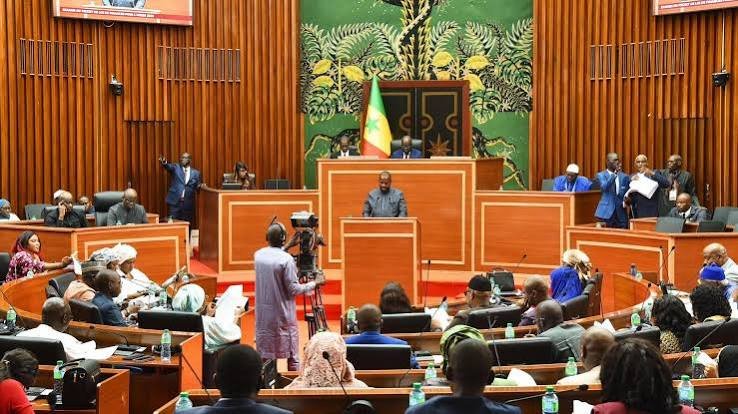
The decision, taken by the National Assembly on Tuesday, November 3, has prolonged a dispute over the country’s financial plans and raised fresh questions about when the West African nation will secure new international funding.
The revised budget was considered an important requirement in the government’s efforts to restore confidence in public finances and advance negotiations over a proposed $2.2 billion IMF programme.
Lawmakers from the ruling Pastef parliamentary group, led by National Assembly President Ousmane Sonko, opposed the proposal. The motion that effectively blocked further consideration of the bill received 109 votes in favour, 20 against, while three legislators abstained.
The outcome came after previous attempts to secure parliamentary approval had failed, leaving the government without the legislative backing it needs to implement its revised financial framework.
Budget disagreement deepens between government and parliament
The rejected proposal was designed to adjust Senegal’s 2026 budget to reflect changes in government revenue, spending requirements and the country’s growing financial pressures.
However, lawmakers from Pastef raised concerns about the assumptions behind the revised figures, particularly the projected budget deficit and the information provided about public debt.
The revised plan placed the deficit at 7.6 per cent of gross domestic product (GDP), compared with the 5.4 per cent target in the original budget.
Pastef representatives argued that the government needed to provide further explanations about the country’s financial position before the revised budget could be accepted.
The disagreement has created difficulties for the administration of President Bassirou Diomaye Faye, as the government seeks parliamentary approval for measures it considers necessary to manage public finances and meet its obligations.
The Finance Minister, Cheikh Diba, had earlier asked lawmakers to reconsider the proposal after it encountered opposition in parliament’s finance committee. However, efforts to reach an agreement did not produce the necessary support.
$2.2 billion IMF programme faces uncertainty
The parliamentary rejection could complicate Senegal’s attempt to secure a new three-year financing arrangement worth approximately $2.2 billion from the IMF.
The proposed programme is intended to help stabilise the country’s public finances, restore access to external financing and support efforts to address its debt challenges.
Senegal had reached a staff-level agreement with the IMF in September 2026. However, the arrangement still requires approval by the Fund’s Executive Board before the financing can be made available.
The budget dispute has therefore introduced another obstacle into the process, potentially delaying the anticipated approval.
The proposed funding is also important to the government’s wider debt-management strategy. Senegal has been working to restore financial credibility after the discovery of previously undisclosed government borrowing under the previous administration.
According to IMF figures cited in reports on the crisis, the country’s debt had reached approximately 132 per cent of GDP by the end of 2024.
The revelation of billions of dollars in previously misreported borrowing forced authorities to reassess the country’s financial position and complicated its efforts to secure new funding.
Revised budget increases deficit target
The proposed changes to the 2026 budget reflect the difficult choices facing Senegal’s government as it attempts to balance public spending with the need to control its deficit.
Under the revised framework, projected economic growth was reduced to 2.7 per cent from approximately 5 per cent in the original budget.
The deficit target was also increased from 5.4 per cent to 7.6 per cent of GDP, reflecting the pressure on government finances.
Pastef lawmakers questioned whether the proposed deficit level was appropriate and called for tighter spending controls. One of the party’s representatives, Amadou Ba, argued that the deficit should be brought down to 6 per cent of GDP.
Finance Minister Cheikh Diba, however, explained that the 7.6 per cent figure represented a ceiling that should not be exceeded rather than a fixed projection.
The disagreement illustrates the challenge facing Senegalese authorities as they attempt to meet spending obligations while demonstrating to international lenders that public debt can be managed sustainably.
Political tensions add to economic challenges
The budget dispute is unfolding against a background of political disagreements between President Faye and Sonko, who previously served as prime minister.
Sonko was dismissed from the position in May 2026 following a breakdown in relations with the president. He subsequently became president of the National Assembly, retaining considerable influence through his Pastef political movement.
Although Sonko is no longer part of the executive government, his party controls the parliamentary majority and has played a central role in the rejection of the revised budget.
The disagreement between the two political figures has added another dimension to the country’s economic difficulties, with parliamentary resistance making it harder for the administration to advance its financial programme.
Senegal is also facing broader social and economic pressures, including high youth unemployment and rising living costs. These concerns have contributed to public discontent and recent industrial action.
The government must therefore navigate political disagreements while addressing the immediate need to stabilise the economy.
Senegal faces difficult decisions over public finances
The rejection of the revised budget leaves Senegal’s authorities with the task of finding a way forward, either by revisiting the proposal, negotiating changes with lawmakers or developing another approach to managing the country’s finances.
The delay could affect the government’s ability to secure external funding and implement its debt-management plans. It also creates uncertainty for investors and creditors monitoring Senegal’s efforts to restore financial stability.
For the IMF, parliamentary approval and a credible fiscal framework remain important considerations as the proposed financing arrangement moves towards the next stage.
Senegal’s immediate challenge is to find common ground between the government and the parliamentary majority without further delaying the measures needed to address its debt burden.
The latest vote does not automatically cancel the proposed IMF programme, but it represents a significant obstacle to the government’s financing plans. Whether the authorities can reach a compromise with lawmakers may determine how quickly the country can move forward with its efforts to stabilise public finances.