Cameroon has scheduled its next legislative and municipal elections for February 7, 2027, following two postponements that extended the mandates of sitting lawmakers and local councillors.
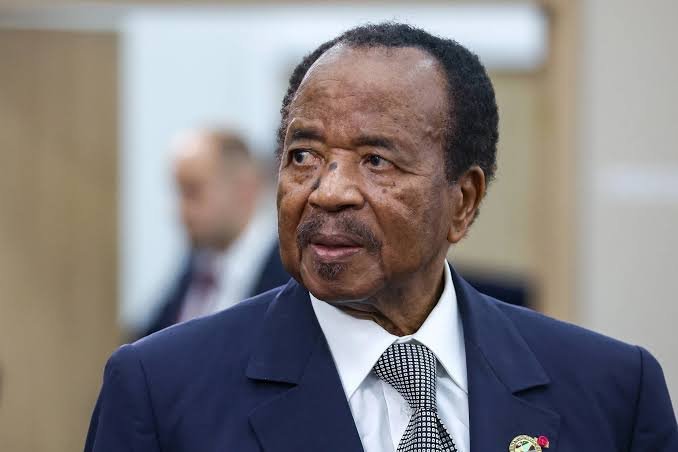
President Paul Biya announced the date on Monday, November 9, through a presidential decree read on state radio, bringing an end to months of uncertainty surrounding the country’s delayed electoral timetable.
The elections will allow voters to choose members of the National Assembly and municipal councillors on the same day. According to reports on the decree, polling stations are expected to open at 8am and close at 6pm local time.
The announcement marks an important development in Cameroon’s political calendar, particularly as the country continues to navigate tensions following the disputed 2025 presidential election.
Cameroon Confirms February 2027 Election Timetable
The February 7 date covers two separate electoral processes: parliamentary elections and municipal polls. Both were originally expected earlier but were postponed twice, resulting in extensions to the mandates of elected officials.
The terms of members of the National Assembly were extended until December 20, 2026, while the mandate of municipal councillors was prolonged until February 28, 2027.
The decision to conduct both elections simultaneously is expected to help clarify the country’s political and administrative arrangements before those extended mandates expire.
Cameroon’s electoral authorities will now have to intensify preparations for the polls, including arrangements for voter participation, candidate registration, electoral materials and the organisation of voting centres across the country.
The date also gives political parties a clearer timetable for selecting candidates, negotiating alliances and preparing their campaigns.
Paul Biya Faces Another Major Political Test
The announcement comes under the leadership of President Paul Biya, who has governed Cameroon since 1982.
At 93, Biya remains one of Africa’s longest-serving political leaders and the world’s oldest serving head of state. His administration has been at the centre of several political debates, particularly concerning governance, electoral competition and the country’s institutional future.
His victory in the October 2025 presidential election generated significant controversy. Opposition candidate Issa Tchiroma Bakary rejected the official outcome and declared himself the winner, prompting a political confrontation that contributed to demonstrations and a security crackdown.
Bakary subsequently left Cameroon for exile in The Gambia after calling on supporters to defend what he described as his electoral victory.
The government, however, maintained its position on the official election outcome.
The next parliamentary and municipal elections will therefore take place against the background of unresolved political disagreements and questions about the level of participation by opposition parties.
Opposition Party Suspension Adds to Political Tensions
The electoral announcement also follows government action against the Cameroon National Salvation Front, known by its French acronym FSNC.
The party, associated with opposition figure Issa Tchiroma Bakary, was suspended by the authorities in October 2026.
The development adds another complication to preparations for the February elections, particularly for opposition groups seeking to organise their political activities and contest seats at national and local levels.
The broader political environment remains sensitive following the protests that followed the 2025 presidential vote.
How political parties respond to the new election timetable, and whether opposition groups can participate effectively, will be important issues as the campaign period approaches.
Cameroon Awaits Government Reshuffle and Vice-President Appointment
Beyond the electoral calendar, Cameroon is also waiting for developments involving the country’s executive leadership.
A government reshuffle announced nearly a year ago has yet to take place, while attention has also turned to the appointment of a vice-president.
The position was reintroduced through a constitutional reform adopted in April 2026. Under the revised arrangement, the vice-president is expected to succeed the president if the incumbent dies while in office.
The restoration of the office has generated interest because of its implications for presidential succession and the country’s political structure.
Biya’s extended periods outside Cameroon have also attracted political discussion. He returned to Yaounde in August after spending more than two months in Geneva, Switzerland, an absence that drew criticism from opposition figures.
These developments form part of the wider political background against which the 2027 elections will be organised.
What the February 2027 Elections Mean for Cameroon
The upcoming elections will determine the composition of the National Assembly and local municipal councils, two important levels of government responsible for national legislation and local administration.
The parliamentary vote will be particularly significant because it will determine the balance of political representation in the country’s legislature.
During the February 2020 legislative elections, the ruling Cameroon People’s Democratic Movement (CPDM) secured 152 of the National Assembly’s 180 seats. The next election will provide an opportunity to assess whether that distribution of political power changes.
Municipal elections will also shape local leadership across the country, with councillors playing roles in community administration and local development.
For voters, the February 7 exercise will offer an opportunity to select representatives at both national and municipal levels. For political parties, it will be a major test of their organisation, public support and ability to compete under the prevailing electoral conditions.
The authorities now face the task of ensuring that preparations proceed according to the announced schedule.
With the two previously delayed elections assigned a common date, attention will increasingly shift towards candidate selection, campaign activities, electoral administration and the participation of opposition parties.
Whether the February 2027 polls ease political tensions or generate further disputes will depend partly on how the electoral process is managed and how competing political groups respond to the outcome.
For now, President Biya’s announcement has provided a firm date for Cameroon’s next major electoral exercise after months of uncertainty.