Human Rights Watch has accused Mali’s military, its Russian-linked allies and armed opposition groups of committing serious abuses during the country’s worsening conflict, warning that civilians and captured soldiers remain at risk as violence continues.
In a report released on October 19, 2026, the international rights organisation said forces on opposing sides had carried out acts that violate international humanitarian law. It called on the African Union (AU) to take stronger action to protect civilians, investigate alleged crimes and ensure those responsible are held accountable.
The findings come amid renewed fighting involving Mali’s military government, Islamist militants and separatist fighters. The violence has placed communities in central and northern Mali under growing pressure, with reports of civilian deaths, injuries and retaliation against people suspected of supporting armed groups.
Human Rights Watch Raises Alarm Over Military Operations
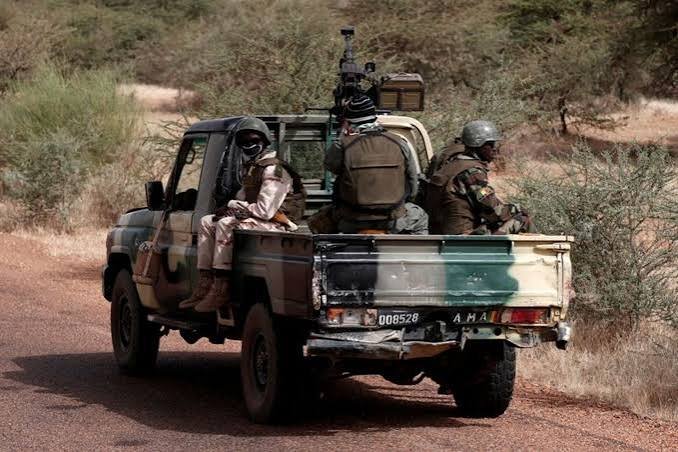
According to Human Rights Watch (HRW), the Malian armed forces and their Russian-linked partners, known as the Africa Corps, have been implicated in operations that killed and injured civilians. The organisation said some incidents involved airstrikes and others occurred during detention or security operations.
HRW’s investigation drew on remote interviews conducted between July 30 and September 20. Researchers spoke to 30 people, including eyewitnesses, community representatives, journalists, human rights defenders and a Malian soldier. The group also examined online footage, photographs and material linked to alleged drone strikes.
The report comes after a surge in attacks by Islamist and separatist forces. HRW said the military’s response has included operations in which civilians were harmed, as well as reprisals against ethnic communities accused of cooperating with insurgents.
The organisation stressed that security operations must distinguish between combatants and civilians. Under the laws of war, parties to a conflict are required to take precautions to protect civilians and cannot deliberately target people who are not participating in hostilities.
July Attack Raises Concerns Over Captured Soldiers
The report also examined allegations that armed groups tortured and killed Malian soldiers captured during an attack on a military convoy near Tabrichat in the Gao region on July 18.
The convoy was travelling between Anefis and Gao when it came under attack. The Islamist group Jama’at Nusrat al-Islam wal-Muslimin (JNIM) and the separatist Azawad Liberation Front (FLA) both claimed involvement in the operation.
Human Rights Watch reviewed footage appearing to show captured soldiers being beaten and shot. The organisation said at least 19 troops who had surrendered were reportedly executed, while the fate of other personnel remained uncertain.
The incident has also raised concerns among relatives seeking information about missing soldiers. According to HRW, some families said they had struggled to obtain clear answers from military authorities about their loved ones’ fate.
The treatment of captured combatants is governed by international humanitarian law. Prisoners and soldiers who have surrendered must be treated humanely and must not be tortured or summarily executed.
JNIM acknowledged that killings of captives had taken place but said it had not ordered the incident. The FLA, meanwhile, denied that its forces carried out the executions and said it was checking allegations of violations by its members.
Civilian Deaths and Injuries in Central Mali
Beyond the allegations involving captured soldiers, HRW documented an incident in the central Mopti region in which a military strike reportedly killed civilians and left others seriously injured.
Witnesses described people suffering severe wounds after an attack in a village market area. Some injured residents reportedly avoided seeking medical care at hospitals because they feared possible reprisals.
The rights group said the available evidence raised questions about whether the military had taken adequate steps to confirm that its targets were combatants. It also said that, as of mid-September, it was not aware of an official investigation into the incident or compensation for the affected families.
The allegations highlight the dangers faced by residents living in areas where government forces and armed groups operate. Civilians can be caught in attacks, accused of supporting one side or left without reliable access to medical treatment and protection.
Conflict Intensifies as Armed Groups Challenge the Government
Mali has faced a prolonged security crisis involving Islamist armed groups, separatist movements and government forces. The situation escalated further after coordinated attacks on April 25 by JNIM and FLA fighters, who are seeking to challenge the military authorities led by General Assimi Goïta.
The military government has relied increasingly on air operations and support from Russian-linked Africa Corps personnel in its campaign against insurgents. However, HRW said the response has been accompanied by serious allegations of civilian harm.
The report also referred to figures from the Armed Conflict Location & Event Data project (ACLED), which monitors political violence. Its data indicated that between April and August 2026, Malian forces and Africa Corps personnel carried out 49 airstrikes, compared with 22 during the same period in 2025. The organisation recorded 89 civilian deaths from those strikes, more than double the 44 reported for the corresponding period a year earlier.
ACLED data cited by HRW also attributed 268 civilian deaths to Malian armed forces during April to August, while JNIM was linked to 134 civilian deaths over the same period. These figures reflect reported incidents collected by a monitoring organisation and should be understood within the limitations of conflict-zone verification.
African Union Urged to Push for Accountability
HRW said international organisations and governments have not done enough to address abuses by the parties fighting in Mali. It urged the African Union’s Peace and Security Council to convene a dedicated session on civilian protection and accountability.
The group wants the AU to publicly condemn violations by all sides, seek urgent reporting on measures to protect civilians and encourage independent investigations into alleged crimes by the military, its allies and armed opposition groups.
HRW also called for support from AU human rights experts to help investigate the incidents and establish accountability.
The organisation argues that monitoring and public statements alone will not be enough without credible investigations and concrete steps to prevent further harm. It said sustained scrutiny could help put pressure on the warring parties to respect their obligations under international law.
Malian authorities had not responded to HRW’s earlier letter seeking answers about its findings, according to the organisation.
A Growing Humanitarian and Human Rights Challenge
The allegations present a difficult challenge for Mali, where the authorities are battling armed groups while facing scrutiny over the conduct of military operations. Abuses by insurgents, including attacks on captured soldiers, add to the risks faced by security personnel and civilians alike.
For people living in affected communities, the consequences extend beyond immediate casualties. Fear of retaliation, uncertainty over missing relatives and concerns about travelling to obtain medical treatment can deepen the impact of the conflict.
HRW’s central message is that no party should be exempt from scrutiny. It says alleged violations must be investigated regardless of whether they involve government forces, their allies or armed opposition groups.
Whether the African Union and other international bodies respond with sustained pressure and practical measures may prove important in determining whether civilians receive better protection as Mali’s conflict continues.