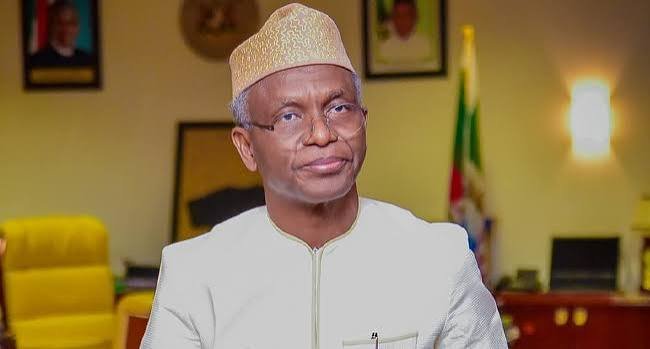
The Court of Appeal sitting in Kaduna has reserved judgment on former Kaduna State Governor Nasir El-Rufai’s appeal challenging the decision of the state High Court to deny him bail.
The appellate court reached the decision after listening to arguments from lawyers representing El-Rufai and the Independent Corrupt Practices and Other Related Offences Commission (ICPC), which is prosecuting the former governor.
A three-member panel headed by Justice Onyekachi Aja Otisi heard submissions from both sides before reserving judgment. However, the court did not announce a date for delivering its decision.
ICPC Opposes El-Rufai’s Bail Request
During the proceedings, ICPC counsel Ayodeji Adedipe asked the Court of Appeal to reject El-Rufai’s appeal and uphold the decision of the Kaduna State High Court.
Adedipe told the appellate court that El-Rufai had previously submitted three separate applications seeking bail before the trial court, but all three were unsuccessful.
According to the prosecution, the first application was dismissed, while the second was rejected after the former governor failed to establish circumstances that would justify granting another bail request.
The ICPC said a third application was subsequently filed and also refused by the lower court. However, rather than appeal that latest decision, El-Rufai challenged the ruling relating to his second bail application.
The prosecution further argued that the defence did not inform the Court of Appeal that the third bail application had also been rejected. On that basis, the ICPC described the appeal as lacking merit and urged the appellate court to dismiss it.
El-Rufai’s Lawyer Makes Case for Bail
Representing El-Rufai, senior lawyer Paul Erokoro (SAN) urged the appellate court to overturn the High Court’s decision and release his client on bail while the criminal proceedings continue.
Erokoro maintained that the offences for which El-Rufai is being prosecuted are bailable and are not capital offences. He argued that continued detention was therefore difficult to justify under the circumstances.
The lawyer also raised concerns about the effect of detention on El-Rufai’s ability to prepare his defence.
According to Erokoro, remaining in custody has made it more difficult for the former governor to maintain adequate access to his lawyers and witnesses. He further argued that restrictions surrounding confidential communication could affect the preparation of the defence.
Political Dimension Raised in Court
El-Rufai’s legal team also drew attention to the former governor’s position as a prominent opposition politician.
Erokoro questioned the timing of the criminal proceedings, suggesting that the charges came at a politically significant period ahead of Nigeria’s 2027 general elections.
The defence has maintained that the court should consider the circumstances surrounding El-Rufai’s detention while deciding whether he should be granted bail.
El-Rufai, who served as Kaduna State governor between 2015 and 2023, is facing prosecution by the ICPC over alleged financial offences linked to his administration. He has denied wrongdoing.
What Happens Next?
With the Court of Appeal reserving judgment, El-Rufai’s bail request now awaits the appellate court’s decision.
No date has been announced for the judgment, meaning the former governor will have to wait for the court to communicate when its ruling will be delivered.
The case has attracted considerable attention because of El-Rufai’s political profile and the wider debate surrounding his detention and the corruption allegations against him.
For now, the key question remains whether the Court of Appeal will overturn the Kaduna State High Court’s refusal and grant El-Rufai bail pending the conclusion of his trial.