Ghanaian President John Dramani Mahama has announced plans to end exports of unprocessed mineral ores by 2030, as his administration seeks to increase local processing, expand manufacturing and retain more economic value from the country’s natural resources.
The proposal would gradually restrict overseas shipments of raw materials such as bauxite, manganese, iron ore and lithium. Instead, the government wants a larger share of these resources to be processed within Ghana, creating opportunities for local industries, skilled workers and businesses.
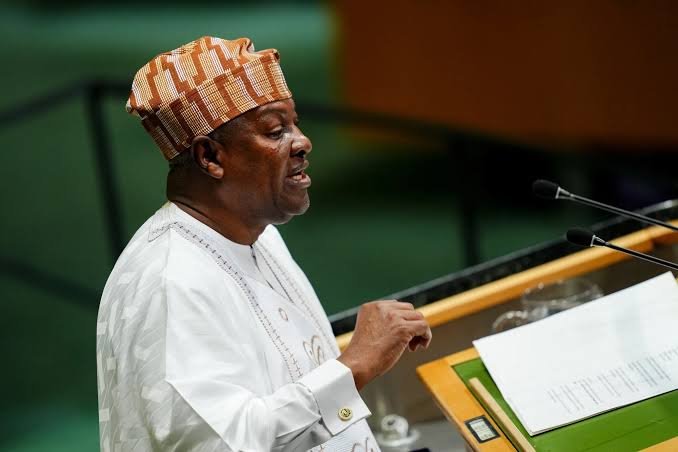
Mahama announced the target on October 19 while addressing the 2026 Mining in Motion Summit in Accra. He argued that Ghana should move away from a system in which it exports minerals in their basic form and later imports finished products made from those same resources.
The policy signals a major shift in the government’s approach to the mining sector. Rather than focusing primarily on extracting and exporting commodities, Ghana wants to develop more of the industrial activities that turn minerals into higher-value products.
However, the proposed restrictions will be introduced in stages, with legislation, requirements tailored to individual minerals and clear implementation schedules expected to guide the transition.
Ghana Plans Phased Restrictions on Raw Mineral Exports
Mahama said the government would not introduce a blanket change overnight. Instead, it intends to establish separate requirements for different minerals, taking account of their processing needs and the investments required to develop local capacity.
The proposed approach will require legal measures and transparent timelines to explain when and how restrictions apply. This is intended to give mining companies and investors time to prepare for the new rules while allowing the government to monitor progress.
The policy will cover several resources important to Ghana’s mining economy, including bauxite, manganese, iron and lithium. These minerals are used in industries ranging from aluminium production and steelmaking to batteries and other industrial technologies.
For Ghana, the objective is to retain more of the value generated along the mineral supply chain. Processing ores domestically could create additional business opportunities beyond extraction, including refining, manufacturing, engineering and transportation.
The government has also indicated that investors seeking access to Ghana’s mineral resources will increasingly be expected to contribute to domestic processing and industrial development.
Why Mahama Wants Ghana to Process More Minerals Locally
Ghana is one of the world’s major gold producers, and mining remains an important source of export earnings and economic activity. But the government wants the sector to contribute more to industrial development by expanding the work carried out after minerals are extracted.
When raw ores are exported, much of the refining and manufacturing activity takes place abroad. Processing minerals at home could allow Ghanaian businesses to capture a larger share of the value created, while supporting technical employment and the development of local expertise.
The strategy could also help strengthen domestic supply chains. For example, locally processed aluminium and steel could supply construction, transport, manufacturing and mining companies, reducing reliance on imported materials where local production is competitive.
Still, building a successful processing industry requires substantial investment. Mineral-processing facilities need dependable electricity, transport infrastructure, skilled workers, financing and access to suitable technology. The government will need to address these requirements if the 2030 target is to become achievable.
Investors Could Face New Processing Requirements
Mahama has signalled that mining companies and other investors will be expected to play a role in Ghana’s industrial ambitions.
Under the proposed phased approach, companies seeking access to the country’s mineral resources could face clearer obligations to support local processing rather than exporting all their output in raw form.
The government has already introduced restrictions on exports of iron scrap and non-ferrous metals, according to the president. The proposed raw-ore policy would extend the wider effort to retain more mineral value within the domestic economy.
The details will matter. Investors will need clarity about which minerals are covered, the timetable for compliance and what processing capacity must be available before restrictions take effect.
If requirements are introduced without sufficient infrastructure or financing, some projects could face higher costs or delays. Conversely, predictable regulations and practical support for processing investments could encourage companies to establish more facilities in Ghana.
The government’s challenge will be to balance its industrial objectives with the need to maintain investment in exploration, extraction and mineral development.
Gold Refining and Aluminium Production Form Part of the Plan
Ghana’s push for greater domestic value addition is also reflected in its plans for gold refining and the development of the aluminium industry.
Mahama said the Ghana Gold Board and the country’s gold-refining policy were intended to increase local participation in activities such as assaying, refining and related services. These activities can create additional opportunities for businesses and skilled professionals instead of limiting domestic participation largely to the extraction and sale of gold.
The government also wants to modernise the Volta Aluminium Company (VALCO) and strengthen the domestic aluminium value chain, from bauxite to alumina and aluminium products. Developing this sector could support manufacturing and supply materials for other industries.
Plans to strengthen iron and steel production are another part of the broader industrialisation agenda. A stronger local steel industry could help supply construction, transport and mining businesses, while creating opportunities for further manufacturing.
These ambitions will require long-term investment and reliable access to energy. Refining and smelting are energy-intensive activities, making electricity supply and operating costs important factors in determining whether domestic facilities can compete internationally.
Can Ghana Achieve the 2030 Target?
The deadline gives Ghana roughly four years to establish the policies, infrastructure and industrial capacity needed to significantly reduce exports of unprocessed mineral ores.
That is an ambitious undertaking, and the announcement represents a policy target rather than proof that the transition is already secured. The pace of implementation will depend on legislation, financing, investor commitments and the readiness of local processing facilities.
The government has said the transition will be gradual and adapted to the requirements of individual minerals. That approach could give businesses time to invest, but clear rules and consistent implementation will be essential.
Ghana will also need to ensure that processing projects deliver benefits beyond export statistics. The intended gains include skilled employment, stronger domestic businesses, technology transfer and greater opportunities for manufacturers to use locally processed materials.
Mahama’s proposal forms part of a wider debate across Africa about how mineral-rich countries can retain more of the economic benefits of their resources. Governments increasingly want to move beyond exporting raw commodities and build industries that produce refined materials and finished goods.
For Ghana, the 2030 target sets out the direction of travel. The key test will be whether the government can turn that commitment into viable processing industries while keeping investment flowing into the mining sector.