Guinean President Mamadi Doumbouya has invited domestic and international investors to pursue opportunities tied to Simandou, the country’s large iron ore, railway and port development. Speaking at the opening of the first Simandou Mining Summit, he presented the project as a potential driver of economic diversification and industrial growth.
The three-day summit opened on Wednesday, November 11, on Kassa Island, off the coast of Conakry. Its theme focused on mining as an engine of economic diversification under the government’s Simandou 2040 programme. The event came a year after the integrated project’s official inauguration at the port of Morébaya.
Doumbouya told attendees that Guinea could offer investors stability, a long-term development framework and business opportunities. He urged them to consider not only mining, but also energy, agriculture, logistics, digital technology and tourism. He called for partnerships based on equal terms, commitments being honoured and a fair share of the value created.
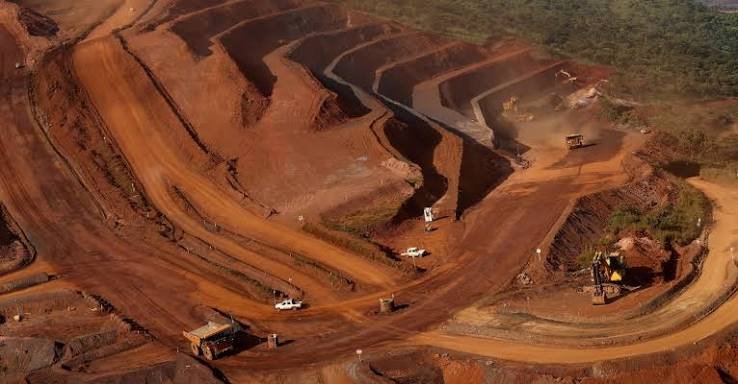
At the heart of the pitch is the Simandou project’s linked infrastructure: iron ore mines in southeastern Guinea, a trans-Guinean railway and port facilities for exporting the mineral. APA reports that the project involves the Guinean state and companies including Baowu Steel, Chinalco, Rio Tinto and Winning International, with overall investment exceeding $20 billion. The railway is planned to extend more than 650 kilometres.
The government’s stated ambition is to use that infrastructure to support more activity inside Guinea. Doumbouya said the country should move beyond exporting raw materials and process more of its resources domestically. He cited plans for a steelworks and the development of alumina refineries as examples of the kind of industrial investment he wants to attract.
Those projects were presented as ambitions and opportunities; the summit report does not say that the steelworks or new alumina refineries are already operating. Separately, Doumbouya said the Nimba Gold Refinery was operational. He also pointed to the Compagnie du TransGuinéen, or CTG, which is expected to make rail infrastructure available to multiple operators under equitable conditions. Guinea holds a 15% stake in the CTG, according to APA.
The Simandou 2040 programme is intended to provide a longer-term framework for turning resource development into jobs, skills training, business growth and industrialisation. APA describes it as a 15-year socioeconomic transformation plan. The president also highlighted the proposed Simandou Academy, which he said would help train young people for skills needed as the economy develops.
The programme is associated with more than $200 billion in investment over 15 years. That figure represents the scale of investment envisaged across the national development plan; the summit report does not establish that the full amount has been secured or committed. It is distinct from the more than $20 billion in overall investment reported for the Simandou mining and transport project itself.
The summit also gives Guinea a platform to court investors as the country seeks to turn its mineral wealth into broader economic gains. Independent reporting has highlighted the scale of the challenge: the project depends on completing and operating a complex chain of mines, rail links and port infrastructure. Rio Tinto’s SimFer joint venture said in August 2026 that construction at the mine and port was progressing, with port commissioning then expected in the first quarter of 2027.
Doumbouya’s appeal therefore extends beyond attracting capital to the extraction of iron ore. His government is positioning Simandou as a foundation for investment across several sectors and for more domestic processing. The summit’s central promise is that the project’s benefits can reach beyond the mine itself. Whether that promise translates into wider employment, infrastructure access and local industry will depend on how the investment plans are delivered.