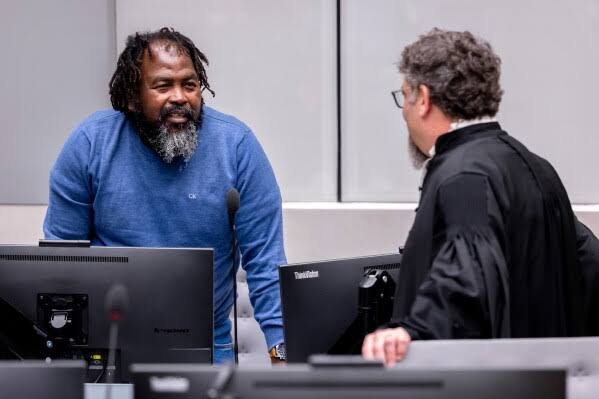
The International Criminal Court (ICC) has convicted former Central African Republic rebel commander Mahamat Said Abdel Kani over crimes against humanity committed during the country’s violent conflict in 2013.
Judges at the ICC in The Hague found Said guilty on four counts, including torture, persecution and severe deprivation of liberty. The case centred on his alleged role in overseeing a detention facility in Bangui where people accused of supporting then-President François Bozizé were held and subjected to serious abuse.
Said, 56, was a senior member of the predominantly Muslim Seleka rebel coalition, which seized control of the Central African Republic in 2013 and forced Bozizé from power. The takeover was followed by widespread violence and the emergence of the mainly Christian anti-Balaka militias.
ICC finds Said responsible for abuses
According to the judges, Said exercised authority over the Central Office for the Repression of Banditry, commonly known by its French acronym OCRB, in Bangui.
The facility became a key location for the detention and mistreatment of people regarded as opponents of the Seleka administration.
During the judgment, presiding Judge Miatta Maria Samba described evidence concerning beatings, torture and degrading treatment of detainees. Witnesses also told the court about extremely poor conditions inside the facility, including cramped and unsanitary cells.
Human Rights Watch said the conviction represents an important measure of justice for victims of abuses attributed to the Seleka movement.
The organisation noted that Seleka forces had seized Bangui in March 2013 after overthrowing Bozizé, with civilians becoming victims of violence and looting during the conflict.
Some war crimes charges dismissed
While Said was convicted on crimes against humanity charges, the ICC did not find him guilty of every offence brought against him.
The judges acquitted him of three war crimes charges, determining that the armed conflict had ended by the time some of the alleged acts occurred. Prosecutors had accused him of serious offences linked to the detention and mistreatment of prisoners, but the court distinguished between conduct that met the legal requirements for crimes against humanity and those specific war crimes charges.
Said had denied the allegations against him. His sentence will be determined during a separate hearing.
Verdict follows years of ICC investigations
The conviction comes after years of international efforts to establish accountability for crimes committed during the Central African Republic’s conflict.
The ICC has investigated the situation in the country since 2014, following a referral by the Central African Republic government. The court has previously prosecuted members of opposing armed factions involved in the violence.
In July 2025, ICC judges convicted two anti-Balaka leaders, Alfred Yekatom and Patrice-Edouard Ngaïssona, of war crimes and crimes against humanity. Yekatom received a 15-year prison sentence, while Ngaïssona was sentenced to 12 years. Appeals against that judgment are ongoing.
Said’s conviction therefore represents another major judgment arising from the conflict, this time involving a senior figure from the Seleka side.
Justice efforts continue in CAR
The latest ICC ruling comes as the Central African Republic continues to pursue accountability through both international and domestic institutions.
A Special Criminal Court was established in Bangui to prosecute serious crimes committed in the country since 2003. The court has already delivered several verdicts and continues to handle cases involving alleged war crimes and crimes against humanity.
Human Rights Watch has argued that continued support for both the ICC and Central African judicial institutions remains necessary because many victims of atrocities have yet to receive justice.
For survivors of the 2013 violence, the verdict against Said provides a formal judicial finding concerning abuses at one of the conflict’s detention facilities. However, his eventual sentence will still have to be determined by the ICC.
The ruling also adds to a growing body of international court decisions concerning the Central African Republic, where rival armed groups committed serious abuses during years of political and sectarian violence.
With Said’s sentencing still pending, attention will now turn to the next stage of the proceedings and the punishment the ICC will impose for the crimes for which he was convicted.