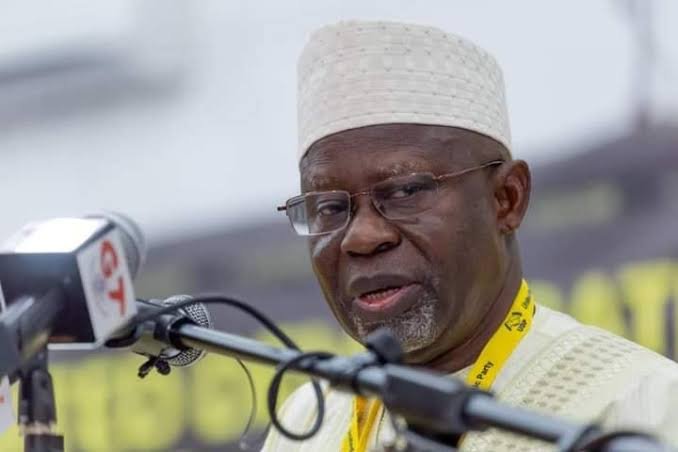
Gambian opposition politician Ousainou Darboe has formally entered the country’s 2026 presidential race, setting the stage for another contest over the country’s political leadership.
Darboe’s decision to pursue the presidency adds another significant development to preparations for the December 2026 election, as political parties and opposition figures position themselves ahead of the national vote.
The veteran politician, who leads the United Democratic Party (UDP), has remained an influential figure in Gambian politics since the country’s transition away from the long rule of former president Yahya Jammeh.
His entry into the presidential contest is expected to place the UDP at the centre of discussions surrounding the opposition’s strategy, political alliances and campaign priorities.
Darboe Makes Sixth Attempt to Become President
At 78, Darboe is preparing for his sixth presidential bid, having previously contested the elections in 1996, 2001, 2006, 2011 and 2021.
Despite his previous unsuccessful attempts, the veteran opposition politician has maintained a prominent position in the country’s political landscape.
On Monday, November 9, 2026, Darboe submitted his nomination documents to the Independent Electoral Commission (IEC), chaired by Joseph Colley.
He was accompanied by thousands of United Democratic Party supporters, many of whom wore yellow outfits representing the party’s official colours.
His nomination documents included proof of Gambian citizenship, tax clearance certificates, an asset declaration, educational records, a one-million-dalasi deposit and 5,000 supporting signatures required under the country’s electoral regulations.
Following the submission, the electoral commission indicated that candidates would be informed about the outcome of their applications by November 16.
The nomination process is an important stage in determining which aspirants will officially qualify to contest the December presidential election.
Darboe also confirmed that the 2026 election would represent his final attempt to become president, bringing an end to his decades-long pursuit of the country’s highest political office.
From Political Ally to Rival of President Adama Barrow
One of the major political developments surrounding Darboe’s candidacy is his complicated relationship with incumbent President Adama Barrow.
The two politicians were once important allies in the opposition movement that challenged the government of former president Yahya Jammeh.
During the 2016 presidential election, Darboe and the UDP supported Barrow’s candidacy, which eventually ended Jammeh’s 22-year rule.
However, Darboe was unable to participate freely in the political process at the time because he had been imprisoned under Jammeh’s administration.
Following Barrow’s victory, Darboe became part of the new government, serving first as foreign minister before eventually becoming vice-president.
Their political relationship deteriorated in 2019, resulting in a split that transformed the former allies into political rivals.
Since then, Darboe has continued leading the UDP, positioning the party as a major opposition force against Barrow’s administration.
The breakdown in their relationship has become an important part of Gambian political discussions ahead of the December 2026 election.
Darboe Promises to Fight Corruption and Revive the Economy
In presenting his presidential ambition, Darboe has placed considerable emphasis on fighting corruption, improving economic conditions and restoring public confidence in government.
The UDP leader said that, if elected, his administration would pursue policies aimed at improving the country’s economic and social development.
He has also criticised the economic circumstances contributing to the increasing number of young Gambians attempting dangerous journeys to Europe in search of better opportunities.
The phenomenon, commonly referred to as the Backway migration route, has remained a major concern for families and authorities in The Gambia.
Darboe argued that the growing number of young people leaving the country reflects deeper problems with economic opportunities and government policies.
He has promised to tackle the issues by introducing reforms that would create better prospects for Gambians, particularly younger citizens.
The opposition politician also urged voters to examine the development proposals of presidential candidates rather than making their decisions based solely on political loyalty.
His campaign message places corruption, economic transformation and youth migration among the issues likely to feature prominently in his presidential agenda.
Constitutional and Institutional Reforms Among His Priorities
Beyond the economy, Darboe has indicated that constitutional reform and improvements to public institutions would be central to his proposed administration.
He has expressed interest in introducing a new constitution that better reflects the aspirations of Gambians and addresses outstanding questions surrounding the country’s political system.
Other areas he has identified for reform include the security sector, civil service and public administration.
Darboe has also suggested that a single five-year presidential term would give him an opportunity to establish lasting institutional changes.
He wants reforms that would improve the treatment of public servants, strengthen government institutions and introduce greater emphasis on merit in public appointments.
According to his statements following the nomination process, his ambition is to leave behind institutional improvements that could benefit the country beyond his time in office.
Political Alliances Shape the December 2026 Election
Darboe’s entry into the presidential race comes as political groups in The Gambia continue negotiations and explore alliances ahead of the December 5 election.
The ruling National People’s Party (NPP), associated with President Adama Barrow, has secured support from other political figures and organisations.
Among those reported to have aligned with the ruling party are Mamma Kandeh’s Gambia Democratic Congress and lawyer Essa Faal.
These developments add another dimension to the upcoming election, particularly as political parties consider how alliances could influence their participation in the national contest.
The Independent Electoral Commission initially listed 27 prospective presidential aspirants, although some subsequently withdrew their intentions to contest.
The commission has maintained that it is working according to the established electoral timetable, with November 16 scheduled for communicating nomination decisions and the beginning of the official campaign period.
December 5 Election Set to Test Gambia’s Political Landscape
The December 2026 presidential election will provide another important moment for The Gambia as voters prepare to decide the country’s next leader.
For Darboe, the contest represents an opportunity to make another attempt at achieving a political ambition he has pursued for three decades.
His campaign is expected to focus on corruption, constitutional reform, economic development, youth unemployment and migration.
Meanwhile, President Barrow’s ruling political camp is also working to consolidate support through political alliances ahead of the election.
With the nomination process approaching its conclusion, attention is increasingly shifting towards the candidates who will receive official approval to participate.
Darboe’s announcement that this will be his final presidential attempt adds a personal dimension to an election that could have significant implications for the future direction of Gambian politics.
Whether his proposed reforms resonate with voters will ultimately be determined at the ballot box on December 5, 2026.