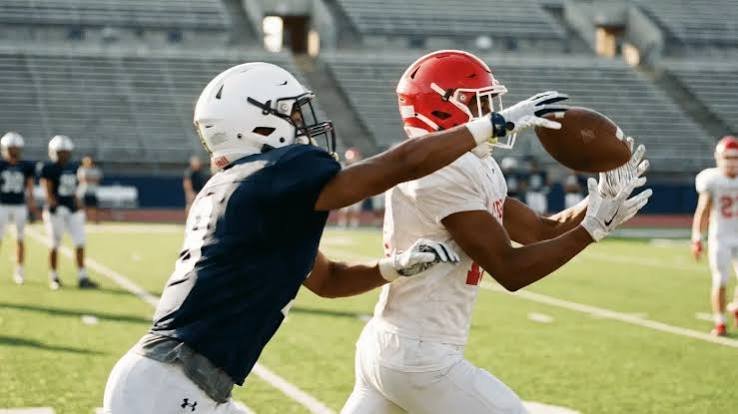
If you’re searching for pbu meaning football, PBU usually stands for pass breakup. It’s a defensive statistic credited when a defender’s play prevents a forward pass from being completed. You may also see the term written as “pass break-up.”
A typical example: a quarterback throws to a receiver, and a defensive back reaches in to knock the ball away. The pass falls incomplete, and the defender may be credited with a PBU. A defender who bats a pass down at the line of scrimmage can earn one too.
What counts as a PBU?
A PBU is more than just an incomplete pass near a defender. The defender must have helped cause the incompletion. That can happen by touching the ball and deflecting it, or, under NCAA statistical rules, by tackling the intended receiver as the ball arrives and thereby preventing the catch. An uncatchable overthrow or a receiver’s unforced drop generally isn’t credited as a pass breakup.
The official statistician determines who receives credit. On some plays, a defender tips the ball and a teammate catches it. In NCAA statistics, the player who first deflected the pass may receive a breakup while the teammate is credited with the interception. A defender who catches the ball himself is credited with an interception rather than a PBU for that play.
PBU vs. interception
Both plays can stop a completion, but the outcome is different:
- PBU: The defender disrupts the pass, and it falls incomplete. The offense keeps possession for its next down.
- Interception: The defender catches the pass, giving the defense possession.
An interception is usually the bigger result because it creates a turnover. A PBU still matters: it can force a punt, prevent a first down or stop a scoring opportunity.
PBU vs. passes defended
Stat labels vary across leagues and stat providers. PBU generally refers to a pass breakup. PD, often short for “passes defended” or “pass defensed,” may refer to a broader total that includes both breakups and interceptions. Check the league or box-score definitions when comparing stats, since the categories aren’t presented identically everywhere. The NCAA manual, for example, treats interceptions and breakups as separate stats before combining them in the “passes defended” category.
The linked D3D4 Football explainer also describes PBU as a pass breakup and discusses how it differs from an interception. One useful clarification: its statement that a defender must always touch the ball is too narrow for NCAA statistics, which can award a breakup when a defender tackles the receiver as the pass arrives and prevents the catch.
Which players record PBUs?
Cornerbacks and safeties often earn the most PBUs because they spend much of the game covering receivers and contesting passes. Linebackers can break up throws in short or intermediate coverage, while defensive linemen may get credit for batting a pass down near the quarterback.
A high PBU total can show that a defender is disrupting passing plays, but it doesn’t tell the whole story. It can also depend on how often opponents throw toward that player. Coaches and analysts may consider PBUs alongside interceptions, targets, coverage performance and the situation in which the plays occurred.
Quick example
On third-and-long, a receiver runs a route past the first-down marker. The quarterback throws a catchable pass, but a cornerback reaches across and knocks it to the ground before the receiver can secure it. The pass is incomplete, the offense has not gained the first down, and the defender may be credited with a PBU.
In short: PBU meaning football is usually “pass breakup”—a defensive play that prevents a pass from being completed without the defender catching it for an interception.