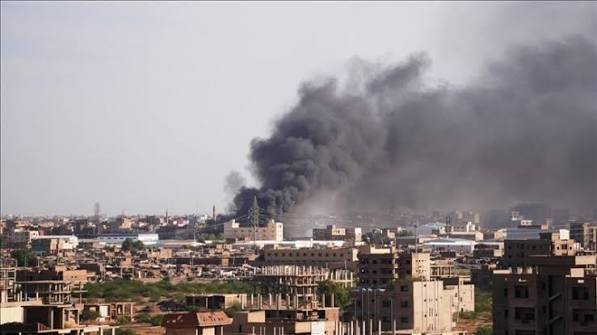
Sudan has accused neighbouring Ethiopia of providing a launching ground for drone attacks targeting vital infrastructure inside its territory, escalating tensions between the two countries as the war between the Sudanese army and the Rapid Support Forces (RSF) continues.
In a statement on Saturday, October 31, Sudan’s Foreign Ministry called on the international community to take action against Ethiopia over alleged drone operations originating from its Assosa air base.
The accusation comes after a renewed wave of attacks damaged electricity infrastructure across several Sudanese states, leaving communities facing power disruptions and raising concerns about the security of essential services.
Sudanese officials say the alleged involvement of Ethiopian territory in the attacks represents a serious threat to the country’s sovereignty and regional stability. Ethiopia has not publicly responded to the latest accusation in the report.
More than 13 electricity stations reportedly damaged
According to Sudan’s Foreign Ministry, more than 13 electricity distribution stations were severely damaged during the latest series of attacks.
The affected facilities are located across Gedaref, Khartoum, Al Jazirah, Red Sea, Sennar, White Nile and South Kordofan states.
The damage has disrupted electricity supplies in several communities, adding to the difficulties facing residents and businesses already affected by years of conflict.
The attacks are part of a broader pattern of drone operations targeting power infrastructure and other strategic facilities in areas controlled by the Sudanese Armed Forces (SAF).
Sudan’s authorities have increasingly accused the RSF of using drones to strike military installations, electricity facilities, fuel depots and economic infrastructure.
The latest incidents have raised fears that the conflict is moving into a more destructive phase, with essential services becoming increasingly exposed to aerial attacks.
Sudan calls on international community to intervene
Foreign Ministry Undersecretary Muawiya Osman addressed foreign diplomats in Port Sudan, urging them to confront what he described as aggression originating from Ethiopia.
He argued that the international community should not overlook the alleged use of Ethiopian territory to conduct operations against Sudanese infrastructure.
Khartoum wants international institutions and foreign governments to take the allegations seriously and exert pressure to prevent further attacks.
Sudanese officials have previously warned that cross-border drone operations could worsen instability across the Horn of Africa, particularly as the conflict continues near the Ethiopian frontier.
The government has also maintained that it reserves the right to defend its territory against external threats.
Ethiopia faces allegations over support for RSF operations
The latest accusation adds to growing diplomatic tensions between Sudan and Ethiopia.
Sudanese authorities have repeatedly alleged that Ethiopia is allowing the RSF or forces associated with it to use its territory for military activities against Sudan.
On October 29, Foreign Ministry official Muawiya Osman Khalid accused Ethiopia of continuing to facilitate attacks, describing the alleged activities as a dangerous development for regional security.
Sudanese officials have also previously claimed that drones crossed into the country from Ethiopian territory.
However, these allegations have not been independently verified, and the identity of those responsible for the latest attacks remains a central issue.
The dispute is particularly sensitive because Sudan and Ethiopia share a long border that has experienced security tensions, especially around the Blue Nile region.
RSF drone campaign targets power and military facilities
The allegations against Ethiopia come amid intensified drone attacks attributed to the Rapid Support Forces.
On October 30, RSF drones reportedly targeted a transformer station and military installations in Shendi, a city in northern Sudan.
The attack triggered a fire at the power facility and caused electricity outages in Shendi and surrounding communities.
Military sites reportedly targeted included the headquarters of the army’s 3rd Infantry Division and a fuel depot. Sudanese sources said air defences intercepted some of the incoming drones.
A day earlier, another attack struck the Um Dabaker thermal power station in Rabak, White Nile State. The strike damaged four transformers and a processing unit, forcing the facility out of service and disrupting electricity supplies in White Nile and North Kordofan.
These incidents illustrate how energy infrastructure has increasingly become a target in the ongoing conflict.
Gold mining and economic infrastructure also under pressure
The drone attacks have extended beyond electricity facilities to include gold mining operations and other economic assets.
In Sudan’s Blue Nile region, attacks on October 29 reportedly hit mining sites, a market, a school and a health facility.
Local officials said the strikes destroyed a fuel tanker and damaged water basins used in gold-processing operations. No casualties were reported in that particular incident.
Gold is an important source of revenue for Sudan’s military-backed government, particularly as the war has disrupted other economic activities and reduced the country’s ability to generate income.
The attacks on mining facilities could therefore affect both local livelihoods and the government’s ability to finance essential imports.
The RSF has not immediately commented on the latest allegations concerning the attacks.
Sudan’s war continues to threaten regional stability
Sudan has been engulfed in a devastating conflict since April 2023, when fighting erupted between the Sudanese Armed Forces, led by General Abdel Fattah al-Burhan, and the paramilitary RSF, commanded by Mohamed Hamdan Dagalo, widely known as Hemedti.
The conflict has destroyed infrastructure, displaced millions of people and created one of the world’s most serious humanitarian emergencies.
The increasing use of drones has added another dimension to the fighting, allowing attacks to reach strategic facilities far from some of the main battlefronts.
The reported involvement of neighbouring territory, if established, could further complicate efforts to contain the conflict and increase the risk of wider regional confrontation.
Sudan’s latest appeal to the international community therefore comes at a time when diplomatic tensions are rising alongside attacks on essential infrastructure.
Diplomatic tensions could deepen between Sudan and Ethiopia
The latest accusations place additional pressure on relations between Khartoum and Addis Ababa.
For Sudan, protecting electricity facilities, mining operations and other strategic assets has become increasingly important as the war continues to damage its economy.
For the wider region, the dispute raises concerns about the possibility of the Sudanese conflict extending beyond its borders through alleged cross-border military operations.
Whether the claims against Ethiopia can be independently established remains uncertain. However, the damage to Sudan’s electricity infrastructure and the growing number of drone attacks demonstrate the serious consequences of the conflict for civilians and essential services.
The international response to the allegations could become an important factor in determining whether tensions between the neighbouring countries escalate further.