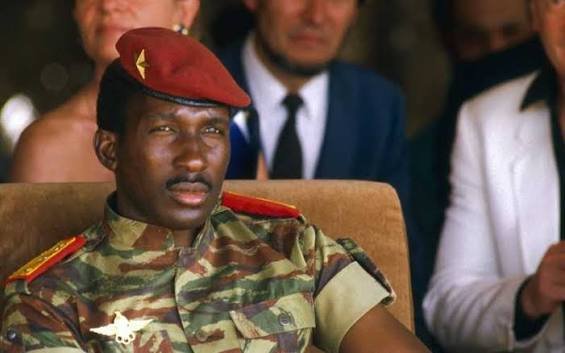
Burkina Faso has marked the 39th anniversary of the assassination of former president Thomas Sankara and 12 of his companions, with current leader Captain Ibrahim Traoré urging citizens to protect national unity and remain vigilant against internal divisions.
The commemorative ceremony took place on Thursday, October 15, 2026, at the Thomas Sankara Memorial in the capital, Ouagadougou. Prime Minister Rimtalba Jean Emmanuel Ouédraogo represented Traoré and delivered the president’s message to officials and members of the public who gathered to honour the former revolutionary leader.
Sankara and his companions were killed on October 15, 1987, during a coup that brought Blaise Compaoré to power. Nearly four decades later, Sankara remains an influential figure in Burkina Faso and across Africa, particularly among people who admire his emphasis on national independence, social justice and economic self-reliance.
Traoré used the anniversary to connect Sankara’s political legacy with the challenges confronting Burkina Faso today, arguing that unity, collective responsibility and commitment to national development are essential to the country’s future.
The commemoration also highlighted the government’s continued emphasis on sovereignty, local production and the preservation of Sankara’s memory for younger generations.
Ibrahim Traoré Warns Against Divisions Within the Revolution
In his address, Traoré warned that internal disagreements and mistrust could undermine a political movement just as seriously as threats from outside.
The president drew lessons from Sankara’s assassination, arguing that the former leader was killed not by openly declared enemies alone but by people who had been close to him.
He urged Burkinabè citizens to resist suspicion, personal rivalries and accusations that could weaken cooperation within the country.
Traoré also stressed that remembering Sankara should involve more than annual ceremonies. In his view, honouring the former president requires people to contribute actively to the country’s development through their work and everyday responsibilities.
He pointed to a range of sectors, including agriculture, manufacturing, education, the media and public service, as areas where citizens could help advance the national project.
The president’s message reflected his government’s effort to present its political programme as a continuation of Sankara’s revolutionary vision, particularly regarding independence, popular mobilisation and the reduction of foreign dependence.
Sankara’s Legacy Remains Central to Burkina Faso’s Political Direction
Thomas Sankara led Burkina Faso from 1983 until his death in 1987. During his presidency, he promoted an ambitious programme focused on social reform, national independence and reducing the country’s reliance on foreign assistance.
His government pursued initiatives in education, healthcare, environmental protection and women’s rights. Sankara also encouraged domestic production, arguing that African countries should rely more heavily on their own resources and capabilities to support economic development.
His political ideas continue to resonate with supporters across Africa, particularly those advocating greater economic independence and a stronger role for African countries in determining their own futures.
During the anniversary ceremony, Traoré highlighted these themes, calling on citizens to strengthen Burkina Faso’s ability to provide for its population and make decisions independently.
He also paid tribute to the country’s defence and security forces and the Volunteers for the Defence of the Homeland, recognising their role in the government’s campaign against insecurity.
Burkina Faso has faced a persistent security crisis involving armed groups, particularly in areas where attacks have displaced communities and disrupted economic activity. The government has made national security a central part of its political agenda.
Traoré’s message linked the country’s security challenges with the broader objective of preserving national sovereignty and strengthening public solidarity.
President Emphasises Local Production and Economic Independence
Economic self-reliance was another major theme of the anniversary address.
Traoré revived one of Sankara’s best-known principles: producing what the country consumes and consuming what it produces. The approach places emphasis on supporting local farmers, manufacturers, artisans and other domestic producers.
The president described local production as an important means of reducing poverty and strengthening Burkina Faso’s capacity to meet its own needs.
He also called for progress across several areas of national sovereignty, including security, food production, economic and monetary affairs, and culture.
The emphasis on food sovereignty is particularly relevant to countries seeking to reduce their vulnerability to disruptions in international supply chains and fluctuations in the prices of imported goods.
Strengthening domestic industries and processing locally available raw materials could also create employment and help retain more economic value within Burkina Faso.
However, achieving these objectives requires sustained investment, reliable infrastructure, access to markets and support for businesses and producers. The anniversary speech set out the government’s priorities but did not establish how quickly all of these goals could be achieved.
The broader message was that Burkina Faso’s development should depend increasingly on the capacity and participation of its own people.
Thomas Sankara Memorial Attracts More Than 200,000 Visitors
The anniversary also drew attention to the growing public interest in the Thomas Sankara Memorial, which opened to visitors on May 19, 2025.
According to figures presented in Traoré’s address, the site had welcomed more than 200,000 visitors by September 30, 2026.
The memorial generated approximately 130 million CFA francs during that period, with the money intended to support the development of infrastructure at the site.
Traoré encouraged citizens and supporters of Sankara’s legacy to contribute to the fundraising campaign known as Ma brique pour Sankara, or My Brick for Sankara.
The initiative seeks to attract contributions towards the memorial’s development and help preserve the former president’s political and historical legacy.
Traoré expressed the hope that the site would become a place where visitors could learn about Sankara’s ideas, Burkina Faso’s history and the wider struggle for African independence.
The ceremony also featured the unveiling of a mural honouring prominent pan-African and revolutionary figures, adding another element to the commemoration.
The memorial’s visitor numbers suggest continued public interest in Sankara’s life and political ideas, although the extent of that interest varies across different groups and communities.
Burkina Faso Seeks to Preserve Sankara’s Legacy for Future Generations
The 39th anniversary served both as a tribute to Sankara and as an opportunity for the current administration to restate its political priorities.
By emphasising unity, local production and sovereignty, Traoré presented Sankara’s legacy as a guide for addressing Burkina Faso’s contemporary challenges.
The anniversary also highlighted the importance of preserving historical memory through public education, memorial projects and cultural activities.
For many of Sankara’s admirers, his legacy represents an enduring call for African countries to strengthen their independence and pursue development policies that respond to the needs of their populations.
At the same time, the current government’s invocation of Sankara’s ideas places its own policies under scrutiny, particularly regarding security, economic development and national cohesion.
As Burkina Faso continues to face significant challenges, the practical results of its efforts to strengthen domestic production, improve security and expand public services will remain important measures of progress.
Nearly four decades after Sankara’s death, his ideas continue to shape political debate in Burkina Faso. The latest commemoration demonstrated that his legacy remains a powerful reference point in the country’s ongoing discussion about independence, development and its future direction.