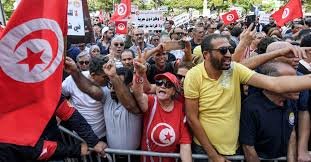
Police in Tunisia have clashed with protesters in several parts of the country, as public anger over deaths involving security operations, inadequate public services and worsening living conditions adds to mounting political tensions.
On Thursday, October 22, 2026, security forces fired tear gas to disperse demonstrators in Ettadhamen, a suburb of the capital, Tunis. The unrest followed the death of a man who had been detained on suspicion of drug dealing, while separate confrontations were reported in southern Tunisia.
The latest disturbances have raised concerns about the possibility of further unrest in a country already grappling with economic difficulties and growing dissatisfaction with the government of President Kais Saied.
Death in Custody Triggers Protests Near Tunis
The demonstrations in Ettadhamen erupted following the death of a man who had been arrested on suspicion of involvement in drug dealing.
His relatives alleged that he died after being subjected to violence by police officers and called for an investigation into the circumstances surrounding his death. They also demanded accountability for anyone found responsible.
However, local media reports offered a different account, saying the man died after swallowing drugs. Tunisia’s Interior Ministry had not provided an immediate response to the allegations when the incident was reported.
The conflicting accounts have left questions about the circumstances of the death unanswered, fuelling calls for clarification from the authorities.
During the demonstrations, protesters reportedly blocked roads, set tyres on fire and threw stones at security personnel. Police responded with tear gas as officers worked to protect a National Guard station in the area.
The incident has intensified public scrutiny of security operations and the treatment of people held in police custody.
Clashes Spread to Southern Tunisia
Tensions were also reported in the southern part of the country, where confrontations broke out in Jebeniana following the death of another man.
The man’s relatives said he died during a pursuit involving security personnel. His death prompted protests, bringing demonstrators into confrontation with police.
Agareb, another town in the Sfax governorate, also experienced clashes, according to reports.
The incidents underline the sensitivity surrounding deaths linked to police operations, particularly at a time when public confidence in institutions is under pressure.
Authorities have not publicly established all the circumstances surrounding the deaths, and the allegations made by relatives remain claims requiring clarification.
Students Protest Over Medical Emergency Response
In the coastal city of Sfax, students took to the streets over the death of a female student who suffered a cardiac problem.
Her colleagues accused ambulance services of taking too long to reach her, arguing that weaknesses in medical infrastructure and emergency response contributed to the tragedy.
The students called for improvements to healthcare services and announced plans for a strike at university faculties in Sfax on Friday, October 23.
Their protest added another dimension to the growing discontent, shifting attention beyond policing and political freedoms to the quality of essential public services.
The complaints reflect broader frustrations over access to healthcare and the ability of public institutions to respond effectively when lives are at risk.
Saied Faces Growing Political Pressure
The clashes came only days after thousands of Tunisians gathered in the capital for a major demonstration against President Kais Saied.
The October 17 protest brought together opposition groups, civil society organisations and members of the Tunisian General Labour Union (UGTT), one of the country’s most influential trade union bodies.
Demonstrators accused Saied’s government of weakening democratic institutions and failing to address the country’s economic difficulties. They also called for greater political freedoms and the release of critics held in detention.
The rally was described by Reuters as the largest protest against Saied in years, signalling renewed efforts by different opposition groups to challenge his leadership.
Saied’s political position has been contested since 2021, when he suspended parliament and concentrated greater powers in the presidency. He later dissolved parliament and oversaw the adoption of a new constitution that expanded presidential authority.
His supporters have defended his actions as necessary to address political deadlock and corruption. Critics, however, say the changes have weakened democratic checks and balances.
Economic Hardship Adds to Public Anger
Tunisia’s political tensions are unfolding alongside persistent economic and social challenges.
Households have faced pressure from the cost of living, while recurring disruptions to water and electricity supplies and shortages of medicines and other essential goods have contributed to public frustration.
Difficulties with employment and declining purchasing power have also remained important concerns for many Tunisians.
The combination of economic pressure, dissatisfaction with public services and disputes over political freedoms has created an increasingly difficult environment for the government.
The recent demonstrations do not necessarily indicate that nationwide unrest is inevitable, but the spread of separate protests over different grievances suggests that dissatisfaction extends beyond a single incident or political group.
The coming days may therefore prove important in determining whether authorities can contain the immediate tensions and respond to demands for accountability and better public services.
For Tunisia, the central challenge remains addressing citizens’ concerns while preventing local confrontations from developing into a broader crisis.