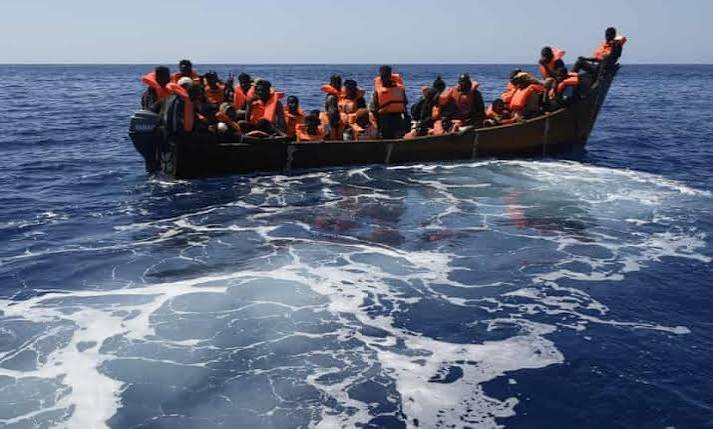
Stricter migration controls in Morocco, Mauritania and Senegal are changing how West African migrants attempt to reach Europe, with more departures shifting south towards The Gambia and other coastal areas, according to a report by the African Press Agency (APA).
The changing pattern comes as the number of West African migrants arriving in Europe by sea has fallen sharply. However, the decline has not removed the dangers associated with irregular migration. Instead, longer journeys across the Atlantic, overcrowded boats and deadly shipwrecks continue to put lives at risk.
Data published by the International Organization for Migration (IOM) on October 14, 2026, showed that 4,566 people from Mali, Senegal, Guinea and The Gambia reached Europe through maritime routes during the first half of 2026. That represented a 59 per cent decrease compared with the same period in 2025.
The figures point to a changing migration landscape in West Africa, where stronger border enforcement is influencing departure points and travel routes, while economic pressures and the desire to find opportunities abroad continue to drive migration.
The Gambia Emerges as an Important Departure Point
The Gambia is becoming increasingly significant in the changing movement of migrants towards Spain’s Canary Islands. As controls tighten along more established routes, some people are travelling farther south to board boats for the hazardous Atlantic crossing.
According to the APA report, some journeys have become approximately 750 kilometres longer, reaching distances of around 2,200 kilometres. Longer crossings expose passengers to greater risks, including engine failure, dwindling food and drinking water supplies, exhaustion and vessels becoming lost at sea.
The consequences can be devastating when boats remain adrift for days or weeks without adequate provisions or reliable communication.
A particularly tragic case occurred in September 2026, when a boat that had departed from the Gambian coast was rescued south of the Canary Islands after drifting for approximately 26 to 27 days.
Of the 128 people reportedly aboard when the vessel set off, only 45 survived, according to the migrant-monitoring platform cited by APA. More than 80 people, including an infant, were reported to have died during the journey.
The incident illustrates the extreme risks involved when migrants attempt long-distance sea crossings in poorly equipped boats.
Migrant Arrivals Fall, but Atlantic Crossing Remains Deadly
The IOM figures show that the number of arrivals from the four West African countries dropped from approximately 11,137 in the first half of 2025 to 4,566 in the same period of 2026.
Yet the reduction in arrivals has not translated into a comparable improvement in safety. Along the Atlantic route to the Canary Islands, arrivals fell by 62 per cent between 2024 and 2025, while recorded deaths and disappearances increased from 1,172 to 1,215.
West African nationals also accounted for a larger share of arrivals along the Western Mediterranean route, rising from 15.6 per cent to 21.9 per cent. This suggests that migration patterns are changing, even as the total number of people reaching Europe declines.
The statistics do not capture every attempted journey or shipwreck. Some boats disappear without being detected, meaning the true number of people who die or go missing at sea may be higher than recorded.
Rescue Operations Highlight the Human Cost
Several recent incidents illustrate the dangers confronting people attempting the journey.
On October 20, 2026, 171 migrants were rescued after their boat ran aground at Pilote Bar, near Gandiol in northern Senegal. The group reportedly included 114 Gambians, 37 Senegalese and one Guinean national. Preliminary findings indicated that the vessel had left the Gambian coast five days earlier and was heading towards Spain.
In another incident in May, Mauritanian coast guards intercepted a boat arriving from The Gambia with 223 people aboard. Those on the vessel included citizens of several West African countries, among them Nigeria, Guinea, Burkina Faso, Senegal and Côte d’Ivoire.
These cases demonstrate that migration by sea is a regional issue involving people from multiple countries, rather than a challenge confined to one nationality or coastal state.
Authorities Target Suspected Smuggling Networks
The changing routes have also created challenges for law enforcement agencies seeking to disrupt networks that organise irregular crossings.
In October, authorities reportedly dismantled a suspected cross-border smuggling operation involving Senegal, The Gambia and Guinea-Bissau. Investigators identified approximately 190 people who were allegedly preparing to travel towards the Canary Islands.
Nearly 140 people were said to have gathered at an apartment in Bara, The Gambia, before a planned transfer to Senegal.
Such cases illustrate how suspected smuggling networks can operate across national borders, requiring authorities to coordinate investigations and share information. At the same time, efforts to combat criminal activity need to account for the safety and rights of migrants, many of whom may be vulnerable to exploitation.
IOM Calls for Cooperation and Safer Migration Options
The International Organization for Migration has called for stronger cooperation between governments, improved protection for people on the move and the creation of safer, legal migration opportunities.
IOM Director General Amy Pope has stressed that no single country can address the challenge independently. Countries of origin, transit and destination need to work together to reduce deaths, tackle smuggling and expand realistic opportunities for young people.
The organisation also highlights an important distinction: migration within West and Central Africa remains a major part of regional mobility. According to figures cited by APA, more than 77 per cent of the 11.3 million migrants living in the two regions originated from within the same region.
People move for many reasons, including employment, trade, family connections and environmental pressures. Policies focused exclusively on preventing journeys to Europe risk overlooking this wider movement of people and the economic relationships it supports.
Balancing Border Security With Migrant Protection
The shifting routes present governments with a difficult challenge. Countries want to manage their borders and disrupt criminal networks, but increasingly restrictive controls can also push migrants towards more remote departure points and longer, riskier crossings.
Addressing the issue requires more than border enforcement. Better access to employment, education and safe migration channels could help reduce the pressure that drives people to undertake dangerous journeys.
The latest figures show that fewer West Africans are reaching Europe by sea, but they also reveal why arrival numbers alone cannot measure the success of migration policy. The safety of the journey, the number of people who go missing and the conditions that drive migration must also be considered.
For West African governments, the priority is to combine effective regional cooperation with protection for migrants and stronger economic opportunities at home. Without that broader approach, the routes may continue to change while the dangers remain.