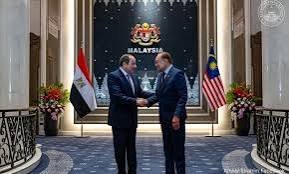
Egyptian President Abdel-Fattah el-Sisi and Malaysian Prime Minister Anwar Ibrahim have called for a political settlement to the escalating Middle East crisis, stressing that diplomacy remains essential to achieving lasting peace and regional stability.
The two leaders discussed the conflict during el-Sisi’s two-day state visit to Malaysia, which concluded on Saturday, October 10, 2026. The visit marked the first time an Egyptian president had travelled to Malaysia in nearly 30 years, highlighting renewed efforts by both countries to strengthen their diplomatic and economic relationship.
During their discussions in Kuala Lumpur, the leaders addressed the situation in Gaza, the broader Israeli-Palestinian conflict and tensions affecting other parts of the region, including the Red Sea, the Horn of Africa and the Strait of Hormuz.
Both leaders criticised Israeli military actions in Gaza and reiterated their support for a peaceful resolution based on international law and the establishment of an independent Palestinian state.
El-Sisi emphasised that lasting peace would require comprehensive political agreements rather than continued military confrontation. He also highlighted the importance of coordinated international efforts to prevent further escalation and address the underlying causes of regional instability.
Egypt and Malaysia Reaffirm Support for Palestinian Statehood
A major focus of the discussions was the longstanding Israeli-Palestinian conflict, with both leaders insisting that a lasting settlement must guarantee the Palestinian people’s right to establish an independent state.
El-Sisi and Ibrahim reaffirmed their backing for a two-state solution based on the borders that existed before the June 1967 war, with East Jerusalem serving as the capital of a future Palestinian state.
The Egyptian president described the Palestinian issue as central to achieving peace in the Middle East, arguing that a comprehensive settlement would provide a foundation for long-term regional stability.
Ibrahim, meanwhile, strongly criticised Israel’s military operations in Gaza and expressed Malaysia’s continued support for the Palestinian people.
The Malaysian prime minister also acknowledged Egypt’s role in providing humanitarian assistance to Palestinians affected by the conflict. He noted that Malaysia had worked with Egyptian authorities to support relief efforts, including arrangements involving injured Palestinians who were brought to Egypt for treatment.
The leaders’ statements reflect their shared position that military action alone cannot resolve the conflict and that a political agreement must address the fundamental questions surrounding Palestinian statehood, security and territorial rights.
Leaders Raise Concerns Over Gaza and Regional Tensions
Beyond the situation in Gaza, the discussions covered a range of security challenges affecting the wider Middle East.
Both governments expressed concern about escalating regional tensions, including developments surrounding the Strait of Hormuz, a strategically important waterway for international energy shipments.
Disruptions or military confrontations around the strait can affect global shipping, energy supplies and international trade, making stability in the area an important concern for countries well beyond the Middle East.
The two leaders also exchanged views on the Horn of Africa and the Red Sea, where security challenges have raised concerns about maritime transport and regional stability.
El-Sisi argued that the crises affecting these areas require comprehensive political agreements and sustained diplomatic engagement.
Egypt’s position reflects its strategic interest in maintaining stability around the Red Sea, a vital route for international commerce and a key connection between Europe and Asia through the Suez Canal.
For Malaysia, developments in the Middle East also carry economic and diplomatic significance because of the country’s international trade links and its longstanding support for the Palestinian cause.
By coordinating their positions, Cairo and Kuala Lumpur are seeking to strengthen diplomatic efforts aimed at reducing tensions and preventing further instability.
Egypt and Malaysia Seek Stronger Economic Cooperation
While regional security dominated much of the discussions, the visit also provided an opportunity for both countries to expand their economic partnership.
Egypt and Malaysia are exploring opportunities to increase trade, encourage investment and develop cooperation in sectors where both economies have complementary strengths.
Malaysian Prime Minister Anwar Ibrahim described Egypt as an important partner because of its influence in Africa and the Arab world.
He argued that closer relations with Cairo could create opportunities for Malaysian businesses to expand their activities across African and Middle Eastern markets.
The two governments also discussed potential collaboration in areas such as education, tourism, industry and investment.
Their economic discussions reflect a broader effort to build stronger commercial links while maintaining cooperation on international political issues.
According to figures cited by the Malaysian Foreign Ministry, bilateral trade between Egypt and Malaysia reached approximately $720 million in 2025.
Trade increased further during the first eight months of 2026, reaching $870 million, representing a reported rise of 74.7 percent. The figures underline the growing importance of the relationship to both countries.
Four Agreements Signed During El-Sisi’s Visit
The state visit produced several agreements intended to strengthen cooperation between Egypt and Malaysia.
The two countries signed four memoranda of understanding covering women’s empowerment, higher education, tourism and investment.
These agreements are designed to provide a framework for expanding collaboration beyond political consultations and into practical areas of economic and social development.
Education remains an important part of the relationship, with Malaysian students having longstanding links to Egyptian institutions, particularly Al-Azhar University.
Both countries have also expressed interest in developing broader educational exchanges and cooperation in additional fields.
Tourism and investment are other areas with potential for growth. Stronger institutional links could help businesses identify opportunities, encourage commercial partnerships and improve connections between the two countries.
The agreements also reflect the willingness of both governments to translate their diplomatic relationship into programmes that deliver tangible benefits.
Egypt and Malaysia are expected to continue discussions through their bilateral cooperation mechanisms, with further work planned to advance agreements reached during the visit.
A Diplomatic Partnership With Wider Regional Significance
El-Sisi’s visit represents an important moment in Egypt-Malaysia relations, bringing together two governments that share concerns about regional security and support diplomatic efforts to resolve international conflicts.
Egypt occupies a significant position in the Arab world and Africa, while Malaysia has developed a prominent diplomatic voice in Southeast Asia and has consistently advocated for Palestinian rights.
Their closer engagement could create additional opportunities for coordinating positions at international forums and supporting initiatives aimed at reducing tensions.
However, translating their shared statements into meaningful progress will require sustained diplomatic work and cooperation with other governments involved in the conflicts.
The situation in Gaza remains particularly complex, with a durable settlement requiring agreement on Palestinian statehood, security arrangements and other longstanding political disputes.
Similarly, tensions around the Red Sea, the Strait of Hormuz and the Horn of Africa involve different actors and interests that cannot be resolved through a single diplomatic initiative.
Nevertheless, the renewed engagement between Cairo and Kuala Lumpur signals their determination to promote political solutions while expanding economic cooperation.
For both countries, the challenge will be to turn diplomatic commitments into practical outcomes that support peace, regional stability and stronger commercial relations.