Libya’s central bank has been plunged into fresh uncertainty following a controversial change in leadership that saw board member Fawzi Abu Khazam assigned to take over the governor’s responsibilities while the status of incumbent Naji Issa remains disputed.
The development unfolded on Thursday, October 22, 2026, after the eastern-based House of Representatives accepted Issa’s earlier resignation request in principle and appointed Abu Khazam to oversee the Central Bank of Libya (CBL) on an interim basis.
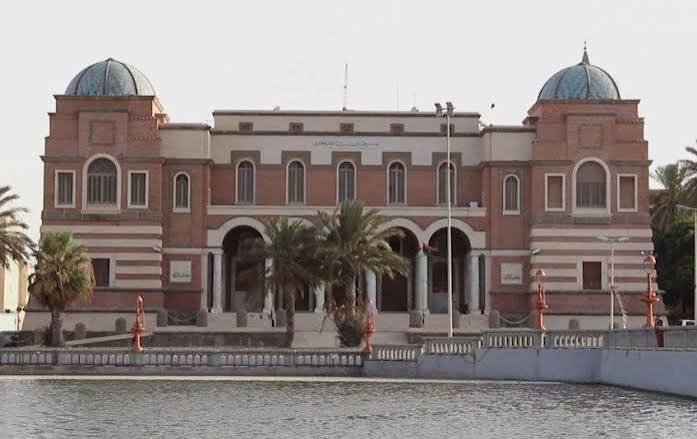
The move was accompanied by reports that security personnel and a committee representing the House of Representatives and the High Council of State entered the bank’s headquarters in Tripoli, where Abu Khazam was installed in the governor’s office.
The transition has triggered objections over the procedure used to change the bank’s leadership, highlighting the political divisions that continue to affect Libya’s state institutions.
Parliament Accepts Issa’s Resignation in Principle
The House of Representatives announced that it had provisionally accepted Issa’s resignation request, which he submitted in August. At the time, the request had not resulted in his departure, and officials had called on him to remain in office while the matter was considered through the appropriate procedures.
The latest decision, attributed to the House’s presidency, tasked Abu Khazam with carrying out the governor’s duties temporarily until parliament makes a final determination on Issa’s resignation and the legal position of the office.
However, Issa has reportedly disputed the move, saying he did not consider himself to have resigned and had withdrawn his earlier request. The Central Bank’s administration also condemned the entry into its headquarters, describing it as a breach of institutional procedures and the integrity of the governor’s office.
These conflicting positions have left questions about the legitimacy and permanence of the leadership change unresolved.
High Council of State Divided Over the Appointment
The controversy has exposed disagreements within Libya’s political institutions over how the central bank leadership should be changed.
Naji Mukhtar, the first deputy chairman of the High Council of State, rejected the move as unilateral and urged Issa not to allow administrative or legal consequences to follow from the decision. Other political figures, however, have appeared more supportive of allowing Abu Khazam to manage the bank’s affairs while the issue is resolved.
The disagreement matters because Libya’s political settlement has long relied on cooperation between competing institutions and factions. Decisions involving the central bank can carry particular weight because the institution manages the country’s monetary policy, foreign currency reserves and important aspects of the state’s financial system.
The dispute therefore goes beyond a change of personnel. It raises broader questions about institutional authority, the procedures for appointing senior officials and the ability of rival political bodies to reach agreement on key economic institutions.
Issa’s Dispute With Government Spending
Issa’s tenure had been marked by mounting pressure over Libya’s public finances and the weakening of the national currency.
According to reporting by Libya Herald, the governor had raised concerns that spending by rival authorities in eastern and western Libya was putting pressure on the economy, contributing to the depreciation of the Libyan dinar and placing the country’s foreign currency reserves under strain.
His efforts to rein in expenditure reportedly brought him into conflict with political actors who rely on public spending to maintain their influence.
At the same time, Issa faced criticism over his inability to stabilise the dinar on the parallel foreign exchange market. The US dollar had traded above 10 Libyan dinars during the week, despite earlier expectations that the currency would strengthen.
The debate over his record has consequently centred on two competing arguments: critics have pointed to the currency’s weakness, while his defenders argue that excessive government spending has made the central bank’s task more difficult.
Who Is Fawzi Abu Khazam?
Abu Khazam is a member of the Central Bank of Libya’s board of directors and comes from the Wadi al-Shati area in southern Libya. His background has been presented as a possible advantage in a country where political competition is frequently divided along regional lines.
His appointment gives him responsibility for managing an institution facing significant economic challenges, including pressure on the dinar, strained public finances and concerns about liquidity and purchasing power.
However, his immediate priority will be to establish whether the interim assignment can proceed without further institutional confrontation. The dispute over the legality of the leadership transition could complicate decision-making and create uncertainty for financial authorities and market participants.
His role is currently described as interim, pending further action by parliament and the completion of the relevant procedures.
Libya’s Political Divisions Complicate Central Bank Governance
Libya has struggled with competing centres of political authority since the 2011 overthrow of Muammar Gaddafi. Rival institutions and administrations have repeatedly disagreed over appointments, public spending and the distribution of national resources.
The central bank occupies a particularly sensitive position because oil revenues are the main source of state income. Its decisions affect public expenditure, access to foreign currency and the wider economy.
Any uncertainty over its leadership risks intensifying concerns about the independence of financial management and the consistency of economic policy.
The reported entry into the bank’s headquarters has added another layer to the dispute. The Central Bank’s administration placed responsibility for securing the premises on the relevant authorities, particularly the Ministry of Defence, and reserved its right to pursue legal action.
At the time of the initial reports, the Tripoli-based government had not publicly commented on the events.
What Happens Next?
The immediate question is whether the interim appointment will be accepted by all the relevant institutions or challenged through political and legal channels.
Parliament is expected to consider Issa’s resignation request further, while objections from within the High Council of State could prolong the dispute. Until the issue is resolved, the bank’s leadership arrangements remain politically contested.
For Libya’s economy, continuity and credibility at the central bank will be essential. Businesses, investors and ordinary citizens are closely affected by exchange-rate movements, public spending decisions and the stability of the financial system.
The leadership change therefore comes at a difficult moment, when authorities face pressure to protect the dinar, manage government expenditure and maintain confidence in the country’s financial institutions.
Whether Abu Khazam’s interim appointment becomes permanent or is overturned, the dispute illustrates how Libya’s political divisions continue to complicate the management of its most important economic institutions.