World Vision Uganda plans to mobilise up to $250 million, equivalent to about Shs900 billion, over the next five years as it redirects more of its humanitarian and development work towards refugee communities and areas facing severe needs.
Under its new five-year strategy covering 2026 to 2031, the organisation expects to spend approximately $50 million, or Shs180 billion, annually on programmes across Uganda.
The shift comes as international donor funding becomes increasingly constrained, forcing humanitarian organisations to reassess where limited resources can have the greatest impact. World Vision says refugee-hosting communities will receive greater attention under the new approach.
Refugees become a major priority
World Vision Uganda National Director Jeremiah Nyaga said the organisation’s priorities are changing after four decades of operations in the country.
Rather than maintaining the same programmes in every location, the organisation plans to concentrate resources in communities where humanitarian needs are considered most urgent.
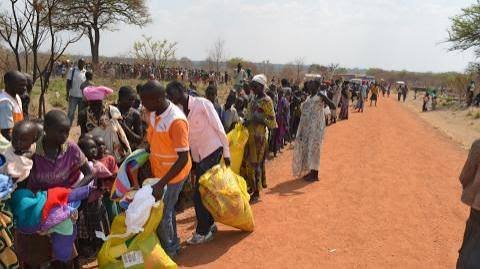
Refugee settlements and neighbouring host communities are expected to feature prominently because of the growing pressure on food supplies, healthcare and education.
Uganda currently hosts more than two million refugees, according to figures cited by Daily Monitor. Nyaga said a significant proportion of them face inadequate access to food, making humanitarian assistance increasingly important.
Food, health and education among key needs
The organisation identified food security, healthcare and education as some of the major challenges confronting refugees and communities hosting them.
Many refugees arrived in Uganda after fleeing conflicts in neighbouring countries, placing additional pressure on services and resources in host areas.
World Vision says its new strategy will therefore seek to direct funding towards locations where these pressures are greatest.
The approach is also expected to involve working with government agencies, local authorities and other development partners to address the needs of vulnerable populations.
Some programmes to close
The new strategy is already resulting in changes to World Vision’s operations.
The organisation has announced the closure of programmes in Oyam, Kole, Omoro and Gulu districts, where it had operated for an average of about 18 years.
However, officials stressed that these closures do not mean World Vision is completely leaving the districts.
Instead, the organisation is relocating its programmes to particular sub-counties where assessments indicate that humanitarian needs are more severe.
World Vision Operations Director Edward Khaukha said the organisation was effectively changing its geographical focus rather than withdrawing entirely from communities where it has previously worked.
World Vision marks 40 years in Uganda
The restructuring comes as World Vision celebrates four decades of work in Uganda.
During its 40 years in the country, the organisation has supported programmes covering education, healthcare, agriculture, infrastructure and community development.
Its activities have involved partnerships with government institutions and local communities, with programmes designed to improve household livelihoods and access to essential services.
In the areas where programmes are being closed, local leaders have acknowledged the organisation’s contribution to community development.
Omoro District Chairperson Andrew Okot Obibi said World Vision had supported education, household incomes and other community initiatives during its years of operation in the district.
More than 268,000 people reached
World Vision said its programmes have reached approximately 268,000 people, while 268 children have benefited from education sponsorship initiatives.
The organisation’s departure from some programme areas therefore comes at a time when local communities are still facing development challenges.
Local authorities have acknowledged that government will have to play a greater role in maintaining progress made through development programmes once international organisations change their areas of operation.
Donor funding pressures reshape aid programmes
The changes in Uganda reflect a broader challenge facing humanitarian organisations as international funding becomes more limited.
With resources under pressure, organisations such as World Vision are increasingly required to prioritise communities facing the most serious humanitarian challenges.
For Uganda, where refugee numbers remain high, the shift means more attention could be directed towards settlements and host communities that are struggling to meet basic needs.
World Vision’s planned Shs900 billion investment is therefore expected to combine humanitarian assistance with longer-term development initiatives.
The organisation says its immediate priority will be ensuring that its available resources reach communities where they can address the greatest needs.
As the new five-year strategy takes effect, World Vision’s operations in Uganda are expected to become more concentrated geographically, with refugee communities and other highly vulnerable populations taking a larger share of its humanitarian and development programmes.