Ethiopia’s military says it has killed 272 fighters from the Tigray People’s Liberation Front (TPLF) during a counteroffensive in the Amhara region, as renewed fighting raises fears that the country could be heading back towards a wider conflict.
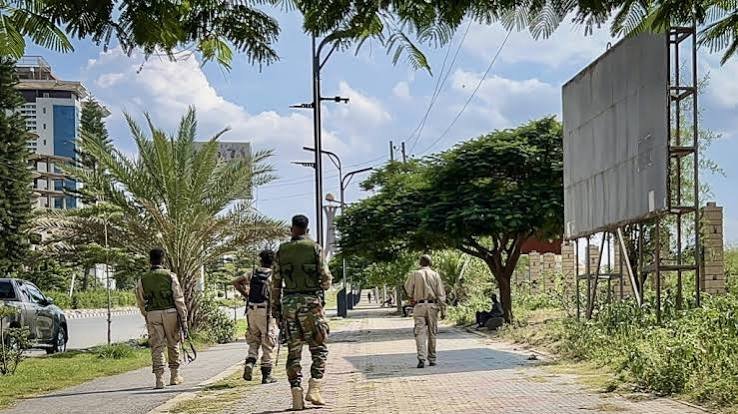
The Ethiopian National Defence Force said on Thursday that government troops responded after Tigrayan forces and their allies launched attacks in parts of North Wollo, an area of Amhara bordering the Tigray region.
The military claimed that 260 other Tigrayan fighters were wounded and several more were captured. The reported casualty figures have not been independently verified. No corresponding figures for government troops or civilians were immediately provided.
Fighting spreads beyond Tigray
The latest clashes are part of a rapid escalation that has spread beyond Tigray into neighbouring Amhara and Afar.
TPLF officials have described the situation as a return to full-scale war, while Ethiopian government representatives have blamed the Tigrayan forces for initiating the latest attacks. The two sides therefore continue to offer conflicting accounts of how the current fighting began.
The escalation has also affected civilian movement and transportation. Tigrayan forces reportedly seized several local airports, prompting the suspension of flights to Lalibela, a major tourist destination known for its historic rock-hewn churches. Reports also indicated fighting around the town.
New rebel alliance raises tensions
The renewed fighting follows the creation of a new coalition involving seven armed movements from different parts of Ethiopia.
The Ethiopian Peoples’ Forces Alliance for Survival includes the TPLF, the Amhara Fano National Movement and the Oromo Liberation Army, alongside groups associated with the Somali, Afar and Benishangul-Gumuz regions.
The alliance has declared its opposition to Prime Minister Abiy Ahmed’s government and called for a political transition. Its formation represents a major change in Ethiopia’s political and military landscape because some of the groups now working together have previously been opponents.
TPLF Vice President Amanuel Assefa told AFP that the organisation was now in what he described as a “full-blown war” situation. He confirmed that Tigrayan forces were operating alongside armed groups in both Amhara and Afar.
Memories of the 2020-2022 war
The latest violence has revived memories of Ethiopia’s devastating Tigray war, which began in 2020 and lasted for two years.
That conflict ended with the Pretoria peace agreement in November 2022. The deal brought an end to major fighting between the federal government and the TPLF, but several disputes remained unresolved.
Relations between Addis Ababa and Tigrayan leaders have since deteriorated again, while tensions between the federal government and armed groups in Amhara have also remained high.
The formation of the new alliance has further complicated the political situation, bringing together factions with different ethnic, regional and political interests. Analysts have warned that maintaining unity within such a diverse coalition could become increasingly difficult if the conflict continues.
Eritrea and regional tensions
The latest crisis also has implications beyond Ethiopia’s borders.
Ethiopia’s relationship with neighbouring Eritrea has deteriorated in recent years, particularly over disagreements concerning the 2022 peace settlement and Addis Ababa’s ambitions for access to the Red Sea.
Some analysts have suggested that Eritrea could be supporting forces opposed to the Ethiopian government, although Eritrea has denied backing Ethiopian armed groups. TPLF officials have also said they do not currently have information confirming Eritrean plans to intervene militarily.
The situation is further complicated by the conflict in neighbouring Sudan. Ethiopia, Eritrea and Sudan are all involved in a wider network of political and security tensions across the Horn of Africa.
Humanitarian concerns grow
The renewed fighting is creating concern over the humanitarian consequences for communities already affected by years of conflict.
Hundreds of thousands of people remain displaced in Tigray following the previous war, according to UN migration data. Any sustained escalation could increase displacement and further disrupt access to food, healthcare and other essential services.
Regional organisations have called for an end to the fighting and renewed dialogue. The Intergovernmental Authority on Development (IGAD) has urged the parties to stop hostilities and return to negotiations, while the United Nations has expressed concern about the emergence of the new armed coalition and reports of drone attacks.
For now, the Ethiopian military’s reported counteroffensive marks another serious development in a conflict that many had hoped was settled by the 2022 peace agreement.
With fighting now reported across parts of Tigray, Amhara and Afar, attention is focused on whether the latest escalation can be contained or whether Ethiopia is entering another prolonged period of armed conflict.