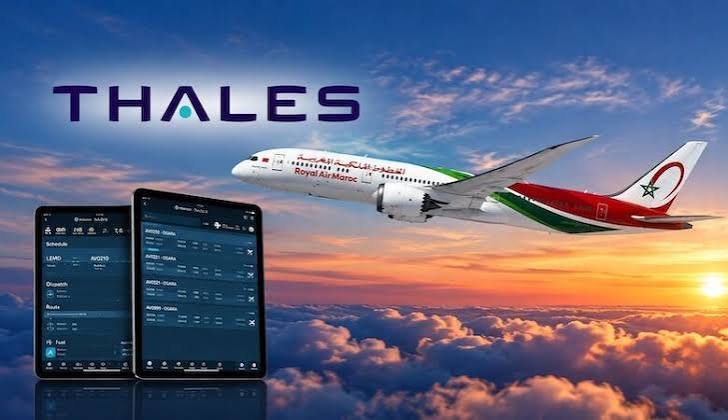
Morocco’s national airline, Royal Air Maroc (RAM), has signed a five-year agreement with French technology company Thales to introduce digital tools designed to improve flight operations, strengthen safety procedures and support the carrier’s long-term expansion plans.
Under the agreement, pilots across Royal Air Maroc’s fleet will use AvioBook Flight, an electronic flight bag platform developed by AvioBook, a company within the Thales Group. The system is intended to help flight crews and ground personnel coordinate their work more efficiently before departure, during flights and after aircraft arrive at their destinations.
The agreement comes as Royal Air Maroc pursues an ambitious growth strategy that aims to increase its fleet to 200 aircraft by 2037. The airline is also seeking to strengthen Morocco’s position as a major aviation hub connecting Africa with Europe and other international markets.
According to Thales, the new platform is designed to improve operational efficiency, support fuel optimisation, simplify procedures and help reduce the time aircraft spend on the ground between flights. The company also expects the technology to assist the airline in meeting aviation safety and regulatory requirements.
Digital Technology to Improve Airline Efficiency
The introduction of AvioBook Flight represents another step in Royal Air Maroc’s efforts to modernise its operations through digital technology.
Electronic flight bag systems provide pilots with digital access to operational information and tools that have traditionally relied, in part, on printed documents and separate procedures. By bringing relevant functions together in one platform, airlines can make information easier to access and improve coordination between flight crews and ground teams.
The software is designed to support multiple stages of a flight, from preparation and departure to the flight itself and post-flight procedures.
Thales says the integrated system can help streamline workflows, improve operational consistency and reduce the risk of errors associated with complex procedures. Its ability to connect with an airline’s back-office systems is also intended to make it easier for operational teams to share information and coordinate activities.
Fuel management is another key objective. By supporting more efficient flight operations, the technology is intended to help airlines optimise fuel use and contribute to environmental sustainability. However, the companies have not announced specific figures for expected fuel savings or cost reductions under the agreement.
The platform is also designed to help shorten aircraft turnaround times, potentially allowing Royal Air Maroc to manage its growing fleet more efficiently as its network expands.
Royal Air Maroc Targets a Fleet of 200 Aircraft by 2037
The partnership with Thales is closely linked to Royal Air Maroc’s long-term plans to expand its fleet and strengthen its international presence.
The airline aims to grow to 200 aircraft by 2037, a target that would require substantial investment in aircraft, operational systems, personnel and supporting infrastructure.
As the number of aircraft and flights increases, managing flight information and coordinating crews becomes more complex. Digital tools such as AvioBook Flight could help the airline standardise its procedures and manage operations across a larger fleet.
The expansion strategy also reflects Morocco’s ambition to develop its aviation sector and improve connections with destinations across Africa, Europe and other regions.
Royal Air Maroc plays an important role in linking Morocco with international markets, particularly through Casablanca. A larger fleet and more efficient operations could support additional routes, increased flight frequencies and improved connectivity for passengers.
However, achieving the 2037 target will depend on several factors, including aircraft availability, financing, infrastructure development and demand for air travel.
The digital agreement with Thales is one component of that broader strategy rather than a replacement for the investment required to expand the airline’s fleet.
AvioBook Technology Already Used by 70 Airlines
Thales says AvioBook’s aviation software has been deployed by approximately 70 airlines worldwide, drawing on more than a decade of experience developing digital solutions for flight operations.
The platform is designed to be adaptable to different airline requirements and to integrate with existing operational systems. This could help Royal Air Maroc introduce digital processes while maintaining coordination with its established procedures.
The experience gained from deployments at other airlines may also help the company implement the technology across its own fleet.
For an expanding carrier, the ability to scale operational software is important. Systems that work effectively for a smaller fleet must also be capable of supporting more aircraft, routes and flight crews as operations grow.
Although the agreement is expected to support greater efficiency, its practical impact will depend on implementation, staff training and how effectively the technology is incorporated into everyday operations.
Thales and Royal Air Maroc Build on an Existing Partnership
The agreement extends a relationship between Thales and Royal Air Maroc that already includes cooperation in areas such as in-flight entertainment, aircraft maintenance and cybersecurity.
The latest contract broadens that collaboration into the digital management of flight operations.
For Thales, the agreement represents an opportunity to expand its involvement in Morocco’s aviation industry as the country invests in its aerospace capabilities. For Royal Air Maroc, working with an established technology supplier offers access to specialised software intended to support the airline’s operational requirements.
Thales’ activities in Morocco extend beyond commercial aviation into defence, security and digital technology. The company has repeatedly highlighted its interest in supporting the country’s ambition to develop a modern, internationally connected aviation sector.
The deal was announced in the period surrounding the Marrakech Airshow 2026, held from October 7 to 10. The event brought together companies and industry representatives working across civil aviation, defence and aerospace technology.
The partnership therefore reflects a broader trend in aviation: airlines are increasingly using digital systems to improve efficiency, manage complex operations and prepare for future growth.
What the Agreement Means for Morocco’s Aviation Industry
Royal Air Maroc’s adoption of AvioBook Flight highlights the growing importance of digital technology in Morocco’s aviation development.
As the country seeks to expand its role in international air travel, airlines will need reliable operational systems capable of supporting larger fleets and more complex networks.
Improved coordination between pilots and ground staff could help streamline procedures, while better access to operational information may support safety and regulatory compliance.
More efficient aircraft turnaround times could also help airlines make better use of their fleets, although the extent of any improvement will depend on how the software is implemented and used.
For passengers, the agreement is primarily an operational development rather than a direct announcement of new routes or immediate changes to ticket prices. Any longer-term benefits would depend on whether the technology helps Royal Air Maroc operate more efficiently as it expands.
The five-year contract signals a commitment to digital modernisation, but the airline’s broader growth ambitions will require progress across several areas, including fleet acquisition, airport capacity, staff development and network planning.
Ultimately, the agreement gives Royal Air Maroc another technological tool as it prepares for a larger future fleet. Its success will be measured by how effectively the airline translates digital investment into safer, more efficient and more sustainable operations.