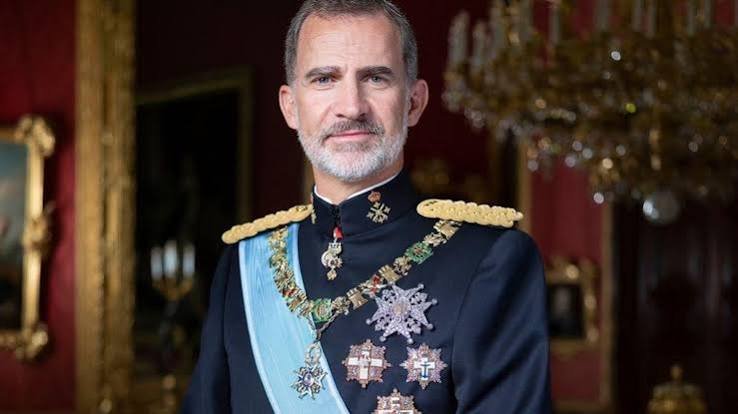
Morocco has so far chosen not to publicly respond to Spain’s announcement that King Felipe VI and Queen Letizia will visit Ceuta and Melilla later this month, despite the long-running dispute over the two Spanish-administered territories.
The Spanish royal household has confirmed that the king and queen will travel to Ceuta on October 13 and Melilla on October 14. It will be Felipe VI’s first visit to both cities since becoming king in 2014 and the first royal trip to the two enclaves since 2007.
The absence of an immediate response from Rabat has attracted particular attention because relations between Morocco and Spain remain sensitive following a major migration crisis at the Ceuta border earlier this year.
Rabat Avoids Immediate Confrontation
Unlike the strong reaction that followed the previous Spanish royal visit in 2007, Moroccan authorities have not issued a formal condemnation of the upcoming trip.
No statement has been announced by Morocco’s Foreign Ministry or the Royal Palace specifically addressing Felipe VI’s planned visit, according to reports.
That silence has been interpreted by some analysts as an attempt to prevent another diplomatic confrontation with Madrid while maintaining Morocco’s longstanding position on the status of the two cities.
Morocco regards Ceuta and Melilla as territories under Spanish control that it claims should ultimately return to Moroccan sovereignty. Spain, however, considers both cities integral parts of its territory.
The dispute has remained unresolved for decades.
Why the Visit Is Politically Sensitive
The timing of the royal trip is particularly important.
In July, more than 72,000 migrants entered Ceuta from Morocco, creating a major security and humanitarian crisis in the enclave. Spanish authorities have since been dealing with the political consequences of the incident, while Madrid and Rabat have sought to prevent the episode from causing a broader breakdown in their relationship.
Felipe VI recently described the mass arrival as unacceptable and called for greater European cooperation in dealing with migration pressures at the bloc’s external borders.
The planned royal visit therefore comes at a moment when the two countries are still navigating the aftermath of the border crisis.
A Different Response From 2007
The current Moroccan silence contrasts sharply with events in 2007.
When former Spanish King Juan Carlos I visited Ceuta and Melilla that year, Morocco reacted angrily and recalled its ambassador to Madrid for consultations.
The incident created a temporary diplomatic crisis between the two neighbours.
Nearly two decades later, Rabat appears to be taking a more cautious approach.
Analysts quoted in Spanish and Moroccan media have suggested that Morocco could still issue a diplomatic protest closer to the date of the visit, but there is currently no indication that Rabat intends to allow the dispute to derail its wider relationship with Spain.
Spain-Morocco Relations Have Improved
Despite disagreements over Ceuta and Melilla, Spain and Morocco have developed stronger cooperation in several areas in recent years.
Migration control, trade, security and regional stability have all become important components of their bilateral relationship.
Madrid has also sought closer cooperation with Rabat on managing migration across the western Mediterranean and Atlantic routes.
That broader relationship could explain why both governments have an interest in avoiding an escalation over the royal visit.
For Morocco, responding too aggressively could put other areas of cooperation at risk. For Spain, the king’s presence in the two cities reinforces Madrid’s position that Ceuta and Melilla are Spanish territories.
Moroccan Media React to the Announcement
Although the Moroccan government has remained publicly restrained, sections of the country’s media have been far more critical of the planned visit.
Some Moroccan outlets have described the trip as provocative and warned that it could reopen questions surrounding the disputed territories.
Other coverage has taken a more cautious approach, focusing on the potential diplomatic consequences and the need to preserve the broader partnership between Rabat and Madrid.
This difference between media commentary and official policy is significant because Morocco’s foreign-policy decisions are closely associated with the Royal Palace.
As a result, the absence of an official statement does not necessarily mean the issue has been ignored in Rabat.
Ceuta and Melilla Remain a Sensitive Issue
The two enclaves occupy a unique position on the northern coast of Africa.
Ceuta lies across the Strait of Gibraltar, while Melilla sits farther east along the Mediterranean coast. Both have remained under Spanish administration for centuries and are surrounded by Moroccan territory.
For Spain, their status as Spanish cities is not considered negotiable.
For Morocco, their presence remains linked to a broader historical and territorial question.
That makes visits by Spain’s monarch particularly symbolic.
What Could Happen Next?
The most immediate question is whether Morocco will issue a formal response before Felipe VI and Queen Letizia arrive.
Some analysts expect Rabat could register its displeasure through diplomatic channels without taking measures that would seriously damage bilateral ties. Others believe the government may continue avoiding public confrontation altogether.
The approach would allow Morocco to preserve its position on the territories while preventing the issue from overshadowing cooperation with Spain.
For now, however, Rabat’s silence remains the clearest signal.
With the royal visit scheduled for October 13 and 14, attention will increasingly turn to how both governments manage the diplomatic sensitivities surrounding Ceuta and Melilla.
The trip is unlikely to resolve the territorial dispute, but the manner in which Morocco responds could provide an important indication of the current state of relations between Rabat and Madrid.