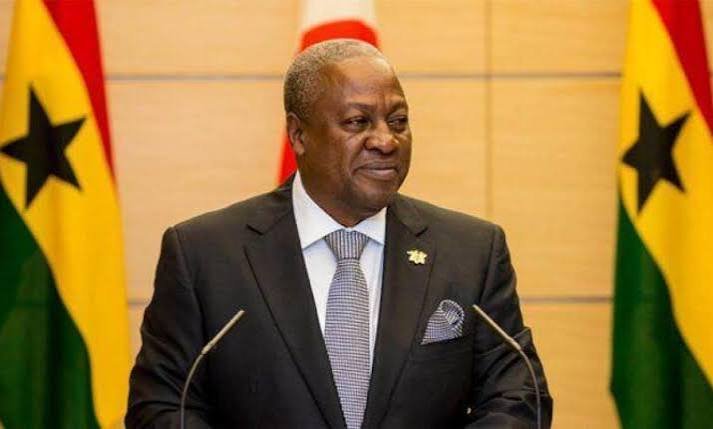
Ghanaian President John Dramani Mahama has expressed openness to security assistance from any country willing to help combat terrorism in West Africa, including Russia, as armed violence continues to threaten countries across the Sahel.
Speaking at the Financial Times Africa Summit in London on Wednesday, October 21, 2026, Mahama said the priority should be a partner’s commitment to tackling terrorism rather than the country it represents. His remarks came in response to a question about Russia’s growing security role in the Sahel.
The statement reflects Ghana’s position that the regional security crisis requires cooperation from a broad range of international partners. It also comes as Mali, Burkina Faso and Niger deepen their security ties with Moscow after distancing themselves from several traditional Western partners.
Mahama Prioritises Results Over the Identity of Security Partners
Mahama’s comments signal a pragmatic approach to international security cooperation. Rather than ruling out assistance because of geopolitical differences, the Ghanaian president indicated that support should be judged by its contribution to the fight against armed extremist groups.
Russia has expanded its engagement with the military-led governments of Mali, Burkina Faso and Niger, offering security cooperation as the three countries pursue alternatives to their former Western defence partnerships. Moscow has also expressed support for a joint Sahel force intended to strengthen the countries’ capacity to confront armed groups.
The situation has created a changing security landscape across West Africa. Governments are weighing different forms of foreign assistance while trying to address insurgencies that have spread across borders and placed pressure on local communities, public services and national economies.
Mahama’s remarks did not amount to an announcement of a new Ghana-Russia security agreement. Rather, they conveyed his view that countries genuinely prepared to help confront terrorism should not automatically be excluded from the wider effort.
Sahel Countries Face Persistent Security Challenges
The Sahel has experienced years of violence involving jihadist groups, local armed factions and government forces. The instability has affected communities across Mali, Burkina Faso and Niger, with insecurity spreading into areas closer to West Africa’s coastal states.
The three countries, all governed by military authorities following coups, established the Alliance of Sahel States (AES) and moved away from the Economic Community of West African States (ECOWAS). Their foreign and security policies have increasingly focused on cooperation among themselves and partnerships with countries such as Russia.
The regional crisis has created a difficult environment for neighbouring states. Attacks and armed activity near national borders can disrupt trade, displace residents and put pressure on security forces tasked with protecting vulnerable communities.
Russia’s involvement has become part of a wider debate over how best to respond to the crisis. Supporters of its role argue that African governments should be free to choose the partners they believe can help meet their security needs. Critics, meanwhile, question the effectiveness and wider consequences of different foreign military arrangements.
Mahama’s position places emphasis on keeping potential channels of assistance open as regional governments search for more effective ways to contain the violence.
Ghana Calls for Cooperation Beyond Regional Divisions
Mahama has previously argued that Mali, Burkina Faso and Niger cannot overcome the threat from armed groups without support from outside their borders. In remarks to the Council on Foreign Relations in September, he advocated greater regional and international cooperation.
He has also maintained that ECOWAS should remain open to working with the three Sahel countries despite their withdrawal from the bloc. The Ghanaian president has pointed to continued cross-border trade and personal ties as reasons to preserve communication between governments and communities.
The position suggests that Ghana wants to avoid allowing political disagreements between regional governments to undermine efforts to address a shared security threat. Although the AES countries have separated themselves institutionally from ECOWAS, the security challenges facing West Africa remain closely connected.
Maintaining dialogue could help governments exchange information, coordinate border security and reduce the risk that armed groups exploit gaps between neighbouring states.
Ghana Strengthens Security Along Its Northern Border
Ghana is also taking steps to protect itself from the spread of extremist violence towards the Gulf of Guinea. Mahama has acknowledged that the country is exposed to the threat moving south from the Sahel, prompting the government to strengthen its security measures.
According to the report, Ghana has expanded surveillance and intelligence-sharing cooperation with Burkina Faso. Such collaboration is important because armed groups can take advantage of remote border areas, limited state presence and weak coordination between security agencies.
Improved intelligence exchange can help authorities identify emerging threats and monitor suspicious movements. However, these measures must be accompanied by broader efforts to strengthen border communities and address the conditions that make them vulnerable to recruitment by armed organisations.
Ghana’s approach therefore involves both domestic preparedness and engagement with neighbouring countries. The government’s willingness to consider assistance from a range of international partners forms part of this broader effort to protect the country from regional instability.
What Mahama’s Position Means for West Africa
Mahama’s comments highlight the growing importance of practical cooperation as governments confront a security crisis that crosses national boundaries. They also reflect a regional environment in which traditional Western partnerships are being reconsidered and Russia has become a more prominent security actor.
For Ghana, the challenge is to work with partners capable of contributing to counterterrorism efforts while safeguarding its national interests. For the wider region, progress will depend on whether countries can maintain communication and coordinate their responses despite political disagreements.
The president’s statement does not resolve differences between ECOWAS and the AES, nor does it guarantee that assistance from any particular country will deliver lasting results. It does, however, make clear that Ghana is prepared to consider support on the basis of its contribution to combating terrorism.
As armed groups continue to threaten communities across the Sahel, cooperation among neighbouring governments, intelligence sharing and effective protection of civilians are likely to remain central to the region’s security agenda.