Libya’s diplomatic mission in Washington says a senior US State Department official has expressed regret and apologised over controversial comments made by President Donald Trump about Libya and its people.
According to the Libyan Embassy, Leslie Hayden, the US State Department’s director for North African affairs, conveyed the apology during a meeting with Libyan diplomatic representatives in Washington on Monday, October 26, 2026. The embassy described the gesture as a sign that Washington recognises the importance of maintaining relations with Libya on the basis of mutual respect.
The development follows several days of diplomatic tension after Trump used disparaging language to describe Libya and other countries during a political rally in the United States. The remarks prompted an official protest from Libya’s internationally recognised Government of National Unity.
US and Libyan officials meet in Washington
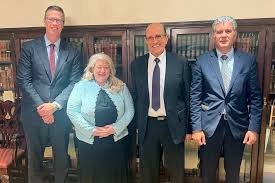
The meeting took place at the US State Department and brought together Hayden, Mahmoud Al-Futaisi, Libya’s chargé d’affaires in Washington, and Fathi Al-Hafi, the embassy official responsible for consular affairs.
The Libyan Embassy said the discussions covered ways to strengthen cooperation in political, economic, investment, educational and cultural affairs.
Both sides also highlighted the importance of keeping diplomatic communication open, with the aim of resolving disagreements and improving confidence between the two countries.
The embassy stressed that Libya’s sovereignty, national dignity and respect for its official institutions remain central to its dealings with foreign governments. It added that these principles are compatible with efforts to build constructive partnerships based on shared interests.
Libya had demanded an explanation from Washington
The reported apology came after Libya’s Ministry of Foreign Affairs and International Cooperation summoned Inga Hemmink, the US chargé d’affaires in Tripoli, to formally object to Trump’s comments.
During that diplomatic meeting, Libyan officials presented a note requesting an official explanation and correction of the remarks. The ministry said statements that undermine the dignity of the Libyan people were unacceptable and should not be used to draw the country into domestic political disputes in the United States.
Libya’s House of Representatives also criticised the comments and called for an explicit apology to the Libyan people, arguing that relations between sovereign states should be built on respect rather than insulting language.
The response reflected concern across Libya’s political institutions that the president’s words could damage bilateral ties at a time when the country continues to face significant political and security challenges.
What Trump said about Libya
Trump made the controversial remarks during a political rally in Perry, Georgia, on October 24. While discussing immigration, he referred to Libya, Yemen, Haiti and Somalia in disparaging terms and questioned why the United States accepted migrants from those countries instead of people from certain European nations.
The comments triggered criticism in Libya, where officials objected to the language used to describe the country and its population.
Two days later, Trump sought to soften his position in a statement published on his Truth Social account. He described Libyans as proud, resilient and hospitable people who deserved peace and prosperity.
He also praised the cooperation between Washington and Tripoli in the fight against the Islamic State group, known as ISIS, while insisting that Libya should not remain a route for irregular migration into the United States. Trump reiterated Washington’s stated support for efforts to unify Libya and its institutions.
Although the statement represented a shift in tone, the embassy’s account of the subsequent meeting was significant because it reported that an American official had directly expressed regret and apologised.
The embassy’s statement does not establish that Trump himself issued a formal personal apology. Rather, it attributes the apology to Hayden during her meeting with Libyan representatives.
Libya emphasises sovereignty and mutual respect
Al-Futaisi reaffirmed Libya’s interest in maintaining its longstanding relationship with the United States, according to the embassy’s account.
He stressed that respect for national sovereignty, the dignity of citizens and the legitimacy of official institutions forms the basis of a lasting relationship between countries.
Libya has sought to preserve cooperation with Washington despite the diplomatic dispute. The two countries have common interests in counterterrorism, economic engagement and efforts to address irregular migration.
However, Libyan officials have made clear that continued cooperation should not come at the expense of national dignity or acceptance of language they consider offensive.
What the apology could mean for Libya-US relations
The reported apology may help ease tensions following the public dispute, particularly as both governments have indicated an interest in maintaining communication.
The embassy’s account of the meeting suggests that officials are seeking to move beyond the controversy and focus on practical cooperation in areas such as investment, education, culture and political engagement.
Still, the longer-term effect will depend on how both governments handle future disagreements and whether diplomatic discussions lead to tangible progress.
For Libya, the immediate priority is to defend its national standing while keeping channels open with an influential international partner. For Washington, the episode highlights the diplomatic consequences that presidential rhetoric can have, even when the administration continues to pursue cooperation with the country concerned.
The latest development offers a possible path towards easing the dispute, but it does not remove the broader challenges facing relations between the two countries.