At least eight people have been killed after armed men ambushed a security vehicle escorting road construction workers in Mandera County, northeastern Kenya, in an attack that has renewed concerns over insecurity along the country’s border with Somalia.
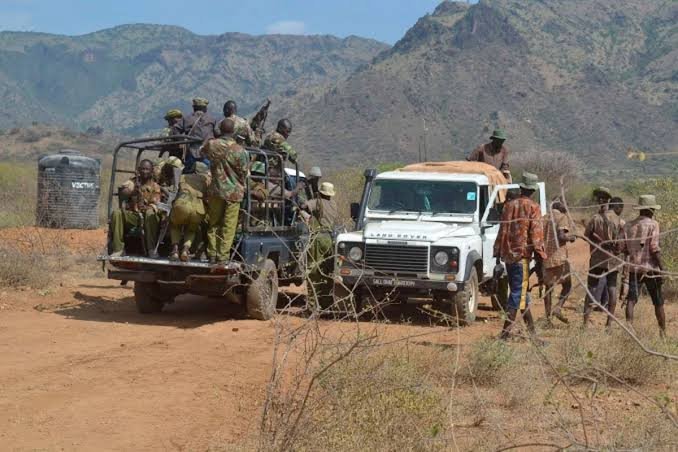
The incident occurred on Tuesday morning, November 10, 2026, in the Hagarsu area along the Arabia Road corridor. The vehicle was accompanying a team involved in the construction of the Mandera-Arabia-Lafey road when the attackers opened fire.
The victims included two National Police Reservists, five construction workers and the driver of the security vehicle, according to reports from Kenyan authorities and local officials.
Mandera County Police Commander Robinson Ndiwa confirmed the attack, describing the assailants as an armed militia. He said the team overseeing the road project was ambushed while travelling through the area.
The attackers reportedly fired repeatedly at the vehicle, killing those on board. Police subsequently deployed security personnel to pursue the gunmen and investigate the circumstances surrounding the incident.
Attack raises security concerns in Mandera
The ambush took place in a region that has experienced repeated security incidents because of its proximity to Somalia. Mandera shares a long and porous border with the neighbouring country, making it vulnerable to cross-border attacks by armed groups.
The area has frequently been associated with suspected activities by Al-Shabaab, the Somalia-based militant organisation linked to al-Qaeda. The group has carried out attacks against security personnel, civilians and infrastructure in northeastern Kenya over the years.
However, Kenyan authorities had not publicly confirmed the identity of the gunmen responsible for Tuesday’s killings. Police said investigations were ongoing, and the motive behind the attack remained unclear.
The distinction is important because although Al-Shabaab is suspected in several attacks in the border region, responsibility for this particular ambush had not been formally established.
Road construction workers among the victims
The attack targeted a security team assigned to protect personnel working on the Mandera-Arabia-Lafey road project.
The road is an important infrastructure development intended to improve transport links between communities in the northeastern county. Construction activities in remote areas such as Mandera often require security arrangements because of the risks associated with operating close to the Somali border.
The deaths of five construction workers and two police reservists highlight the dangers facing both civilian workers and security personnel involved in development projects in the region.
Mandera Governor Mohamed Adan Khalif condemned the incident, expressing sympathy to the families, colleagues and communities affected by the killings.
He called for an urgent investigation and urged security agencies to identify and apprehend those responsible.
The governor also stressed that residents should be able to live and work without intimidation, adding that development activities must be allowed to continue in a secure environment.
Security agencies launch operation to track attackers
Following the ambush, Kenyan security agencies mobilised personnel to search for the attackers and establish how the assault was carried out.
The police commander said a security operation had been initiated, although officials had not disclosed the number of suspects involved or whether any arrests had been made.
The response is expected to involve coordination among different security units operating in the border region, where authorities regularly conduct patrols and counterterrorism operations.
The investigation will also seek to determine whether the attack was connected to previous incidents in the area or whether the road construction team was specifically targeted.
As of Tuesday, no group had formally claimed responsibility for the killings.
Al-Shabaab threat along Kenya-Somalia border
Kenya has faced repeated attacks linked to Al-Shabaab, particularly in counties bordering Somalia. The militant group has maintained an insurgency against the Somali government for years and has also targeted neighbouring countries involved in security operations against it.
Kenya sent troops into Somalia in 2011 as part of efforts to combat the group. Kenyan forces later became involved in the African Union-backed mission supporting security operations in Somalia.
Al-Shabaab has since carried out several deadly attacks inside Kenya, including the 2013 assault on the Westgate shopping centre in Nairobi and the 2015 attack on Garissa University, which killed 148 people, most of them students.
The group has also targeted police stations, military positions and transport routes in northeastern Kenya.
The latest ambush comes amid continuing security concerns in the region. Recent incidents in neighbouring Garissa and Mandera counties have prompted renewed vigilance among security agencies.
Concerns over infrastructure development in border communities
The killings could also affect confidence in infrastructure projects operating in remote parts of northeastern Kenya.
Road construction is important for improving access to markets, healthcare, education and public services in communities that have historically faced transport and development challenges.
However, attacks against workers and their security escorts can disrupt construction schedules, increase project costs and make it more difficult for contractors to operate safely.
Local leaders have repeatedly called for stronger security arrangements to protect communities and development activities in the region.
For residents of Mandera, the immediate concern remains the safety of civilians and the ability of security agencies to prevent further attacks.
Authorities are expected to continue investigations and security operations as they work to establish the circumstances surrounding Tuesday’s ambush.
The killings have once again highlighted the challenges Kenya faces in securing its northeastern border areas, where armed violence continues to threaten civilians, security personnel and development projects.