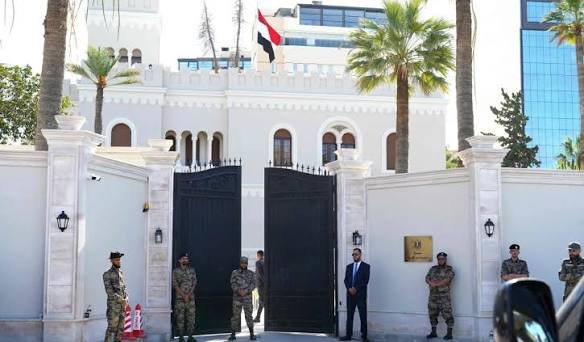
Egypt has reopened its embassy in Libya’s capital, Tripoli, bringing a 12-year diplomatic closure to an end as Cairo moves to strengthen relations with the western-based authorities and expand cooperation in the energy sector.
Egyptian Foreign Minister Badr Abdelatty attended the reopening ceremony on Saturday, November 7, 2026, marking a new phase in diplomatic engagement between the neighbouring North African countries.
The move comes as Egypt seeks to advance several energy projects involving Libya, including a proposed natural gas pipeline, the refining of Libyan crude oil in Egyptian facilities and the restoration of electricity connections between the two countries.
The reopening also represents an important diplomatic development given Libya’s prolonged political divisions and Egypt’s previous support for eastern-based military commander Khalifa Haftar.
Egypt restores diplomatic presence in Tripoli
The Egyptian embassy had remained closed for years amid the security crisis that followed the 2011 uprising that ended Muammar Gaddafi’s rule.
Egypt withdrew its diplomatic personnel from Tripoli in January 2014 after five members of its diplomatic mission were kidnapped in separate incidents. Although the officials were subsequently released, Cairo kept the embassy closed because of deteriorating security conditions.
The diplomatic building was later targeted by armed men and suffered damage in a bombing incident, further complicating efforts to restore normal operations.
Egypt had explored reopening its diplomatic mission in 2021, following renewed international efforts to establish a political process in Libya. However, the historic embassy headquarters only resumed operations in November 2026.
The reopening ceremony was attended by Abdelatty and Libyan officials, including representatives of the Tripoli-based administration.
The Egyptian foreign minister described the relationship between the two countries as one built on historical, geographical and cultural connections.
The restoration of the diplomatic mission is expected to provide a stronger channel for political consultations, economic negotiations and cooperation between government institutions.
Cairo seeks stronger energy cooperation with Libya
Energy cooperation is a major part of Egypt’s renewed engagement with Tripoli.
During his visit, Abdelatty discussed plans to accelerate joint projects involving natural gas, petroleum products, oil refining and electricity infrastructure.
One of the proposals involves constructing and connecting gas pipelines between Libya and Egypt. Such infrastructure could strengthen regional energy links and create additional opportunities for the movement and processing of natural gas.
Abdelatty said Egypt had the facilities required for liquefying natural gas, highlighting the potential for cooperation between the two countries in developing gas-related projects.
Egypt has invested in infrastructure for processing and exporting liquefied natural gas, while Libya possesses significant hydrocarbon resources that could support expanded regional energy trade.
However, the proposed pipeline will require further technical discussions, investment arrangements and infrastructure development before it can become operational.
Libya’s crude oil could be refined in Egypt
Another important proposal concerns the processing of Libyan crude oil in Egyptian refineries for subsequent export to international markets.
Abdelatty called for progress on the initiative, which could allow Libya to benefit from Egypt’s existing refining infrastructure while strengthening commercial cooperation between the two countries.
The Egyptian minister also urged the rehabilitation of Libya’s domestic refineries.
Libya is one of Africa’s major oil-producing countries, but years of conflict, infrastructure deterioration and operational disruptions have affected parts of its energy industry.
Improving refinery capacity could help the country process more of its crude oil domestically, increase the availability of petroleum products and reduce reliance on imported fuel.
For Egypt, closer cooperation with Libya could create additional opportunities for its energy companies and refining industry.
The discussions also covered cooperation in petroleum products, although officials did not announce specific commercial agreements or financial commitments.
Electricity links also feature in the discussions
The two countries are also looking to advance electricity interconnection projects.
Re-establishing and improving power links could support cross-border electricity cooperation, particularly during periods of high demand or supply shortages.
For Libya, stronger electricity infrastructure is important as the country continues efforts to improve power generation and distribution after years of instability.
Egypt has developed a substantial electricity generation capacity and has previously pursued regional energy connections as part of its wider infrastructure strategy.
Completing the proposed interconnection projects could provide opportunities for electricity exchange and technical cooperation.
However, the latest discussions did not provide a confirmed completion date, project cost or detailed construction schedule.
Egypt’s diplomatic approach to Libya evolves
The reopening of the embassy also reflects a shift in Egypt’s engagement with Libya’s competing political authorities.
Since Gaddafi’s removal in 2011, Libya has experienced repeated conflict and institutional divisions, with rival administrations competing for political authority.
Cairo previously maintained close relations with Haftar and the eastern-based authorities, while the internationally recognised Government of National Unity operates from Tripoli under Prime Minister Abdulhamid Dbeibah.
Egypt’s decision to restore its diplomatic presence in Tripoli signals an effort to strengthen direct engagement with the western administration.
The move does not necessarily mean that Cairo has abandoned its relations with eastern Libya. Rather, it provides another diplomatic channel through which Egypt can pursue its political, economic and security interests.
The development comes amid wider regional diplomatic activity involving Libya and its neighbouring countries.
Egypt has also been involved in disputes over maritime arrangements in the eastern Mediterranean, including its objections to a maritime agreement between Turkey and Libya.
The competing maritime claims have added another dimension to regional relations, particularly because of their potential implications for offshore resources and maritime boundaries.
Energy cooperation comes at an important time for Egypt
The renewed discussions are taking place as Egypt faces pressure to strengthen its domestic energy supply.
The country has experienced challenges involving natural gas production and the cost of securing additional energy supplies.
Expanding cooperation with Libya could therefore support Cairo’s efforts to diversify supply arrangements and improve the use of its existing energy infrastructure.
For Libya, closer ties with Egypt could provide access to technical expertise, refining facilities and a neighbouring market for energy cooperation.
The two countries also share a long land border and established economic and social connections, making cooperation in infrastructure and trade strategically important.
Following the meeting in Tripoli, Libya’s acting oil and gas minister, Khalifa Al-Sadiq, indicated that his country intended to continue implementing existing joint projects.
He also planned to visit Cairo for further technical discussions with Egypt’s ministers responsible for petroleum and electricity.
What the embassy reopening means for Libya and Egypt
The reopening of Egypt’s embassy is both a diplomatic milestone and a practical step towards restoring wider bilateral cooperation.
For Tripoli, renewed engagement with Cairo could help attract investment, technical partnerships and opportunities in the energy industry.
For Egypt, a stronger diplomatic presence in Libya provides an opportunity to advance energy projects, strengthen regional relationships and engage directly with the western-based authorities.
Nevertheless, the success of the proposed initiatives will depend on further negotiations, financing, technical planning and the political and security conditions in Libya.
The gas pipeline, oil-refining cooperation and electricity interconnection projects have not all reached confirmed implementation stages.
For now, the reopening of the embassy after 12 years provides a foundation for renewed diplomatic engagement, with energy cooperation emerging as one of the main priorities in the relationship between the two North African neighbours.