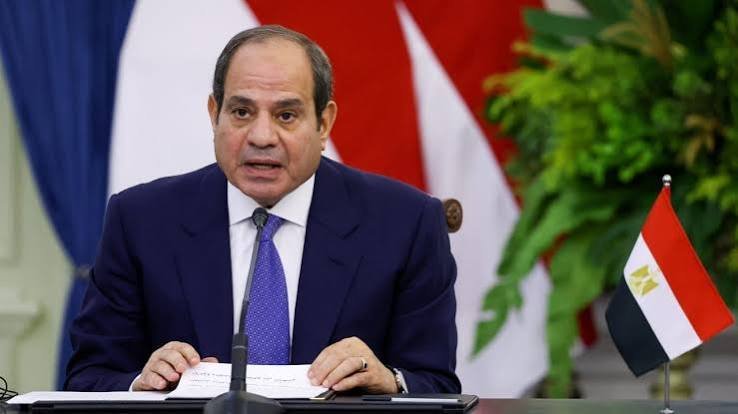
Egyptian President Abdel Fattah al-Sisi has reaffirmed that he will step down when his current presidential term ends in 2030, while proposing a new leadership training programme designed to prepare qualified Egyptians for senior government positions, including the presidency.
Al-Sisi made the announcement on Saturday, October 17, 2026, during a graduation ceremony at the Egyptian Military Academy in the New Administrative Capital. He described his departure from office in 2030 as a settled decision and reiterated that he had no intention of changing the country’s Constitution to extend his presidency.
The announcement comes amid renewed public discussion about Egypt’s political future and whether the president might seek to remain in power beyond his current mandate.
Under the proposed initiative, the Egyptian Military Academy would train carefully selected candidates over a period of 30 months, equipping them with knowledge of state administration, public resources and the responsibilities associated with governing the country.
The programme would be intended not only for potential presidential candidates but also for people who could eventually occupy ministerial positions, serve in parliament or take up other senior public responsibilities.
Al-Sisi’s statement offers an indication of how his administration intends to approach leadership succession before the end of his presidency. However, important questions remain about how participants will be selected and how the programme will interact with Egypt’s existing electoral and constitutional arrangements.
Al-Sisi Rules Out Extending His Presidency Beyond 2030
Speaking at the military academy ceremony, Al-Sisi insisted that the conclusion of his current term would mark the end of his presidency.
He said the country’s Constitution would remain unchanged and that his departure in 2030 was not open to further debate.
The remarks are significant because they address speculation about whether Egypt’s constitutional framework could be amended again to allow him to remain in office beyond his present mandate.
Al-Sisi first became president in 2014 after the military removed Mohamed Morsi from power in 2013. He subsequently won re-election in 2018 and secured another term in December 2023.
Constitutional amendments approved in 2019 extended presidential terms from four years to six and created the legal basis for Al-Sisi to serve his current term through 2030.
The president’s latest statement signals that he intends to respect the existing timetable for his departure rather than pursue another extension.
Nevertheless, the country’s eventual leadership transition will depend on the electoral process, the applicable legal framework and the political environment as the end of his term approaches.
New Programme to Train Potential Presidential Candidates
A central feature of Al-Sisi’s announcement is a proposed leadership development initiative that would place the Egyptian Military Academy at the centre of efforts to prepare future public officials.
The programme is expected to run for 30 months and target candidates aged between 40 and 50 who hold doctoral degrees from recognised Egyptian or foreign universities.
Participants would receive training on how Egypt’s government operates, how public resources are managed and the responsibilities associated with leading state institutions.
According to the proposal, the initiative would prepare candidates for a range of senior positions, including the presidency, government ministries, parliament and governorate administrations.
The president said the country needed qualified people who could assume important responsibilities without requiring extensive on-the-job preparation.
He also indicated that the initiative was intended to establish a pool of capable individuals from whom Egyptians could choose future leaders.
However, the proposal remains at the planning stage, and several details concerning its implementation have yet to be finalised.
Selection Committee to Establish Eligibility Rules
Al-Sisi proposed establishing a committee to develop the programme’s selection criteria and prepare legislation governing its operation.
The committee would operate under the supervision of the Speaker of Egypt’s House of Representatives, with participation from political figures, intellectuals and the ministers responsible for higher education and justice.
Its responsibilities would include defining eligibility requirements and establishing a legal framework for selecting participants.
The president stressed that candidates should be chosen according to their qualifications, competence and ability to serve the country.
The proposed legislation is expected to clarify how the initiative would function and establish the rules governing admission to the training programme.
Nevertheless, the announcement did not fully explain how graduates would become eligible to contest presidential elections or how the initiative would relate to the constitutional requirements for seeking public office.
Completing the programme would not, by itself, guarantee anyone the presidency. Candidates would still need to meet the applicable legal requirements, while the process of electing a president would remain subject to Egypt’s constitutional arrangements.
These unanswered questions are likely to attract attention as the government develops the proposal.
Military Academy Could Take on a Broader Civilian Role
The proposed initiative would expand the Egyptian Military Academy’s responsibilities beyond its traditional role in preparing military personnel.
Under Al-Sisi’s plan, the institution would also become a training centre for people seeking senior positions in civilian government.
The proposal reflects the military’s wider influence in Egypt’s political and economic affairs under Al-Sisi, a former army chief who has led the country since 2014.
The armed forces have become involved in various areas of the economy, including infrastructure and major development projects. The proposed leadership programme would give a military institution a more direct role in preparing people for future civilian leadership positions.
Supporters of the initiative may argue that structured training could improve the administrative skills of future officials and help prepare them for the demands of public service.
However, the programme’s design and selection process will be important in determining whether it provides a transparent route for developing public-sector talent.
Its relationship with established civilian institutions and democratic processes will also be a key consideration.
Egypt’s Political Transition Faces Close Attention
Al-Sisi’s announcement comes at a time when questions about political succession are becoming increasingly important in Egypt.
The president’s current term is scheduled to end in 2030, following the constitutional changes approved in 2019. His declaration that he intends to leave office has therefore brought the issue of his eventual successor into sharper focus.
The proposed training programme could become one element of the preparations for that transition, although it remains unclear how influential its graduates would be in the eventual presidential race.
Egypt’s political system has faced criticism from rights organisations over restrictions on opposition activity, freedom of expression and the treatment of government critics.
Human Rights Watch, among other organisations, has documented concerns about political freedoms in the country. These issues are likely to remain relevant to discussions about the credibility and openness of any future leadership transition.
A successful succession process will depend not only on preparing qualified candidates but also on maintaining a legal and political environment in which eligible contenders can compete and voters can make meaningful choices.
For now, Al-Sisi’s announcement establishes his stated intention to leave office in 2030, while leaving important questions about the proposed leadership initiative unresolved.
Al-Sisi Also Reaffirms Egypt’s Support for Saudi Arabia
During the same address, the Egyptian president spoke about regional security and his country’s relationship with Saudi Arabia.
Al-Sisi said Egypt would be prepared to take measures to defend Saudi Arabia’s security and sovereignty if Riyadh requested assistance.
He also indicated that Egypt’s parliament could be called into an extraordinary session to authorise action if necessary.
The remarks came amid heightened regional tensions and concerns about threats to Gulf security.
Al-Sisi presented the potential response as defensive, stressing that Egypt was not seeking to initiate a war or attack another country.
The statement reinforced Cairo’s emphasis on regional cooperation and its longstanding security relationship with Saudi Arabia.
Although this issue was separate from the proposed leadership programme, it formed another important part of the president’s address.
What Al-Sisi’s 2030 Exit Means for Egypt
Al-Sisi’s declaration and proposed leadership initiative have placed the question of Egypt’s post-2030 political future firmly on the agenda.
The proposed programme could provide a structured route for training prospective public officials, but its effectiveness will depend on how candidates are selected, how the programme is regulated and whether its graduates can participate in the country’s established political processes.
The initiative also raises broader questions about the role of military institutions in preparing civilian leaders and how Egypt will balance administrative training with competitive elections.
For Egyptians, the central issue will be whether the eventual transition produces capable leadership while allowing voters to exercise their constitutional rights.
Al-Sisi has stated that his presidency will end in 2030, but the identity of his successor remains unknown. The proposed 30-month training programme is an early step in his stated effort to prepare future leaders, rather than a confirmation of who will eventually take power.
As the initiative moves towards possible implementation, attention is likely to focus on its eligibility rules, the legislation governing it and the extent to which it supports a transparent presidential succession process.