Three decades after the 1994 genocide against the Tutsi in Rwanda, the search for people suspected of involvement in the killings has continued far beyond the country’s borders.
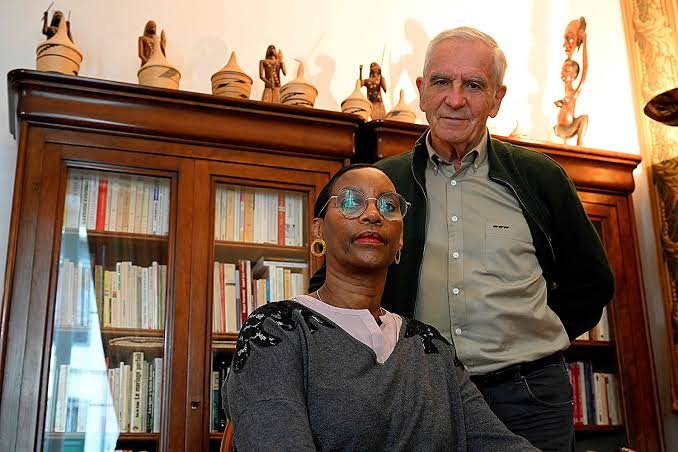
Among those who devoted much of their lives to pursuing justice were Dafroza and Alain Gauthier, a Franco-Rwandan couple who spent years investigating alleged genocide suspects believed to have found refuge in France.
Dafroza was personally affected by the genocide. Several members of her family were among those killed during the mass violence that devastated Rwanda between April and July 1994. Rather than allowing the passage of time to erase the crimes, she and her French husband began working to identify suspects and help bring them before French courts.
Their story was examined in a France 24 documentary, which follows the couple’s efforts to gather evidence, locate witnesses and push French authorities to investigate alleged perpetrators living in France.
A Personal Mission for Justice
For Dafroza, the search was deeply connected to the loss suffered by her family. But the couple’s campaign went beyond personal revenge. Their objective was to ensure that people accused of participating in the genocide would face a judicial process and that survivors would have an opportunity to testify.
The couple eventually became prominent figures in efforts to pursue suspected Rwandan genocide perpetrators who had settled in France.
Their work was not limited to searching through public records or collecting information from a distance. They travelled to Rwanda to meet survivors, locate potential witnesses and reconstruct events surrounding some of the massacres.
They also visited prisons to speak with people who had been detained in connection with the genocide. Such testimonies could become important pieces of evidence in cases being prepared for French courts.
Building Cases Against Suspects in France
In 2001, Dafroza and Alain Gauthier established the Collectif des parties civiles pour le Rwanda, commonly known as the CPCR.
The organisation focused on alleged perpetrators of the genocide who were living in France. At the time, the couple believed that a significant number of suspects had escaped prosecution by leaving Rwanda and establishing new lives abroad.
The CPCR subsequently helped compile information on alleged perpetrators and supported legal proceedings against them.
Over more than two decades, the organisation became involved in numerous cases. According to the Fondation Shoah, the couple submitted around 30 complaints and their efforts contributed to several suspects being brought before the courts.
The work demonstrated the importance of gathering evidence many years after a crime has taken place. Witnesses had to be located, memories carefully documented and individual allegations connected to specific events.
The Challenge of Investigating Crimes Decades Later
The passage of time presented enormous difficulties.
Many survivors had endured profound trauma, while evidence had become harder to obtain. Investigators also had to establish where suspects had been during the genocide and what roles they were alleged to have played.
For the Gauthiers, this meant repeatedly travelling across Rwanda in search of people who could provide information about the massacres.
Their work also highlighted a broader issue surrounding international justice: perpetrators of mass atrocities can sometimes cross borders and remain outside the jurisdiction where their alleged crimes occurred.
France has used the principle of universal jurisdiction in certain serious international-crime cases, allowing its courts to prosecute individuals accused of grave crimes committed elsewhere under specific circumstances.
Seeking Accountability Through French Courts
The campaign eventually produced tangible results.
Several men accused of involvement in the Rwandan genocide were prosecuted in France, with some receiving lengthy prison sentences. The Fondation Shoah says the Gauthiers’ efforts helped bring six men before the courts who were subsequently convicted at the time of its documentary description.
The legal cases also provided an avenue for survivors to tell their stories in court.
For Dafroza, ensuring that victims were heard was just as important as securing convictions. The proceedings offered survivors an opportunity to describe what happened to their families and communities while placing the alleged actions of defendants under judicial scrutiny.
Remembering the Victims
The Rwandan genocide remains one of the most devastating episodes of mass violence of the 20th century. More than 800,000 people were killed during the 1994 slaughter, according to the France 24 documentary description.
For survivors and families of victims, justice has remained an important part of confronting the legacy of the genocide.
The work of the Gauthiers illustrates how that pursuit can continue decades after the original crimes. Their investigations connected survivors in Rwanda with judicial proceedings in France, helping keep individual cases alive long after the violence had ended.
Their story is ultimately one of persistence. While the genocide ended in 1994, the search for accountability continued through painstaking investigations, witness interviews and legal battles.
The couple’s campaign also serves as a reminder that distance does not necessarily prevent perpetrators of international crimes from being held accountable. For Dafroza and Alain Gauthier, justice meant ensuring that alleged perpetrators could not simply disappear into another country and leave the victims without recourse.