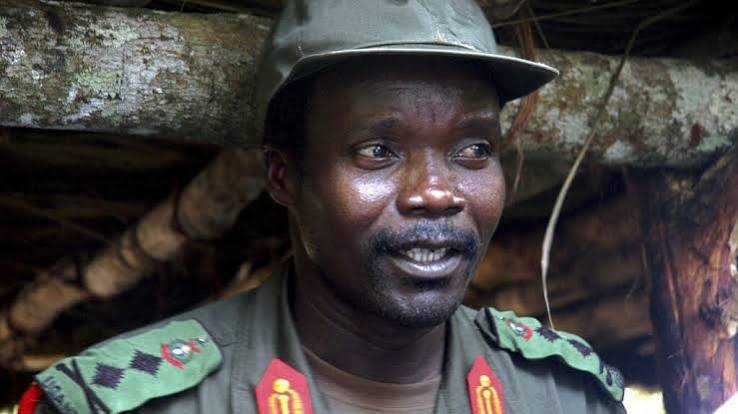
More than two decades after Joseph Kony became the subject of an international arrest warrant, the fugitive leader of the Lord’s Resistance Army (LRA) remains at large, while remnants of his armed group continue to pose a security threat in parts of Central Africa.
Recent reports of attacks and abductions in the Central African Republic (CAR) have renewed attention on the LRA and its elusive commander. Although the group is considerably weaker than it was during the height of its insurgency, security and humanitarian reports indicate that its remaining members continue to operate in remote areas.
The LRA emerged in northern Uganda in the late 1980s under Kony’s leadership. Over the years, the group became associated with attacks on civilians, killings and the abduction of children, many of whom were forced into the organisation or subjected to other forms of exploitation.
LRA shifts operations beyond Uganda
The group gradually moved away from its traditional areas of operation in northern Uganda following sustained military pressure.
Kony and LRA fighters subsequently established themselves across difficult-to-access parts of Central African Republic, the Democratic Republic of Congo and South Sudan, making efforts to locate and capture the leadership increasingly difficult.
The United Nations has previously documented the LRA’s activities across the region, including attacks on civilians, abductions, displacement and looting. UN sanctions material identifies Kony as the group’s founder, religious leader and commander.
The organisation’s ability to survive in isolated border regions has also been linked to its mobility and the limited presence of state security forces in some remote areas.
Fresh concern over child abductions
The renewed concern comes after reports of children being abducted during recent attacks in the Central African Republic.
According to the latest report, at least 25 children were reportedly taken during attacks on several villages. The development has raised fears that the LRA’s remaining network could still recruit or forcibly take civilians despite its significantly reduced strength.
The group’s continued activity has also been highlighted in recent international assessments. A 2025 United Nations report said investigations indicated that children had been abducted by LRA elements linked to Candit Joseph, also known as Yahya Ousman, and noted that Joseph Kony and Salim Kony remained active within the organisation.
Kony remains wanted by the ICC
Kony has been wanted by the International Criminal Court since 2005 over allegations involving war crimes and crimes against humanity.
The charges include allegations relating to murder, abduction, sexual violence, enslavement and the recruitment and use of children.
Despite years of international and regional efforts to locate him, Kony has avoided arrest.
One of the major difficulties has been the environment in which the remaining LRA elements operate. Their movements across remote territories and porous borders have complicated attempts by security forces to track the group’s leadership.
The ICC also does not have its own police force, meaning the arrest of suspects depends heavily on cooperation from governments and security agencies.
LRA has become much weaker
Despite the renewed attacks, the LRA today is far smaller than the organisation that once conducted a major insurgency in northern Uganda.
Years of military operations, defections and the loss of senior commanders have significantly reduced its capacity.
However, analysts have warned that a smaller organisation can still pose serious risks to isolated communities, particularly where government security and basic services are limited.
The recent escape of women and children from LRA captivity has provided another indication that remnants of Kony’s network remain active.
In May 2026, Uganda repatriated two women and several children from the Central African Republic after they escaped from LRA captivity. Ugandan authorities said they were among a larger group that had fled an LRA hideout after it was attacked by another armed group.
Long-running search continues
Kony’s ability to remain at large for more than 20 years has become one of the longest-running unresolved cases involving a senior ICC suspect.
For communities in parts of Central Africa, however, the issue extends beyond the fate of one fugitive leader.
The continued presence of LRA remnants means civilians in remote areas can remain vulnerable to abductions, attacks and displacement.
While the organisation’s influence has declined considerably, recent incidents demonstrate that the group has not disappeared entirely.
For regional governments and international organisations, the challenge now involves preventing the remaining LRA networks from rebuilding their strength, protecting vulnerable communities and helping former captives return to civilian life.
Kony’s continued freedom therefore remains both a longstanding international justice issue and a security concern for communities in Central Africa.