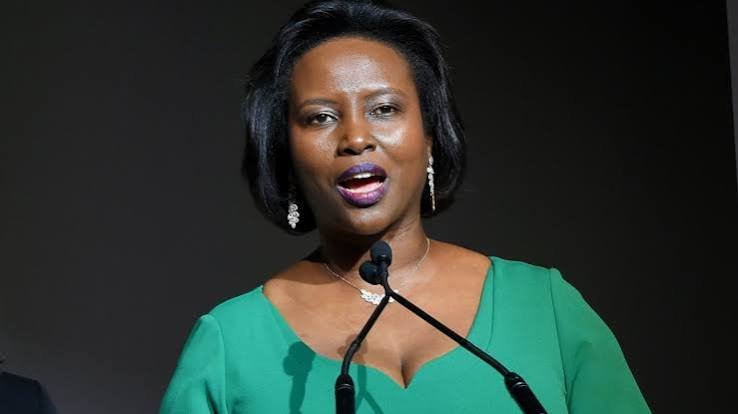
Haiti’s former first lady Martine Moïse has registered to run for president, entering a crowded field ahead of an election intended to restore an elected government after years of political crisis.
Her name appeared among 33 presidential hopefuls on the Provisional Electoral Council’s online registry after registration closed on November 15, according to Africanews and Reuters. Registration puts Moïse into the process, but it does not yet make her a confirmed candidate: election officials must review applications and required documents before publishing the final list.
The electoral council’s deadline notice said applicants had until November 30 to submit the documents needed to complete their files. The council has said it will review candidacies as part of the formal process.
Moïse is the widow of former Haitian President Jovenel Moïse, who was assassinated at his home in July 2021. She was wounded in the attack. Her husband’s killing deepened an already severe political crisis, and Haiti has not held a presidential election since 2016. The presidency has remained vacant, with the country governed by unelected transitional authorities.
Moïse has not publicly announced a detailed campaign platform. In a recent post on X, she wrote that Haiti could rise again and that politics needed to be done differently, Reuters reported. Her candidacy is one of three registered by women, alongside 30 men, according to the same report.
Other names listed in the early field include former presidents Michel Martelly and Jocelerme Privert, former prime minister Claude Joseph and former foreign minister Dominique Dupuy. The candidacies are not yet final, and each applicant must complete the paperwork and pass the council’s review before the definitive slate is known.
The first round of presidential and legislative voting is now scheduled for July 18, 2027, with a second round and local elections planned for October 4. Those dates appear in the electoral council’s updated calendar, published after a revised electoral decree and consultations with security forces, political groups, civil society and the private sector.
The timetable has already shifted several times. Earlier plans called for voting in 2026, but worsening insecurity and operational challenges led authorities to delay the process. The council has said election logistics depend on being able to operate safely throughout the country. Armed groups control or contest territory, particularly around Port-au-Prince, making voter access, campaigning and the movement of election materials difficult.
The security crisis also weighs heavily on the political debate. Africanews, citing the International Organization for Migration, reported that nearly 1.5 million people have been displaced inside Haiti by violence. Gang activity, killings, kidnappings and other abuses have contributed to the country’s instability and to repeated delays in holding a vote.
Moïse’s public profile is closely connected to the assassination of her husband. Reuters reported that she has been a key witness in the Miami court case involving suspects in the killing. Her entry into the presidential race therefore brings both political significance and the unresolved legacy of that attack into an election campaign that has yet to begin in earnest.
For now, the main confirmed development is her registration. The electoral council still has to assess candidates’ documents, and the security conditions required to hold a nationwide election remain a major test for Haiti’s authorities. Whether the current calendar can be met will depend on those preparations and on the ability to provide voters and election workers safe access to the process.