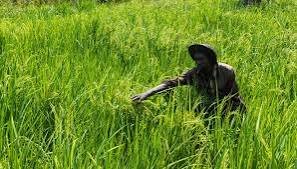
Rice farmers around Doba in southern Chad say an early end to the rains has sharply reduced their harvest during the 2026–2027 growing season. The shortfall is affecting fields in Mboh-Nya, about 15 kilometres from Doba, where growers report that limited rainfall and insufficient canal water left many rice plants with poorly filled grain.
A field report by Chadian outlet Tchadinfos, based on a visit to rice fields on November 13, said farmers in the area had expected 30 to 40 bags of paddy rice from plots of four to five hectares. Instead, some harvested only two or three bags. One farmer told the outlet that he collected just one bag from two hectares.
The farmer attributed the weak crop to rains stopping around the flowering stage, when rice plants need adequate water to develop grain. He said the canals did not hold enough water and many rice ears remained empty. The report also described cattle grazing on what was left in some fields, adding pressure to farmers already dealing with reduced yields.
Benjamin Ouaidou, head of the National Agency for Rural Development Support’s Pende section and acting agriculture delegate for Logone Oriental, confirmed that the season had been marked by a notable rainfall deficit and that rice yields had suffered. He said other crops were performing better overall, suggesting the damage reported in Doba is particularly acute for rice rather than a uniform collapse across all local agriculture.
The local account is consistent with broader monitoring that has flagged poor vegetation conditions in Logone Oriental. The UN Food and Agriculture Organization reported in September that satellite data showed weak vegetation in the province and several other parts of Chad, raising concerns about crop development and yield prospects. That national monitoring provides context for the local reports, though it does not quantify the specific rice losses around Doba.
For farmers, the impact is already extending beyond the fields. Tchadinfos reported that rice prices at local markets were beginning to rise quickly as harvest prospects weakened. The report did not give market prices or estimate how much supply might be lost, so the extent of any broader price increase remains unclear.
Ouaidou advised farmers with access to ponds or boreholes to consider off-season cultivation and diversify their activities. Such options could help growers reduce their dependence on seasonal rainfall, but access to reliable water, seeds and equipment will affect how many farmers can take them up. The official said he had informed his superiors about the situation, according to the field report.
The harvest difficulties come amid wider climate and food-security pressures across the region. FEWS NET’s October seasonal monitoring described rainfall deficits and crop-water stress in parts of Chad and other Sahelian countries. Its analysis noted that irregular rainfall can threaten yields as the rainy season ends. It does not, however, provide a Doba-specific rice production estimate.
The situation in Doba illustrates how a shift in rainfall timing can affect farmers even when the problem is not simply a lack of rain throughout the entire season. If rains stop while crops are flowering, plants may not receive enough water to produce full grain. For rice farmers relying on canals and seasonal water, the timing of rainfall and the amount retained in local water systems can be as important as the season’s total precipitation.
For now, the reports point to severe losses on some farms, early signs of higher local rice prices and calls for alternative cultivation where water is available. More detailed production and market data will be needed to establish the overall scale of the shortfall across Logone Oriental and its effect on consumers.