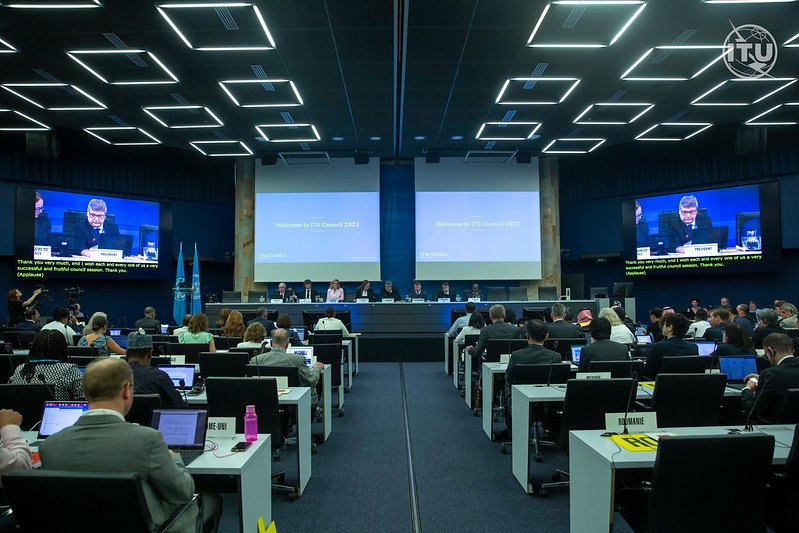
Algeria, Senegal and Morocco have been elected to the International Telecommunication Union’s (ITU) Council for the 2027–2030 term, securing places among 13 African countries chosen to represent the continent in the UN agency’s governing body.
The elections took place in Doha, Qatar, during the ITU Plenipotentiary Conference. The official results show Algeria received 126 votes and Morocco 125. Senegal won 134 votes, placing third among the elected African candidates. Kenya led the regional field with 136 votes, followed by Côte d’Ivoire with 135.
The other elected countries are Tanzania, Egypt, Rwanda, Ghana, Nigeria, Tunisia, Mauritius and South Africa. Ghana and Nigeria each received 121 votes. Uganda did not secure one of Africa’s 13 places. The Democratic Republic of the Congo, Cabo Verde, Libya, Mali, and Gabon also did not secure a place, either. ITU tallies confirm this.
The results preserve a broad mix of countries from across the continent on the council. Algeria, Senegal and Morocco were among the African states serving during the 2023–2026 period, and their re-election extends their participation into the next term. The council seats are held by member states, which select national delegations to take part in its work.
What the ITU Council does
The ITU is a United Nations agency that works on global telecommunications and digital connectivity. Its 48-member Council acts as the organization’s governing body between the Plenipotentiary Conferences, which take place every four years.
The Council oversees the ITU’s activities, policies and strategies, manages working groups, and prepares strategic and financial plans for review at the Plenipotentiary Conference. Africa, designated as Region D, has 13 of the 48 council seats. The other seats are divided among the Americas, Western Europe, Eastern Europe and Northern Asia, and Asia and Australasia.
The council’s decisions can shape international cooperation on telecommunications and digital development. The ITU’s work spans issues such as technical standards and connectivity, while its conferences set the organization’s broad policy direction and approve its plans and budget.
Member states cast votes for candidate countries in their respective regions. Council elections are generally decided in a single round: the candidates with the highest vote totals fill the seats available to each region. For Africa, that meant the 13 highest-scoring candidates were elected.
A new term begins in 2027
The incoming council will serve from 2027 through 2030. Its work will take place within a wider four-year cycle in which ITU members set priorities and agree on how the organization will allocate resources.
For Algeria, Senegal and Morocco, retaining seats offers continuity in the council’s regional representation. Their governments will be able to participate in discussions and decisions alongside the other elected members. The election itself does not announce particular national projects or guarantee specific outcomes; the countries’ influence will depend on their engagement in the council and the positions they advance through its processes.
The vote was part of the 2026 Plenipotentiary Conference, held in Doha from November 9 to 27. The conference elects the council and other ITU officials, and determines the Union’s strategic and financial direction for the coming period.
With the results confirmed, the 13 African member states are set to take their places on the council for the next four years. Their representation will give the region a formal role in the ITU’s work as member states address connectivity, telecommunications governance and the development of global digital systems.