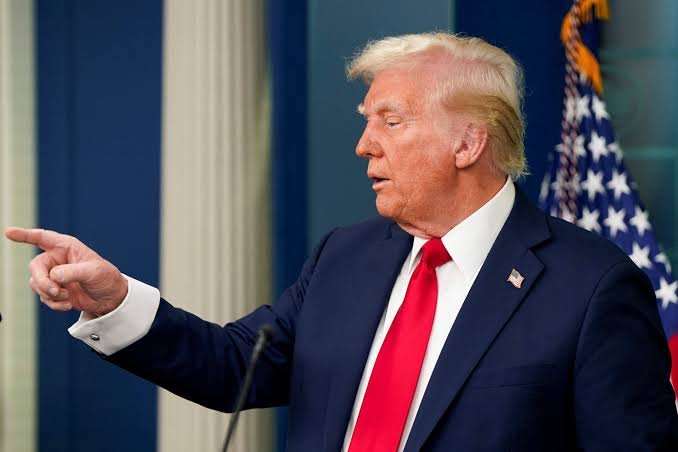
US President Donald Trump is scheduled to meet Chinese President Xi Jinping and Russian President Vladimir Putin in Shenzhen next week, in what would be the first joint summit between the leaders of the three countries. The White House confirmed the plan on Friday, saying the talks are expected to take place on Thursday, November 19, alongside the Asia-Pacific Economic Cooperation (APEC) summit.
The meeting is expected to focus in part on nuclear arms reduction. White House spokeswoman Olivia Wales said Trump wants to discuss reducing nuclear weapons, which he considers a serious danger if they continue to spread. A senior US official said Washington does not expect the talks to produce an agreement, describing them instead as an opening conversation that could lead to further discussions.
Trump is also expected to raise the US and Israeli war with Iran during the three-way session, according to US officials. Ukraine, however, is not expected to be on the agenda. A senior official said Washington is conducting a separate track of talks with Moscow and Kyiv and does not consider China part of that process. Trump is also not scheduled to hold a separate one-on-one meeting with Putin during the visit.
The planned gathering brings together leaders of the three countries with the largest nuclear arsenals, but they approach arms control from different positions. The last major nuclear arms treaty between the United States and Russia expired in February, removing limits on the two countries’ strategic arsenals for the first time in decades. Trump has called for a new agreement that would also involve China.
Beijing has so far shown little interest in joining nuclear negotiations with Washington and Moscow. China’s arsenal is significantly smaller than those of the United States and Russia, and Chinese officials have argued that the two countries with the largest stockpiles should address their arsenals directly. US officials have nonetheless said they want China to take part in broader discussions.
The scale of the difference is substantial. The Associated Press, citing Pentagon estimates, reported that China has more than 600 nuclear warheads, while the US and Russia each possess more than 5,000. Those figures help explain why the three-way meeting may be more symbolic than substantive, particularly if no government enters the talks prepared to negotiate specific limits.
The summit also comes during a period of complex relations among the three powers. Washington and Beijing have sought to stabilise trade ties after a tariff dispute, but disagreements remain over technology, Iran and other issues. US-Russia relations are shaped by the war in Ukraine, which has continued despite Trump’s efforts to pursue a settlement. China has expanded economic and military ties with Russia since Moscow launched its invasion in 2022, while maintaining that it is neutral in the conflict.
The decision to hold a trilateral discussion has raised concerns in Kyiv and some European capitals. Ukrainian President Volodymyr Zelenskyy has warned that talks among the three powers could lead to discussion of Ukraine’s future without Ukrainian participation. US officials have said Ukraine will be left off the Shenzhen agenda because those negotiations are being handled through a separate channel. The absence of Ukraine from the meeting does not mean the war is resolved; it reflects the White House’s stated plan for how it wants to organise the discussions.
The summit has also drawn comparisons to the 1945 Yalta Conference, where the leaders of the United States, Britain and the Soviet Union discussed the postwar settlement in Europe. Such comparisons reflect concern that major powers could discuss global security arrangements without smaller countries at the table. Kremlin spokesman Dmitry Peskov rejected the idea that any agreement in Shenzhen could be imposed on other states, while acknowledging the significance of a meeting among the three leaders.
For Xi, hosting the meeting on the margins of APEC offers an opportunity to present China as a central diplomatic power. For Putin, the gathering provides a chance to appear on equal footing with Washington and Beijing. Trump, meanwhile, has framed nuclear arms control as a possible area for cooperation among the three governments.
The White House has not suggested that the talks will produce a signed accord. Instead, officials have described the meeting as a starting point for conversation on nuclear risks. Any progress would require further negotiations over the size and limits of the arsenals, verification procedures and whether China would agree to participate in a formal framework.
Trump is due to travel to the Philippines before continuing to Shenzhen for the APEC summit and his scheduled meetings with Xi and Putin. Whether the three leaders can turn their joint appearance into practical steps remains uncertain. For now, the announced summit is a diplomatic milestone; its outcome will depend on whether the leaders can move from broad discussion to commitments that each government is willing to uphold.