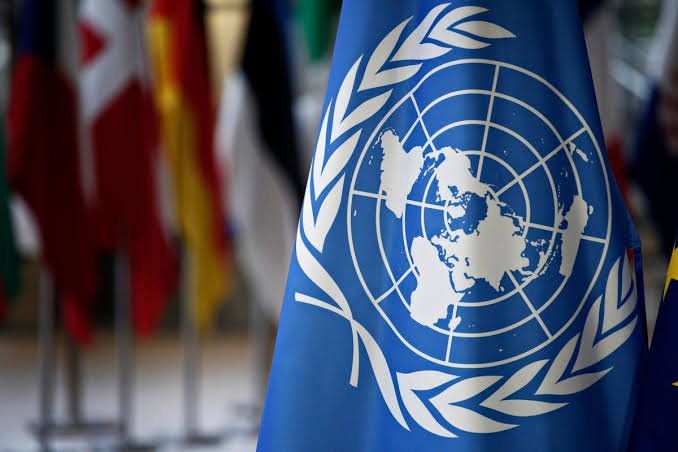
The United Nations is preparing for a leadership change at a time when the organisation is facing some of its most serious challenges in decades, with wars, geopolitical divisions, financial difficulties and demands for institutional reform threatening its influence.
The next secretary-general is expected to assume office on January 1, 2027, succeeding Antonio Guterres, whose decade-long tenure has been marked by conflicts across several regions and growing disagreements among major powers.
At the centre of the debate is whether the United Nations can regain its position as a meaningful force in resolving international crises while adapting to a world that has changed considerably since the organisation was established after World War II.
Guterres calls for a stronger United Nations
During his final address to the UN General Assembly, Guterres argued that the organisation should not retreat at a time when global challenges are becoming more complicated.
He maintained that the world needs a United Nations capable of responding to modern realities rather than one weakened by divisions among its members.
The outgoing secretary-general highlighted several issues that he believes require urgent attention, including armed conflicts, growing inequality, climate change and the rapid development of artificial intelligence.
Guterres also warned against allowing international law and global cooperation to deteriorate, stressing that decisions taken by governments today will have consequences for future generations.
Wars have exposed limits of UN influence
One of the biggest challenges for the incoming UN chief will be rebuilding the organisation’s role in conflict resolution.
The UN has struggled to exert decisive influence over major conflicts, including wars involving Iran, Ukraine and Gaza. The organisation has also faced difficulties responding to crises in Sudan and other conflict zones.
Kizito Byenkya of the Open Society Institute said the incoming secretary-general would face an enormous task because the organisation is already undergoing a difficult reform process.
He also pointed to expectations that the next UN chief should take a more active role in mediation, similar to former secretary-general Kofi Annan, who was widely recognised for his diplomatic skills and direct involvement in international conflicts.
Security Council reform remains a major obstacle
Reforming the UN Security Council is likely to be among the most difficult issues confronting the incoming secretary-general.
The council’s permanent membership remains dominated by the five countries that emerged as the major powers after World War II: the United States, Russia, China, Britain and France. Each possesses veto power over substantive council decisions.
Critics argue that the structure no longer adequately reflects the distribution of political and economic influence in today’s world.
Africa, despite its large population and growing geopolitical importance, has no permanent seat on the council. Latin America and vulnerable island states also lack permanent representation.
Calls for change have therefore become increasingly prominent, particularly from African countries seeking a stronger voice in global decision-making.
Ghana pushes for stronger African representation
Ghanaian President John Mahama was among the African leaders pressing the case for Security Council reform during the recent UN gathering.
Mahama argued that giving Africa a permanent voice should not be viewed as a concession but as necessary for maintaining the credibility and legitimacy of the international organisation.
He also warned about growing divisions between countries, widening inequality and declining confidence in multilateral institutions.
According to Mahama, the international community must confront what he described as an increasingly dangerous move towards unilateral action, where powerful states increasingly pursue their interests without sufficient regard for collective international rules.
Financial problems add to the pressure
The next UN secretary-general will also inherit a significant financial problem.
The organisation has been forced to reduce spending and scale back some humanitarian and development activities amid funding difficulties. The United States’ unpaid financial obligations have contributed substantially to the UN’s financial strain.
The organisation is also reviewing its programmes and mandates in an effort to reduce costs and make its operations more efficient.
These financial pressures could make it harder for the next secretary-general to respond effectively to humanitarian emergencies at a time when conflicts and displacement are increasing in different parts of the world.
A difficult leadership transition
The selection of Guterres’ successor comes as countries debate what they want from the United Nations in the coming decades.
Beyond choosing a new individual to lead the organisation, member states face the broader question of whether they are prepared to make changes that would give the UN greater authority, wider representation and stronger capacity to respond to global crises.
The next secretary-general will therefore inherit an organisation caught between its traditional role and the demands of a rapidly changing international system.
For many countries, particularly those in Africa and the developing world, the priority will be ensuring that the UN becomes more representative. For others, the immediate concern will be restoring its ability to help end wars and manage global crises.
The leadership transition could ultimately determine whether the United Nations succeeds in adapting to the 21st century or remains constrained by structures and power arrangements created more than eight decades ago.