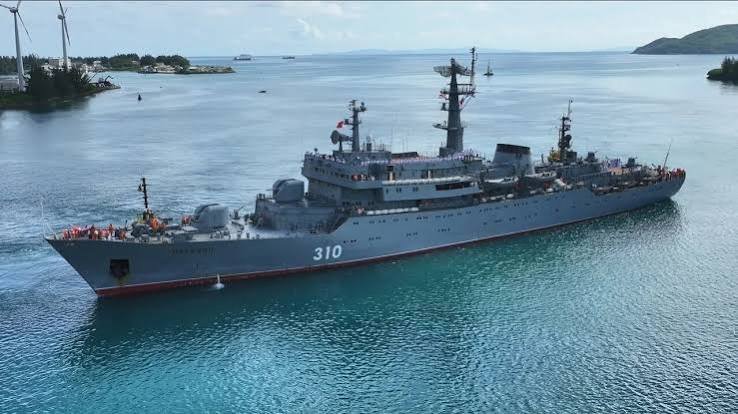
Russia is strengthening its military and diplomatic relationships across Africa through an extensive naval training mission involving several countries, including Nigeria, Tanzania, Namibia, Mozambique and the Republic of the Congo.
The mission, which involves the Russian Navy’s Baltic Fleet training vessel Perekop, is part of Moscow’s broader efforts to expand its military cooperation with African governments and maintain a stronger presence across the continent.
The deployment has attracted attention because of the growing competition among international powers seeking closer defence and security partnerships with African countries.
According to reports, the Russian training ship arrived in Lagos, Nigeria, on November 7, 2026, after travelling from Douala, Cameroon. It subsequently continued its journey, reaching Cotonou, Benin, on November 9.
The vessel’s arrival in Nigeria provided an opportunity for Russian and Nigerian naval officials to discuss military cooperation, professional training and maritime security.
Russian Navy Expands Naval Engagement Across Africa
The deployment of the Perekop reflects Russia’s increasing interest in strengthening its military relationships with African countries through naval visits, training programmes and defence exchanges.
The ship’s African journey has included visits to several strategic coastal destinations, such as Seychelles, Tanzania, Mozambique, Namibia, the Republic of the Congo, Cameroon and Nigeria.
These visits have provided opportunities for Russian military representatives to engage with African defence officials, exchange professional knowledge and explore areas of possible cooperation.
For Moscow, naval visits are an important diplomatic instrument for maintaining relationships with countries across different regions of Africa.
They also allow Russian naval personnel and cadets to gain practical experience while interacting with foreign military institutions.
The expedition began in July 2026 and is expected to conclude in December. During the journey, the vessel is scheduled to cover approximately 30,000 nautical miles, travelling through four oceans, 14 seas and 23 straits.
The extensive route makes the mission a significant international training exercise for the Russian Navy.
Nigeria and Russia Discuss Naval Cooperation in Lagos
Nigeria was among the latest African countries to receive the Russian training vessel.
The Perekop arrived in Lagos on November 7, where Russian diplomats, military representatives and Nigerian Navy officials participated in a reception ceremony.
Russia’s Chargé d’Affaires in Nigeria, Igor Ivannikov, and the country’s military attaché attended the event alongside representatives of the Nigerian Navy.
The Russian delegation also held discussions with senior Nigerian naval officers at the headquarters of the Western Naval Command in Apapa.
The meeting provided an opportunity for both sides to examine potential areas of cooperation, particularly in naval training, professional development and maritime security.
The Nigerian Navy expressed interest in the benefits of international naval engagements, particularly opportunities that allow its personnel to learn from the experiences of other maritime forces.
Activities planned during the ship’s stay included guided tours of the vessel and demonstrations designed to introduce Nigerian naval personnel to different aspects of shipboard operations.
The demonstrations focused on damage control and ship survivability, which are important skills for sailors responsible for protecting vessels during emergencies such as fires, flooding and structural damage.
Russian representatives also indicated their willingness to explore further training opportunities with Nigerian naval personnel.
The visit comes against the background of an existing military-technical cooperation agreement between Nigeria and Russia, signed in August 2021.
However, the discussions surrounding the latest port call do not automatically mean that a new defence agreement has been concluded.
Tanzania, Namibia and Congo Also Feature in the Mission
Nigeria is not the only African country benefiting from the Russian naval expedition.
Earlier in the journey, the Perekop visited Tanzania, where it docked at Dar es Salaam in September 2026.
The vessel was received by representatives of the Russian military presence in Tanzania, alongside Tanzanian naval officials and cadets from the country’s Naval Academy.
The visit provided another opportunity for military engagement and practical training.
Namibia also featured prominently in the expedition when the ship arrived at Walvis Bay in October.
During the stop, four Namibian cadets joined the vessel to participate in its training programme.
The Republic of the Congo was another important destination. Twelve Congolese cadets studying in Russia boarded the ship at Pointe-Noire on October 28 to undertake practical navigation training.
Cameroon subsequently welcomed the vessel at the port of Douala in early November.
Russian and Cameroonian naval representatives held discussions, while activities included demonstrations and opportunities for personnel to interact.
Several Cameroonian cadets were also expected to remain aboard the ship to continue their practical navigation experience.
These engagements demonstrate how the Russian expedition combines traditional naval diplomacy with professional development opportunities for African military personnel.
Moscow Faces Growing Competition for Africa’s Defence Partnerships
Russia’s renewed naval engagement comes at a time when several international powers are competing to strengthen their military and economic relationships with African countries.
China, Türkiye, the United States and European nations have established different forms of defence cooperation across the continent.
Türkiye, in particular, has expanded its defence industry relationships with several African governments, supplying military equipment and supporting training programmes.
China has also maintained a significant presence through military exchanges, infrastructure investments and security partnerships.
For African governments, relationships with multiple international defence partners can provide opportunities to diversify military procurement, improve training and strengthen national security capabilities.
Russia, meanwhile, has continued using military agreements, educational programmes and joint exercises to maintain its influence.
African military representatives have also participated in Russian-led exercises, including the Centre-2026 military exercise held in the Urals.
The participation of African personnel in such activities demonstrates Moscow’s efforts to keep its defence relationships active beyond formal diplomatic engagements.
Nevertheless, Russia’s position in Africa faces competition from countries offering different military technologies, financial arrangements and security partnerships.
The Strategic Importance of Africa’s Maritime Security
The Russian naval mission also highlights the growing importance of maritime security across Africa.
Several countries visited by the Perekop have important coastal economies that depend on secure shipping routes, commercial ports and offshore resources.
For Nigeria, maritime security remains particularly important because of its position along the Gulf of Guinea.
The region plays a significant role in international trade, energy transportation and commercial shipping. It has also experienced security challenges, including piracy, maritime crime and illegal activities in coastal waters.
Consequently, cooperation between naval forces can provide opportunities to improve professional capabilities and strengthen maritime operations.
Nigeria has continued to engage with different international partners to improve its naval capacity and protect its maritime interests.
The country’s discussions with Russia therefore form part of a broader effort to maintain international military relationships.
However, the long-term significance of the latest visit will depend on whether discussions translate into practical cooperation, additional training programmes or other measurable outcomes.
What the Russian Training Ship Perekop Mission Means for Africa
Beyond its military training responsibilities, the Perekop expedition represents an opportunity for Russia to maintain diplomatic visibility across several African regions.
The ship’s extensive journey allows Moscow to engage with governments and military institutions without establishing permanent naval deployments in every country it visits.
For participating African countries, the mission offers opportunities for personnel to gain practical experience, interact with foreign officers and develop professional relationships.
The involvement of cadets from Namibia, the Republic of the Congo and Cameroon also demonstrates the educational dimension of the expedition.
Russia’s decision to include several African destinations in one extended naval journey suggests that the continent remains an important part of its international military engagement strategy.
The mission is expected to continue until December 2026, leaving room for additional diplomatic and naval activities before the vessel completes its journey.
Ultimately, the extent to which these engagements strengthen Russia’s position in Africa will depend on the partnerships and practical military cooperation that emerge after the ship returns from its expedition.
For Nigeria and other participating countries, the challenge will be to ensure that international defence relationships translate into meaningful improvements in training, maritime security and national military capabilities.