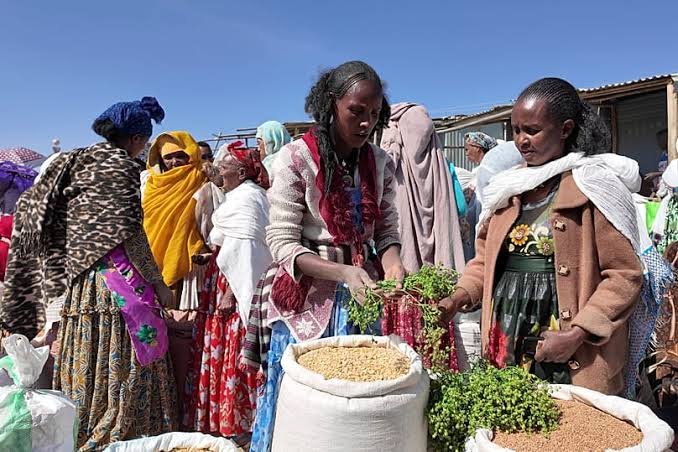
Residents of Ethiopia’s Tigray region are attempting to restore normal life following renewed fighting, but economic hardship, interrupted education and escalating regional tensions continue to threaten the area’s fragile recovery.
In Mekelle, the regional capital, some shops have reopened and banking services are gradually returning. However, the apparent improvement in daily activities has done little to ease concerns among residents who fear that the latest violence could develop into another prolonged conflict.
Ethiopian federal forces and allied fighters regained control of Mekelle on October 4, 2026, following renewed clashes with forces associated with the Tigray People’s Liberation Front (TPLF).
The development has intensified uncertainty in a region still recovering from the devastating 2020–2022 war, which caused widespread displacement, destroyed livelihoods and severely disrupted public services.
For many residents, the immediate priority is not politics but survival: securing an income, keeping children in school and avoiding another period of displacement.
Reopening Businesses Does Little to Ease Financial Pressure
Although commercial activity is gradually returning in parts of Mekelle, many households continue to struggle with the rising cost of meeting basic needs.
Delayed government salaries have left public employees struggling to pay for food, housing and their children’s education. Years of conflict have also exhausted savings that families previously relied on during difficult periods.
The financial difficulties extend beyond individual households. Tigray’s interim administration reported in March that it could no longer pay the salaries of approximately 137,000 civil servants because expected funding transfers from the federal government had not arrived.
Regional finance officials subsequently reported an 8.5-billion-birr shortfall affecting wages and development projects.
These funding problems have complicated efforts to restore public services and revive economic activity. Even when shops reopen, customers without dependable incomes have limited purchasing power, preventing businesses from returning fully to normal operations.
The situation illustrates the difference between reopening commercial premises and achieving a meaningful economic recovery. Without reliable funding, regular wages and improved security, many families will continue to face serious financial uncertainty.
Students Fear Losing More Time Because of Conflict
Education has become another source of anxiety for young people in Tigray.
Students who endured school closures and disruptions during the previous war now face uncertainty over whether they can continue their studies without further interruptions.
In Adigrat, secondary-school student Shewit expressed concern that renewed instability could cost him another academic year, adding to the time already lost because of the earlier conflict.
University students have also explored options outside the region to avoid further delays. Some have travelled to Addis Ababa, Ethiopia’s capital, seeking transfers to other public universities.
The federal Ministry of Education established temporary university placement arrangements for students enrolled at institutions in Tigray. More than 5,000 students had applied for the programme by mid-September.
While these arrangements could help some students continue their education, relocating creates additional financial and personal challenges. Students must adapt to unfamiliar institutions while dealing with uncertainty about their families and homes.
For young people who have already sacrificed years of education, the possibility of another interruption threatens their employment prospects and long-term ambitions.
Ethiopia and Eritrea Tensions Add to Security Concerns
The crisis in Tigray is unfolding against a worsening relationship between Ethiopia and neighbouring Eritrea.
The two countries, which fought alongside each other during the earlier Tigray war, have become increasingly hostile towards one another. Competing accusations and reports of military movements near their shared border have raised concerns that the confrontation could spread beyond Tigray.
Ethiopian authorities have accused Eritrea of sending troops into Ethiopian territory and supporting forces opposed to the federal government. Eritrea has rejected accusations of an invasion.
Reports involving border communities, including Zalambessa, have contributed to anxiety among residents who fear that renewed clashes could threaten their safety and livelihoods.
The situation remains difficult to assess because accounts of military deployments and control of specific areas have not all been independently confirmed.
Nevertheless, the deteriorating relationship between Addis Ababa and Asmara adds another layer of risk to an already volatile situation. A broader confrontation could increase displacement, disrupt trade and place further pressure on communities still recovering from years of violence.
For people living near the border, uncertainty about what might happen next has become part of everyday life.
Caretaker Administration Faces Major Challenges
Ethiopian Prime Minister Abiy Ahmed announced on October 16 that a caretaker administration would oversee Tigray for six months.
The temporary administration has been tasked with restoring public services, supporting displaced people seeking to return home and preparing the region for elections.
The announcement followed the federal forces’ takeover of Mekelle and other major towns, marking a significant change in the region’s political and military circumstances.
Federal authorities have presented the arrangement as a route towards stability and elected regional leadership. However, disagreements with the TPLF remain unresolved, and questions persist about how effectively the new administration will operate throughout Tigray.
Restoring confidence will require more than establishing a temporary governing structure. Authorities will need to address salary arrears, maintain schools and healthcare facilities, improve security and help families whose lives have been disrupted by the fighting.
The administration’s ability to deliver these improvements will be an important test of whether the region can move towards stability.
Residents Want Security and a Return to Normal Life
For Tigray’s population, the prospect of renewed conflict brings back memories of the destruction and suffering experienced during the previous war.
Residents are concerned about whether they can continue working, whether children can attend school consistently and whether displaced families will have the opportunity to return safely.
The reopening of shops and banks provides some encouragement, but it cannot guarantee that the region will remain secure.
In communities such as Zalambessa, residents are particularly worried about the consequences of another escalation. People who have already endured conflict fear losing their homes, livelihoods and remaining savings if fighting intensifies.
Their concerns reflect a broader challenge facing the region: rebuilding trust and restoring essential services while political disagreements and military tensions remain unresolved.
Tigray’s Future Depends on Security and Economic Recovery
Tigray’s gradual return to everyday activities offers a limited sign of progress, but its recovery remains vulnerable to renewed violence and political instability.
The caretaker administration faces the difficult task of restoring public services and preparing for elections while addressing the immediate needs of a population affected by years of conflict.
At the same time, reducing tensions between Ethiopia and Eritrea will be essential to limiting the risk of a wider regional confrontation.
Reliable public funding, regular salary payments, functioning schools and healthcare services, and safe conditions for displaced families will all be crucial to restoring public confidence.
For now, residents are trying to rebuild their lives while watching developments with caution. Whether their efforts lead to lasting recovery or are interrupted by another round of violence will depend on the decisions made by political leaders and the ability of all sides to prevent further escalation.